




Kumpulan kami mempunyai lebih daripada 7,000,000 pedagang!
Setiap hari kami bekerjasama untuk meningkatkan perdagangan. Kami mendapat keputusan yang tinggi dan bergerak ke hadapan.
Pengiktirafan oleh berjuta-juta pedagang di seluruh dunia adalah penghargaan terbaik untuk kerja kami! Anda membuat pilihan anda dan kami akan melakukan segalanya yang diperlukan untuk memenuhi jangkaan anda!
Kami adalah kumpulan yang terbaik bersama!
InstaSpot. Berbangga bekerja untuk anda!





Pelakon, juara kejohanan UFC 6 dan seorang wira sebenar!
Lelaki yang membuat dirinya sendiri. Lelaki yang mengikut cara kami.
Rahsia di sebalik kejayaan Taktarov adalah pergerakan berterusan ke arah matlamat.
Dedahkan semua segi bakat anda!
Cari, cuba, gagal - tetapi tidak pernah berhenti!
InstaSpot. Kisah kejayaan anda bermula di sini!

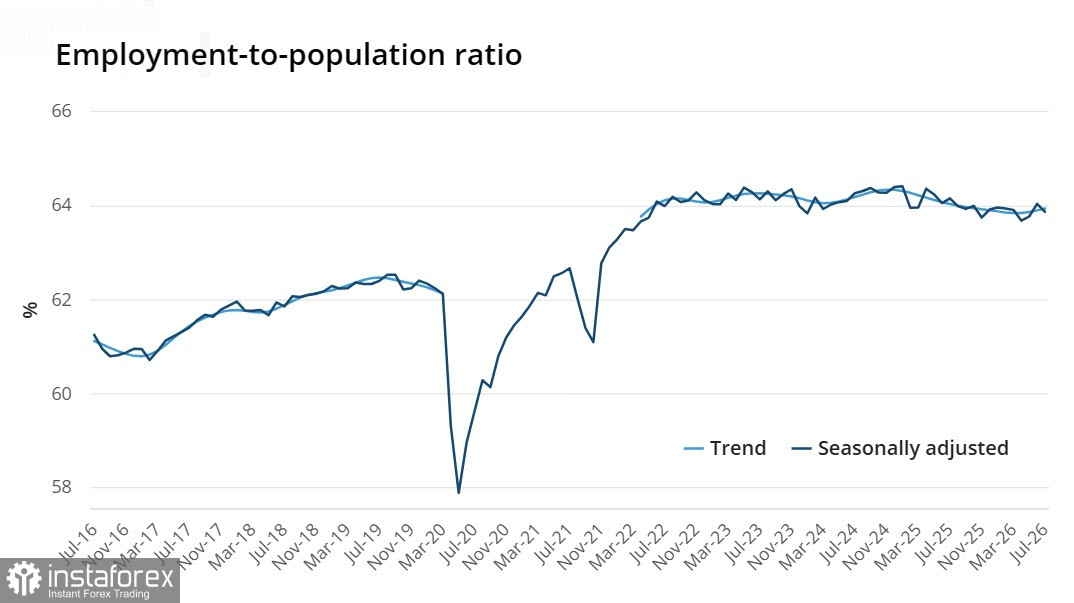
The July employment data for Australia, published on August 20, was the main event of the week and delivered an unpleasant surprise. The economy lost 15,800 jobs, against an expected growth of 15,000, while the unemployment rate surged to 4.5%, compared with an expected 4.4%. The decline in the labor force participation rate and the ratio of employed to the total population is taking on a protracted nature.
However, the Reserve Bank of Australia anticipates further increases in unemployment to 4.8% by mid-2028, which is incorporated into its baseline scenario, so the weak report is unlikely to impress the RBA.
Nevertheless, markets reacted by lowering expectations for the RBA's interest rate, but the Australian dollar not only held its ground but also continued to rise—the AUD/USD pair is maintaining near 10-week highs.
Meanwhile, a structural crisis is brewing in Australia's energy sector, which could lead to a new inflationary shock. Aging coal-fired power plants, with an average age approaching 40 years, are increasingly failing during peak demand times. Against the backdrop of threats to oil supplies, this issue takes on unexpected significance.
When internal generation fails, the dependence on imported energy sources (oil and gas) increases. This means that any supply disruptions through the Strait of Hormuz (which carries about 20% of the world's oil) will have a double effect for Australia: direct increases in fuel prices and an indirect effect through the need to replace lost coal generation with more expensive imported sources.
Forecasts for the RBA interest rate suggest a pause at the current level of 4.35% at least through the end of the year, with the first rate cut expected in mid-2027. Inflation is projected to return to the mid-target range of 2-3% by the end of 2027, but this forecast is hypothetical, as no one knows which factors will prevail or how they will affect prices. The military confrontation between the U.S. and Iran clearly has no good resolution; neither side is willing to make concessions, and therefore oil-importing countries need to find a mechanism to meet their needs without relying on the Strait of Hormuz. For Australia, the threat of an energy shock is very real.
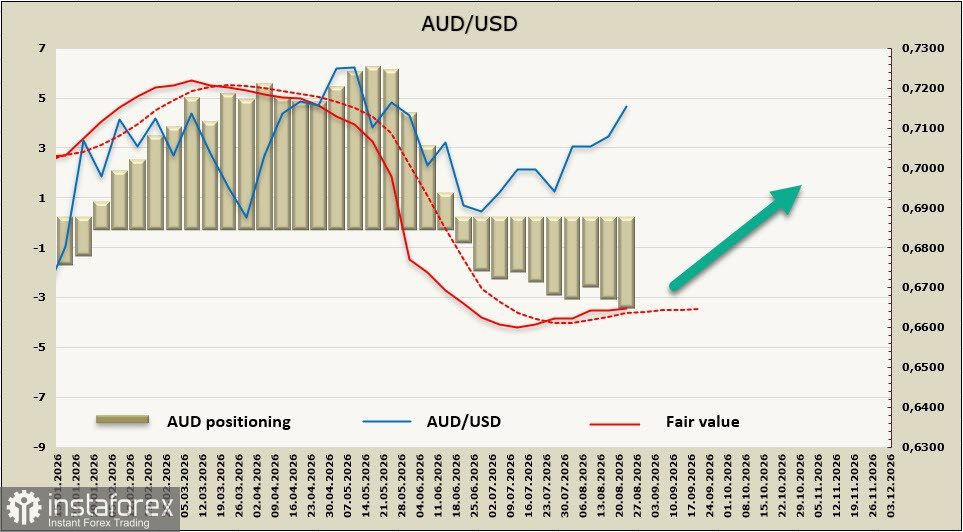
The net short position on the AUD slightly increased over the reporting week to -3.12 billion. Despite the worsening positioning, the calculated price remains above the long-term average and shows no signs of turning south.
The Australian dollar demonstrates remarkable resilience, ignoring the weak labor market and the energy crisis. Last week, we suggested that bullish momentum was nearing exhaustion; however, it appears the U.S. dollar is weakening faster. The nearest targets are 0.7210, followed by 0.7265 and 0.7345. Achieving these levels requires strong data from China, a reduction in geopolitical tension, or unexpectedly dovish rhetoric from the Federal Reserve.
* Analisis pasaran yang disiarkan di sini adalah bertujuan untuk meningkatkan kesedaran anda, tetapi tidak untuk memberi arahan untuk membuat perdagangan.
Kajian analisis InstaSpot akan membuat anda mengetahui sepenuhnya aliran pasaran! Sebagai pelanggan InstaSpot, anda disediakan sejumlah besar perkhidmatan percuma untuk dagangan yang cekap.


