




Kumpulan kami mempunyai lebih daripada 7,000,000 pedagang!
Setiap hari kami bekerjasama untuk meningkatkan perdagangan. Kami mendapat keputusan yang tinggi dan bergerak ke hadapan.
Pengiktirafan oleh berjuta-juta pedagang di seluruh dunia adalah penghargaan terbaik untuk kerja kami! Anda membuat pilihan anda dan kami akan melakukan segalanya yang diperlukan untuk memenuhi jangkaan anda!
Kami adalah kumpulan yang terbaik bersama!
InstaSpot. Berbangga bekerja untuk anda!





Pelakon, juara kejohanan UFC 6 dan seorang wira sebenar!
Lelaki yang membuat dirinya sendiri. Lelaki yang mengikut cara kami.
Rahsia di sebalik kejayaan Taktarov adalah pergerakan berterusan ke arah matlamat.
Dedahkan semua segi bakat anda!
Cari, cuba, gagal - tetapi tidak pernah berhenti!
InstaSpot. Kisah kejayaan anda bermula di sini!

The yen has slid to its weakest level versus the US dollar since 1986, and this may not be the end. Authorities intervened, spending £11.73 trillion (? $71.9bn) on currency operations between 28 April and 27 May, yet the USD/JPY surge to fresh 40-year highs was only delayed, not stopped.
Yen's value against broad currency basket
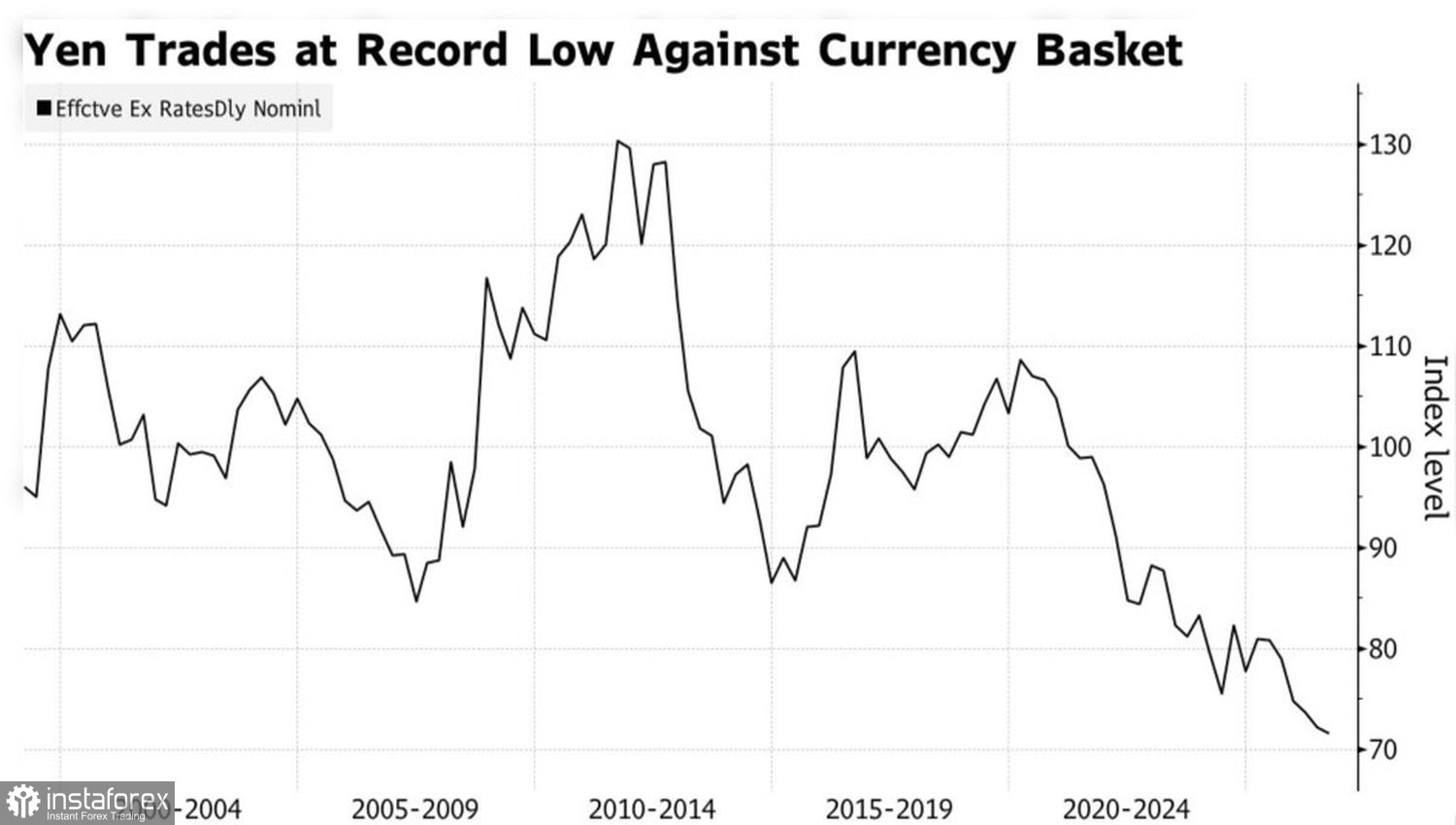
The problem runs deeper than a one-off dollar move. The Bank of Japan's nominal effective exchange-rate index, which tracks the yen versus a trade-weighted basket of peers, has printed fresh record lows this year. The yen's weakness shows up not only versus the dollar but also against the euro, pound, and a range of Asian currencies. That exacerbates imported inflation risks and erodes Japanese households' purchasing power.
The Bank of Japan is caught between a rock and a hard place. Keeping policy ultra-loose feeds inflation via a weak yen; tightening too quickly would raise debt-servicing costs and choke off a fragile recovery. A Reuters poll shows that 86% of economists expect the overnight rate to rise to 1.25% by the end of December, and nearly three-quarters think the Bank of Japan is acting too slowly given that core inflation has not yet settled at the 2% target.
According to Reuters sources familiar with the central bank's thinking, some policymakers are prepared to tighten monetary policy more aggressively than markets anticipate if yen-driven price pressures and rising AI-driven demand push inflation higher than expected. Almost 80% of surveyed experts believe the current USD/JPY is significantly detached from Japanese fundamentals, and more than half cite rising government debt-servicing costs amid multi-decade highs in Japanese government bond yields as a serious concern.
JGB yield dynamics
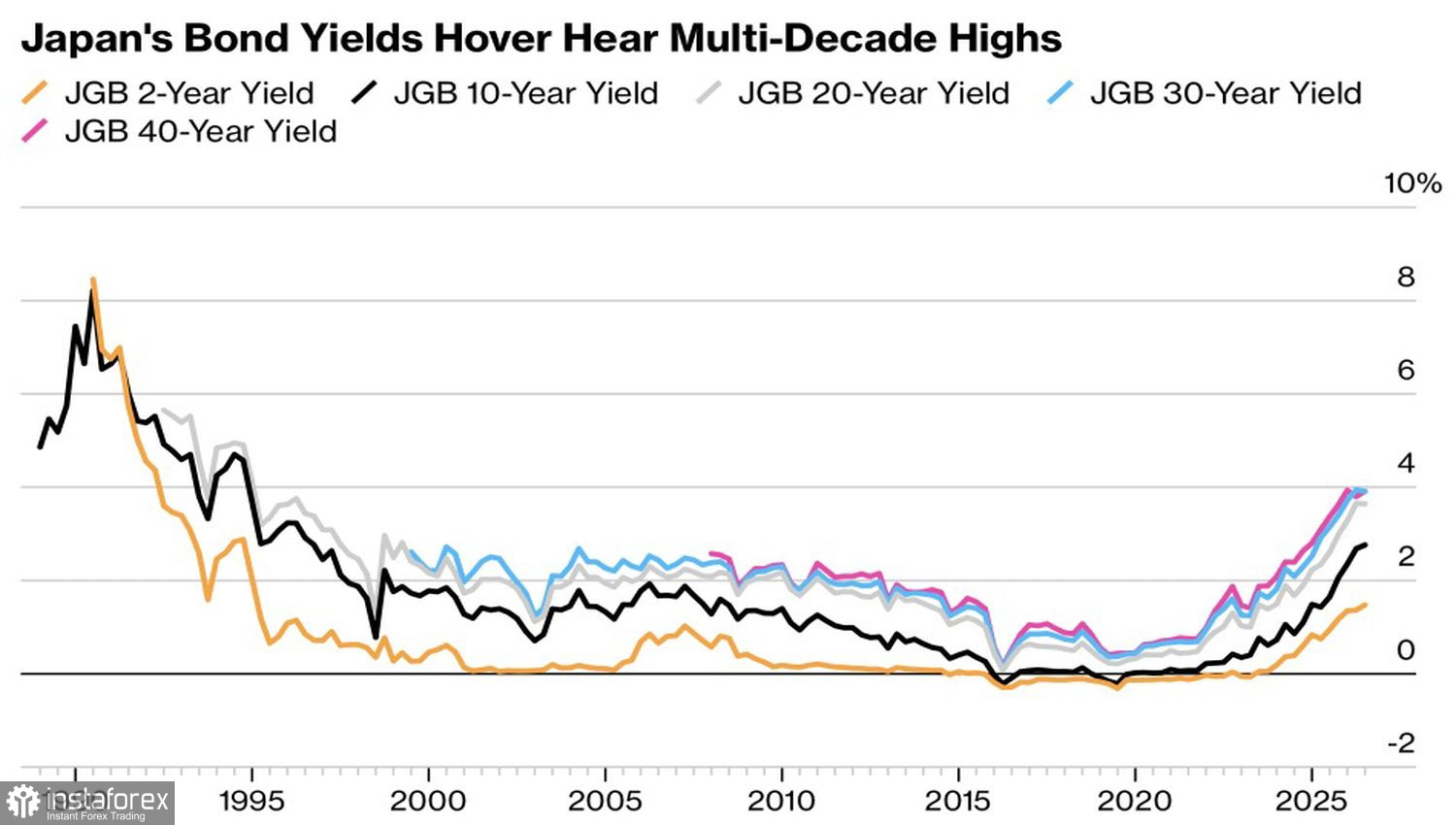
Fundamentally, the yen's problem is a problem of confidence in Japan's fiscal sustainability. Deutsche Bank argues that Prime Minister Sanae Takaichi's ambitious $2.3tn growth plan could force authorities to shift priorities from defending the currency to controlling bond yields. In other words, policy may move from capping USD/JPY to capping borrowing costs.
Currency interventions have already demonstrated their limits against fundamental imbalances. Isn't it time for Tokyo to acknowledge the truth: money alone cannot save the yen?
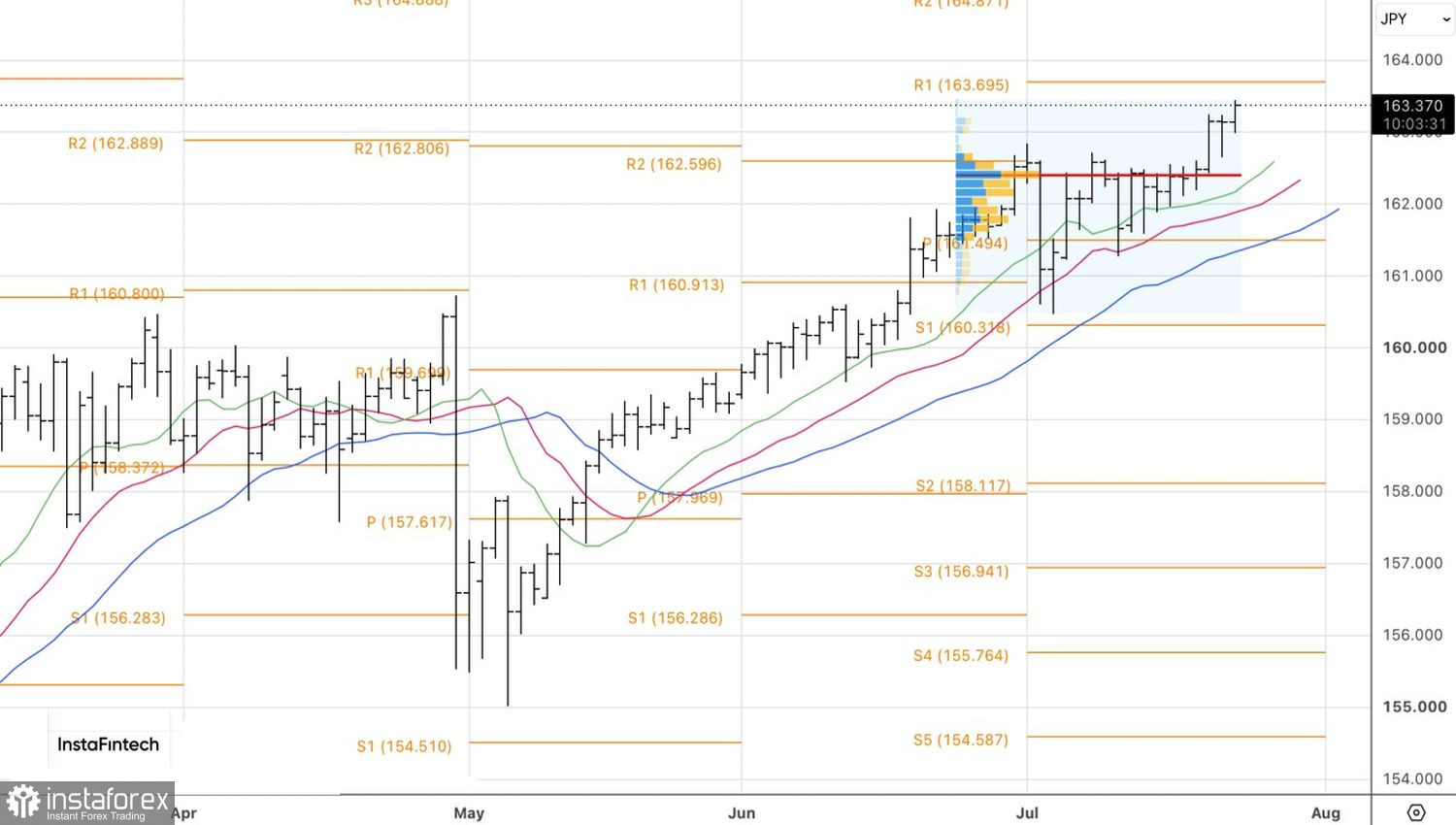
Technically, the daily chart shows that USD/JPY has formed an inside bar whose long lower wick indicates bear exhaustion and raises the odds of the rally continuing toward 163.7 and 164.8. Failure to consolidate above those levels would be a technical trigger for shorting.
* Analisis pasaran yang disiarkan di sini adalah bertujuan untuk meningkatkan kesedaran anda, tetapi tidak untuk memberi arahan untuk membuat perdagangan.
Kajian analisis InstaSpot akan membuat anda mengetahui sepenuhnya aliran pasaran! Sebagai pelanggan InstaSpot, anda disediakan sejumlah besar perkhidmatan percuma untuk dagangan yang cekap.


