




Kumpulan kami mempunyai lebih daripada 7,000,000 pedagang!
Setiap hari kami bekerjasama untuk meningkatkan perdagangan. Kami mendapat keputusan yang tinggi dan bergerak ke hadapan.
Pengiktirafan oleh berjuta-juta pedagang di seluruh dunia adalah penghargaan terbaik untuk kerja kami! Anda membuat pilihan anda dan kami akan melakukan segalanya yang diperlukan untuk memenuhi jangkaan anda!
Kami adalah kumpulan yang terbaik bersama!
InstaSpot. Berbangga bekerja untuk anda!





Pelakon, juara kejohanan UFC 6 dan seorang wira sebenar!
Lelaki yang membuat dirinya sendiri. Lelaki yang mengikut cara kami.
Rahsia di sebalik kejayaan Taktarov adalah pergerakan berterusan ke arah matlamat.
Dedahkan semua segi bakat anda!
Cari, cuba, gagal - tetapi tidak pernah berhenti!
InstaSpot. Kisah kejayaan anda bermula di sini!

Oil prices have risen for the third consecutive day after Donald Trump labeled Iran's conditions as absolutely unacceptable. The opponents are at a stalemate, neither engaging in warfare nor able to negotiate peace. The Strait of Hormuz remains closed, intensifying the risks to a recovery in Brent's upward trend. Moreover, the US President does not rule out the resumption of bombings, while Tehran promises a strong response.
The conflict in the Middle East has caused the oil market to shift from surplus to deficit. The International Energy Agency predicted a record surplus of 4 million barrels per day in December. The estimate for April was revised down to 410 thousand barrels per day, as it was believed that the confrontation between the US and Iran was nearing an end. Currently, there is talk of a deficit of 1.8 million barrels per day, and that's assuming the Strait of Hormuz opens by the beginning of summer. So far, investors have no particular illusions about this.
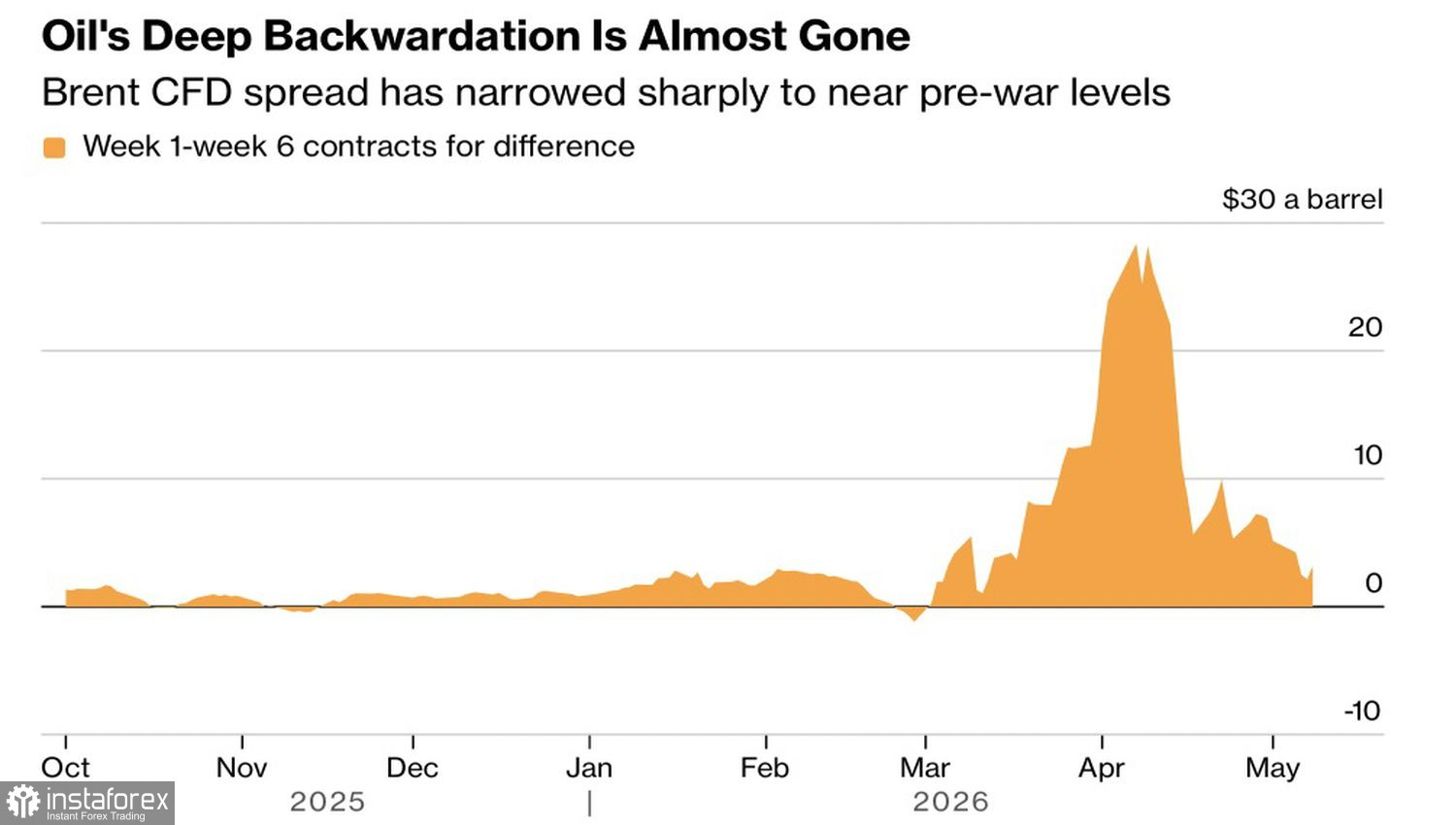
The shift in the black gold market from surplus to deficit at the beginning of April triggered panic and a surge in spot market premiums compared to futures, reaching $30 per barrel. However, since then, this measure has fallen by 90%, as supply losses were offset by global oil inventories.
This situation cannot continue indefinitely. The IEA estimates the oil supply shortfall at 12.8 million barrels per day. Its growth for April totaled 1.8 million barrels per day. The US Energy Information Administration has raised its forecast for the reduction of global oil stocks in 2026 from 300 thousand barrels per day to 2.6 million barrels per day—provided the Strait of Hormuz opens in early June.
Brent's rally is being restrained by factors such as increased production in the US, Brazil, and other countries, the redirection of supplies by Saudi Arabia and the United Arab Emirates, and a decrease in oil and gas exports from China.
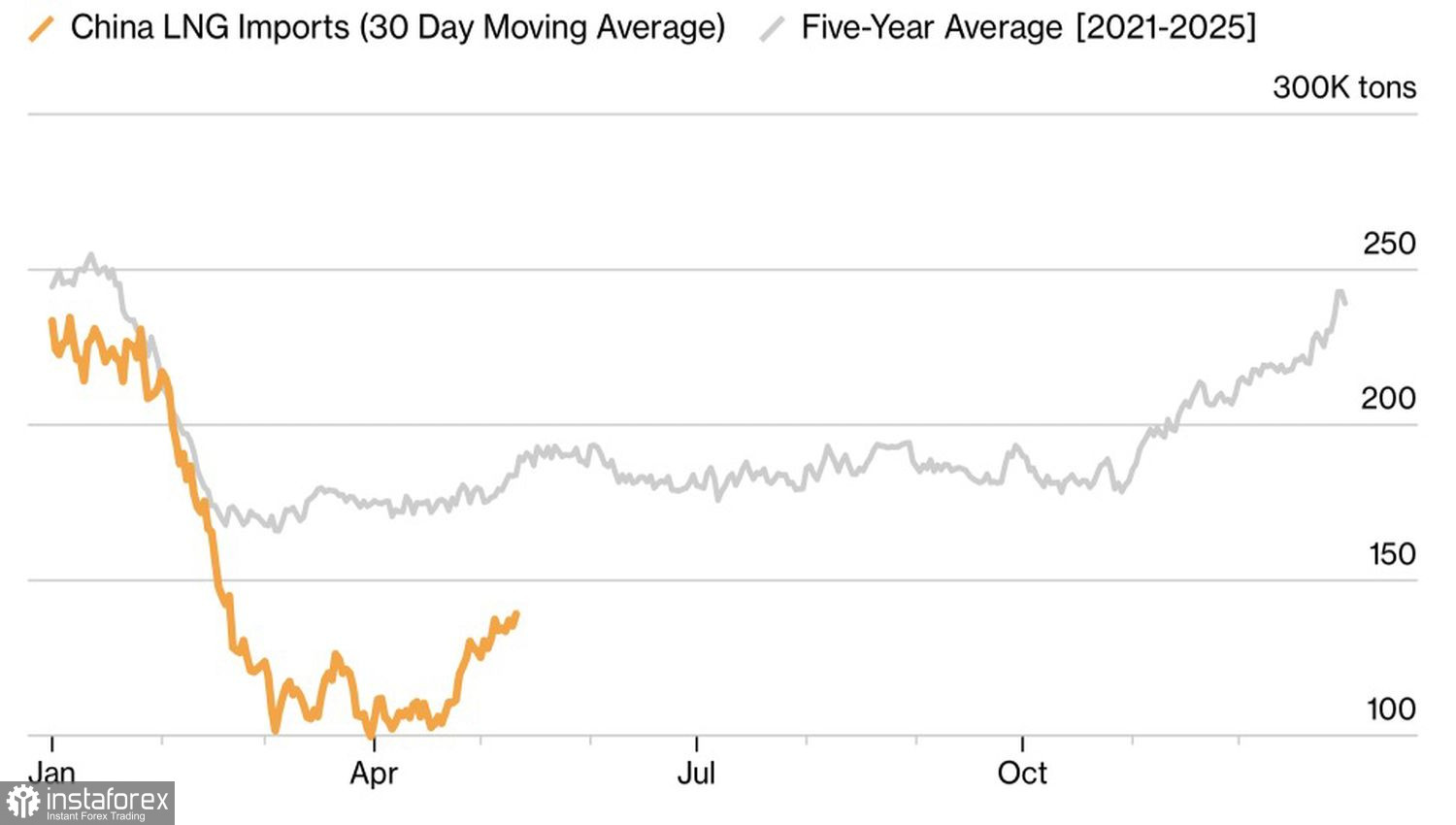
The capacities of these countries are limited, and the growing deficit will push Brent higher unless, of course, the conflict in the Middle East becomes a thing of the past. In this regard, Trump's words that help from Beijing is not needed to resolve this issue provide hope for sellers of North Sea crude.
China is the main buyer of Iranian oil and could exert pressure on Tehran. It seems that the White House has a plan to compel the Islamic Republic to sign a peace agreement. However, so far, the methods employed by the Americans have not been effective.
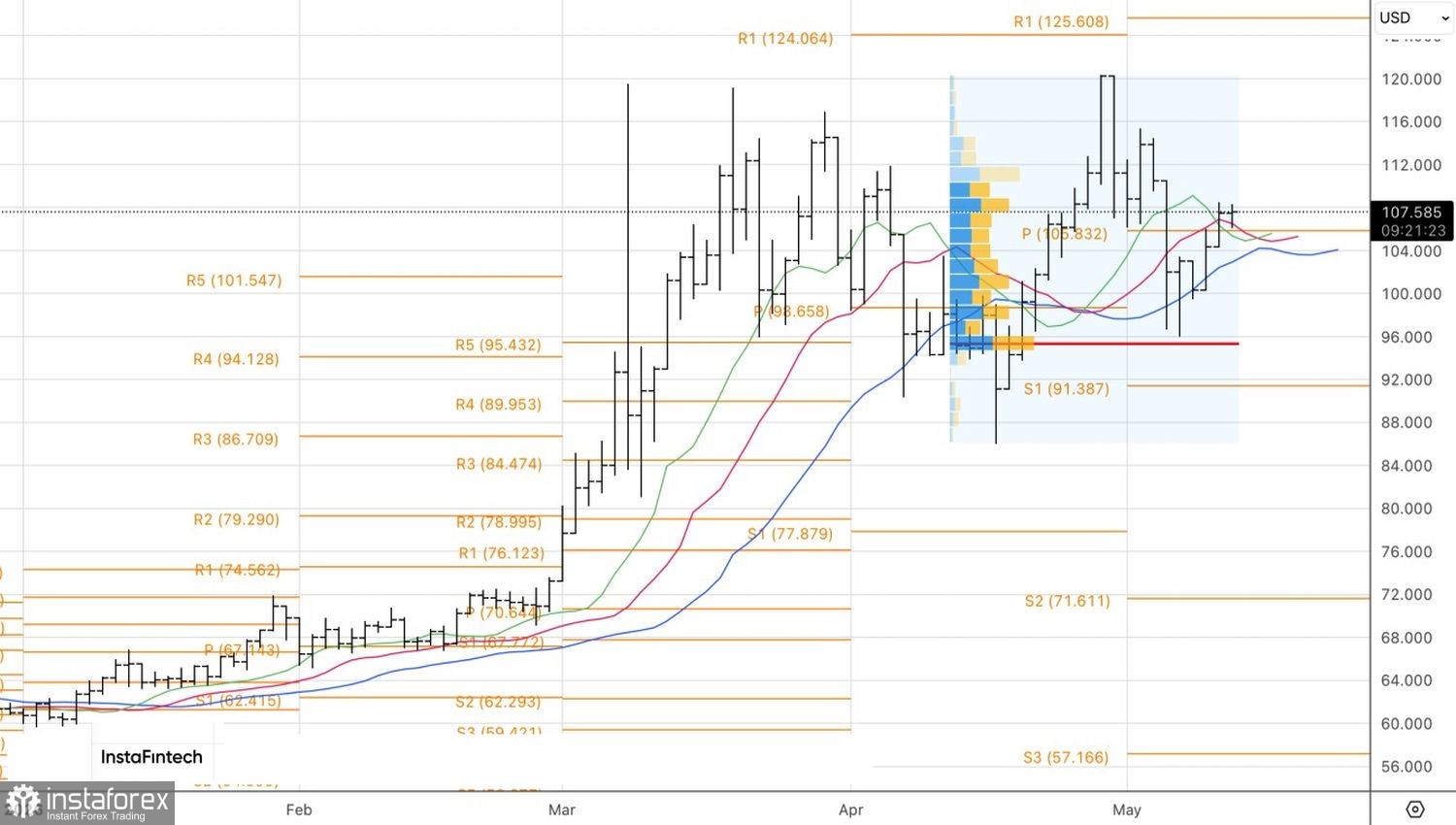
Technically, on the daily chart, Brent shows an attempt by the bulls to consolidate above important supports in the form of clustered moving averages and a pivot level of $105.85 per barrel. As long as it remains in buyers' hands, the chances of a continued rally towards $115 and above are quite high. Traders should focus on forming long positions in North Sea crude. Sales will become relevant if they fall below $104 per barrel.
* Analisis pasaran yang disiarkan di sini adalah bertujuan untuk meningkatkan kesedaran anda, tetapi tidak untuk memberi arahan untuk membuat perdagangan.
Kajian analisis InstaSpot akan membuat anda mengetahui sepenuhnya aliran pasaran! Sebagai pelanggan InstaSpot, anda disediakan sejumlah besar perkhidmatan percuma untuk dagangan yang cekap.


