



Nella nostra squadra ci sono più di 7.000.000 trader! Ogni giorno ci impegniamo a far sì che il trading migliori. Conseguiamo grandi risultati e ci muoviamo in avanti.
Il riconoscimento da parte di milioni di trader in tutto il mondo rappresenta l'alta valutazione della nostra attività! Voi avete fatto la vostra scelta e noi faremo la nostra al fine di soddisfare le vostre aspettative!
Assieme siamo una grande squadra!
InstaSpot. Siamo orgogliosi di lavorare per voi!



Attore, campione del mondo di lotta libera e semplicemente un vero maciste russo! Persona venuta dal nulla. Persona che rispecchia i nostri obiettivi. Il segreto del successo di Taktarov consiste nel mirare continuamente al suo scopo.
Dischiudi anche tu tutti gli aspetti del tuo talento! Impara, prova, sbaglia, ma non fermarti!
InstaSpot - la storia delle tue vittorie inizia qui!

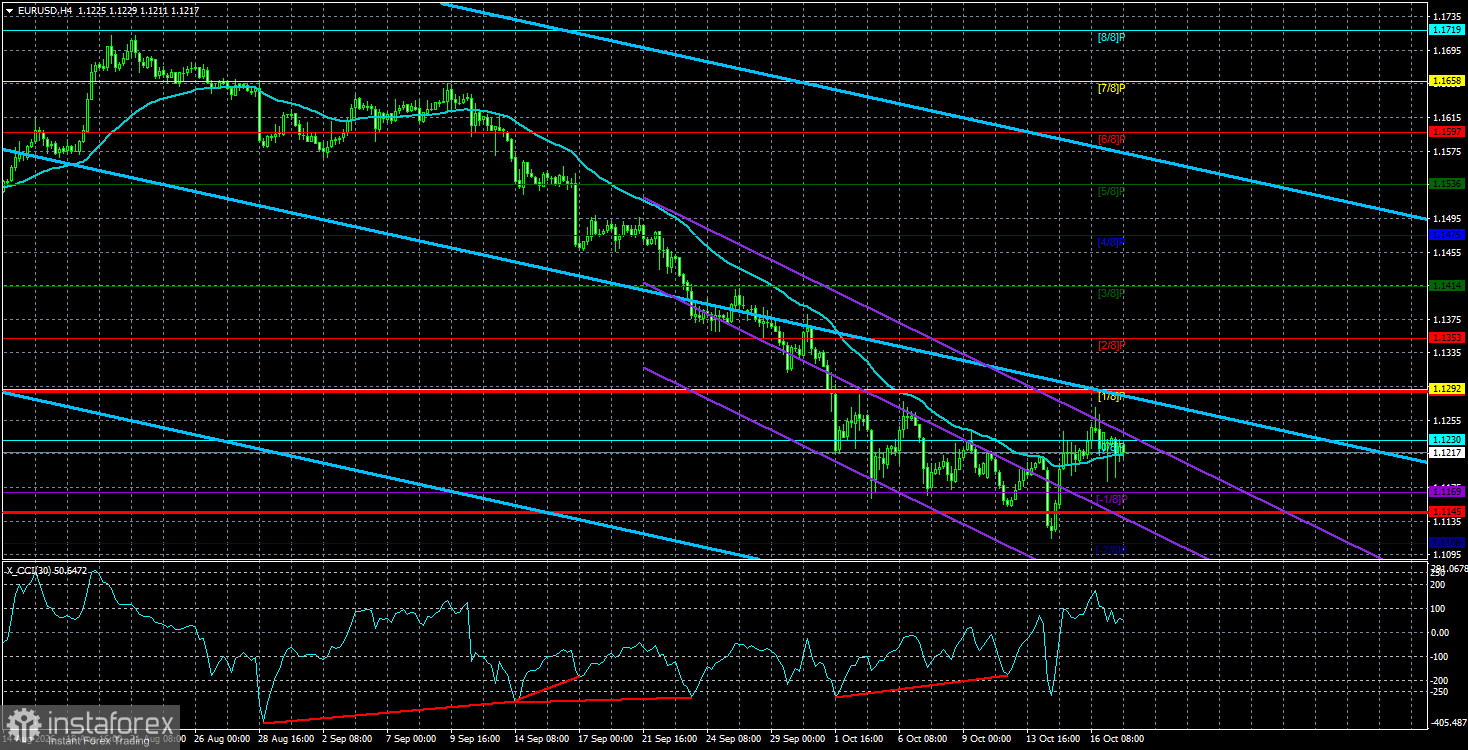
The EUR/USD pair retraced slightly on Monday but traded fairly quietly overall. The day and the week began with a modest decline in the single currency, and most commentators — barely awake — immediately pointed to riots and strikes in France that have spread to other EU countries. The market seems to have found a reason for a fresh euro sell-off. But if you look at price behavior on the smallest timeframes, you see the euro did not materially weaken during the day. Why not, if France is in turmoil? Because the euro has been falling for a month and can't keep falling indefinitely. Riots are bad, of course, but how many "No Kings" rallies against Donald Trump have occurred this year and in previous years? Protests have not always been peaceful. So often, not that Trump had to deploy the National Guard in some states — a step that raises legal questions because the U.S. military cannot be used against the U.S. population in that fashion. But who cares about laws?
In other words, the U.S. is no better or worse than France when it comes to protests and rallies. The euro remains at the bottom, so the market urgently looks for explanations for the currency's low level. When protests in France end, the market will blame the euro for unrest in Belgium or Portugal. Market participants do not want to pay attention to factors that are positive for the euro or negative for the dollar.
So what is all the fuss about? People in France and in some other EU countries are striking because the cost of living has risen. Taxes in the EU keep rising, budgets are perpetually short, and government debt is setting records, much like in the United States. It's the same old story: money is always scarce. The fact that a government — in France or elsewhere — cannot or will not live within its means increasingly angers residents who are being asked to pay for solutions dressed up as national interests.
Sometimes it seems to us diplomacy is the most pointless profession in the modern world. Over the past ten years, diplomats have demonstrated one thing above all: nobody knows how to reach real agreements. Everyone knows how to posture, demand, and issue ultimatums. That sort of diplomacy rarely produces results that benefit the world. From that follow wars, conflicts, coups, riots, and protests. We wonder why people in the U.S. are not protesting when AI is displacing jobs and pushing people out of work. What was AI created for — to leave as many people as possible by the wayside? Then governments ask why populations revolt and demographics decline worldwide. It seems that until governments remember the world is one and people aren't mere cogs to be replaced by more efficient ones, unrest will continue.
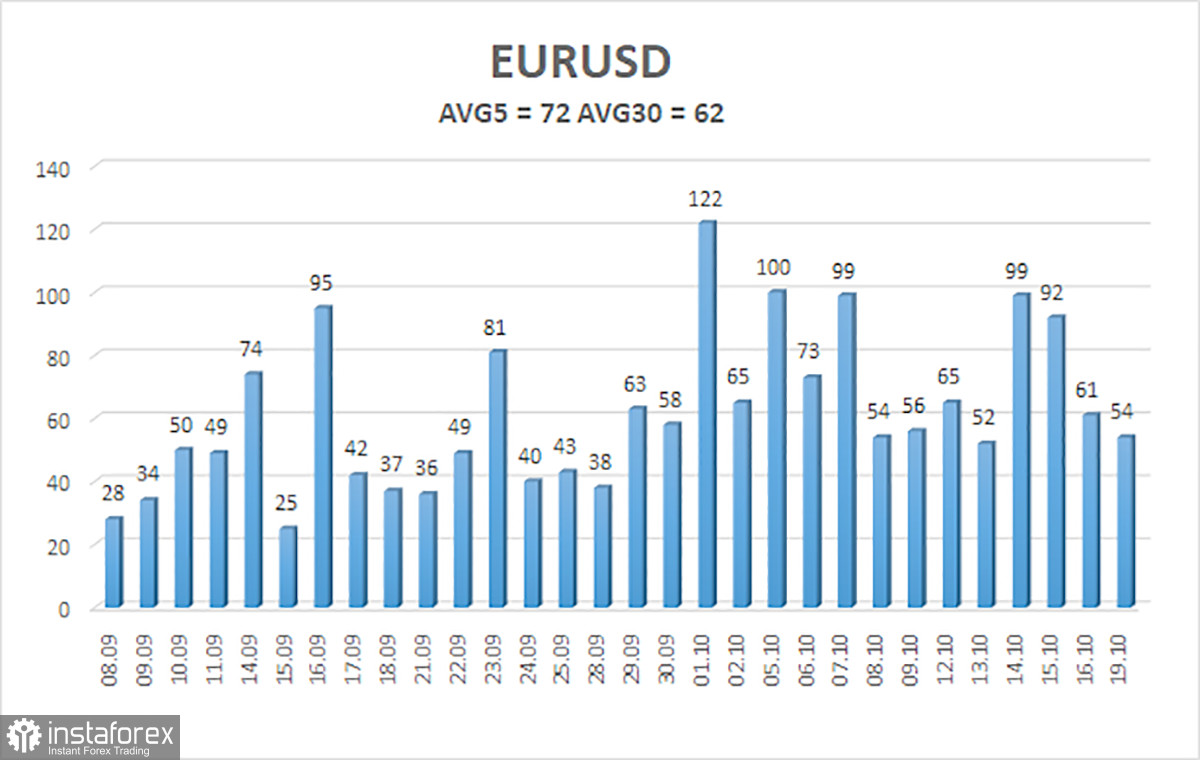
The average volatility of the EUR/USD currency pair over the last 5 trading days as of October 20 is 72 pips and is characterized as "average." We expect the pair to move between 1.1145 and 1.1289 on Tuesday. The upper linear-regression channel has turned down, indicating another trend change. The CCI indicator entered the oversold area five times and formed four "bullish" divergences, which warns that the illogical downtrend may be ending. However, the market is still only weakly responsive to technical signals.
S1 – 1.1169
S2 – 1.1108
R1 – 1.1230
R2 – 1.1292
R3 – 1.1353
EUR/USD continues to move lower, but we still view the decline as a correction ahead of a new uptrend. The global fundamental backdrop for the dollar remains negative, yet in 2026, geopolitics and then the Federal Reserve's hawkish tilt provided strong support for the US currency. With price below the moving average, consider short positions targeting 1.1169 and 1.1145. Above the moving average, long positions are appropriate with targets at 1.1292 and 1.1353.
*La presente analisi del mercato ha un carattere esclusivamente informativo e non rappresenta una guida per l`effettuazione di una transazione.
Le recensioni analitiche di InstaSpot ti renderanno pienamente consapevole delle tendenze del mercato! Essendo un cliente InstaSpot, ti viene fornito un gran numero di servizi gratuiti per il trading efficiente.


