




Nella nostra squadra ci sono più di 7.000.000 trader! Ogni giorno ci impegniamo a far sì che il trading migliori. Conseguiamo grandi risultati e ci muoviamo in avanti.
Il riconoscimento da parte di milioni di trader in tutto il mondo rappresenta l'alta valutazione della nostra attività! Voi avete fatto la vostra scelta e noi faremo la nostra al fine di soddisfare le vostre aspettative!
Assieme siamo una grande squadra!
InstaSpot. Siamo orgogliosi di lavorare per voi!





Attore, campione del mondo di lotta libera e semplicemente un vero maciste russo! Persona venuta dal nulla. Persona che rispecchia i nostri obiettivi. Il segreto del successo di Taktarov consiste nel mirare continuamente al suo scopo.
Dischiudi anche tu tutti gli aspetti del tuo talento! Impara, prova, sbaglia, ma non fermarti!
InstaSpot - la storia delle tue vittorie inizia qui!

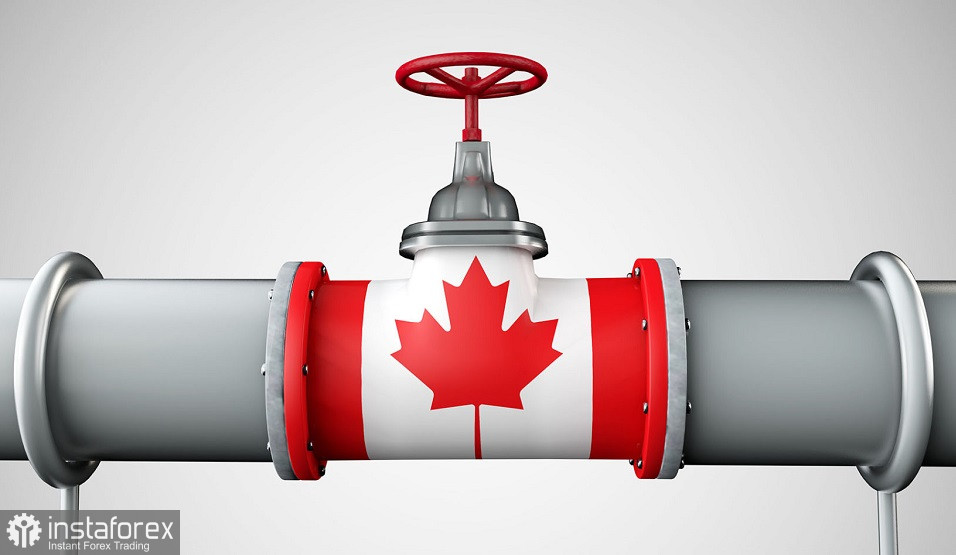
However, the Canadian dollar stands apart in this context. The loonie is not just "holding the line"; it's aggressively climbing, putting strong pressure on the USD/CAD pair. Last week, the pair hit a local high at 1.3715, but on Friday, the price reversed sharply and is currently approaching the bottom of the 35 figure.
It is noteworthy that at the start of the European session, the oil market retreated from its highs on rumors that G7 countries are discussing a coordinated intervention and the release of strategic oil reserves. However, despite the drop in oil prices, bearish sentiment on the USD/CAD pair remains dominant; the commodity nature of the Canadian dollar outweighs the appeal of the safe-haven greenback.
The demand for WTI/WCS oil is driven not only by the fact that its logistics are protected from Middle Eastern escalation but also by technical factors: many funds are shifting from European assets to American/Canadian energy futures, considering them more resilient to global shocks. Canada is the largest supplier of WCS oil, which is priced as "WTI minus discount" due to quality and logistics costs. However, the rise in WTI pulls up the Canadian oil price, which, in turn, supports the loonie due to a substantial influx of currency revenue.
A logical question arises: how long will the "bearish feast" for the USD/CAD pair last? According to some data, G7 intervention could total 300-400 million barrels. On one hand, this is indeed a colossal volume capable of cutting oil prices "here and now." But many experts believe that under the current circumstances, this effect will be short-term and more psychological than fundamental. If the conflict drags on, such "injections" will not resolve the broader issues. This means the loonie will continue to appreciate amid rising WTI/WCS prices.
In other words, the bearish prospects for USD/CAD depend on the duration of the Middle Eastern conflict. Unfortunately, the forecasts here are rather grim—high-ranking sources from Israeli Channel 12 stated that military actions against Iran will last "at least another five weeks." Meanwhile, the conflicting parties have effectively transitioned to a strategy of "energy strangulation." In particular, Israeli aviation has attacked around 30 large fuel terminals over the past two days. Additionally, the U.S. Navy has struck three Iranian oil tankers in the Persian Gulf. In response, the Iranians have attacked an oil refinery in Saudi Arabia.
At the same time, Canadian infrastructure remains fully secure and is reportedly operating at full capacity amid increased demand. This makes the loonie one of the most attractive currencies at the moment.
We must also consider the "side effects" of the current situation. Prior to the escalation, inflation in Canada was close to the target of 2% (in January, the consumer price index was 2.3%), but the rising price of WTI will inevitably be reflected in gasoline costs, adding at least 0.5-0.8 percentage points to the overall CPI. Then secondary inflation effects will emerge—specifically, higher logistics costs will push up food prices, which are already rising rapidly (4.8% year-on-year). The Bank of Canada's rhetoric will also tighten, as it will be forced to respond to the situation.
Such prospects provide additional support for the Canadian dollar.
Thus, until clear signals of de-escalation in the Middle East conflict emerge, bearish sentiment toward the USD/CAD pair will likely persist. Therefore, corrective pullbacks in the pair should be used as an opportunity to open short positions.
The technical indicators support this view as well. On the daily chart, the pair lies between the middle and lower lines of the Bollinger Bands indicator and below all lines of the Ichimoku indicator, indicating a bearish "Parade of Lines" signal. A similar pattern has formed on the H4 timeframe. The target for the southward movement is the level of 1.3540 (the lower Bollinger Bands line on D1 and H4).
*La presente analisi del mercato ha un carattere esclusivamente informativo e non rappresenta una guida per l`effettuazione di una transazione.
Le recensioni analitiche di InstaSpot ti renderanno pienamente consapevole delle tendenze del mercato! Essendo un cliente InstaSpot, ti viene fornito un gran numero di servizi gratuiti per il trading efficiente.


