




Nella nostra squadra ci sono più di 7.000.000 trader! Ogni giorno ci impegniamo a far sì che il trading migliori. Conseguiamo grandi risultati e ci muoviamo in avanti.
Il riconoscimento da parte di milioni di trader in tutto il mondo rappresenta l'alta valutazione della nostra attività! Voi avete fatto la vostra scelta e noi faremo la nostra al fine di soddisfare le vostre aspettative!
Assieme siamo una grande squadra!
InstaSpot. Siamo orgogliosi di lavorare per voi!





Attore, campione del mondo di lotta libera e semplicemente un vero maciste russo! Persona venuta dal nulla. Persona che rispecchia i nostri obiettivi. Il segreto del successo di Taktarov consiste nel mirare continuamente al suo scopo.
Dischiudi anche tu tutti gli aspetti del tuo talento! Impara, prova, sbaglia, ma non fermarti!
InstaSpot - la storia delle tue vittorie inizia qui!

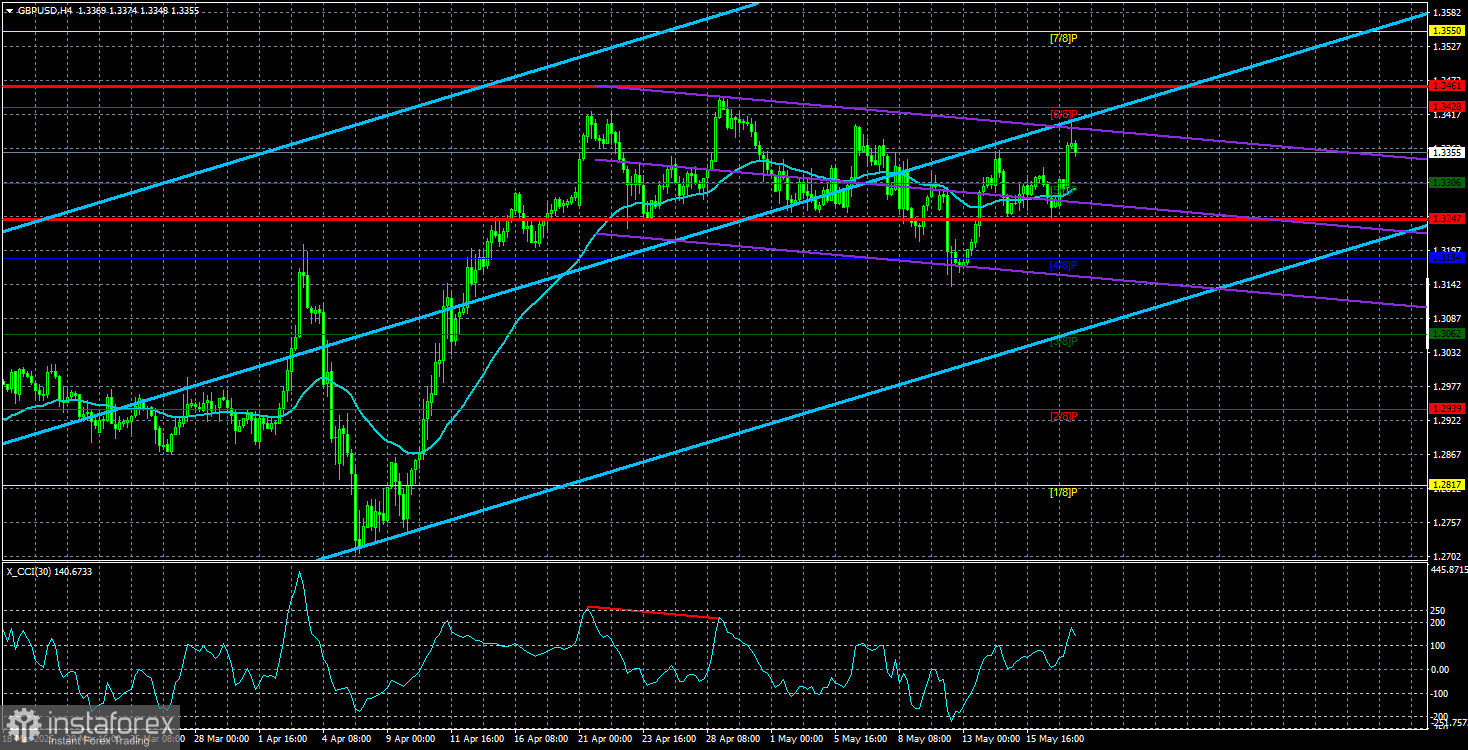
The GBP/USD currency pair traded higher on Monday, and we can "thank" the Moody's rating agency for that. As noted in the EUR/USD review, the U.S. credit rating was downgraded by one notch, and now all three major agencies (Fitch, S&P, and Moody's) assess it at AA1.
This isn't a major issue, but it is yet another deterioration for which Donald Trump can be held accountable. For the market, it wasn't a "serious reason" to sell the dollar, but rather a new excuse to get rid of the U.S. currency. Just look at GBP/USD's movements over the past month—they have been flat. Now consider the weak Q1 GDP report, the solid NonFarm Payrolls and unemployment numbers, Jerome Powell's hawkish stance against easing, the Federal Reserve's meeting with no hints of rate cuts in 2025, and the Bank of England's rate cut. These bullish factors for the dollar only pushed it up 280 pips. On Monday alone, it lost 120–130 pips.
So, our stance remains the same: considering all fundamental and macroeconomic factors, the dollar should already be back at 1.23–1.24. But the market continues to ignore nearly all fundamentals and macro data, even those favoring the dollar. Why? One word: Trump.
Half the world is openly opposed to the American president and U.S. policy. The other half is simply looking for alternative markets and investment options—stepping away from a country that can, under the guise of "fairness," disrupt trade relations and demand more money for nothing. The U.S. has become an unreliable trade partner globally. Of course, smaller economies can't afford to abandon U.S. trade, nor can the EU or China. So negotiations will have to continue, potentially for years.
It's important to remember that trade involves not only countries but also private businesses and corporations. After Trump's erratic policies, many have chosen to redirect exports away from the U.S. Many Chinese companies have already done this, increasing exports to other countries after U.S. tariffs exceeded 100%. Other corporations may follow suit. Consequently, U.S. imports will inevitably decline. As for U.S. exports, they're already suffering due to widespread boycotts. In 2025, buying American cars or alcohol has become uncool, and there are plenty of alternatives.
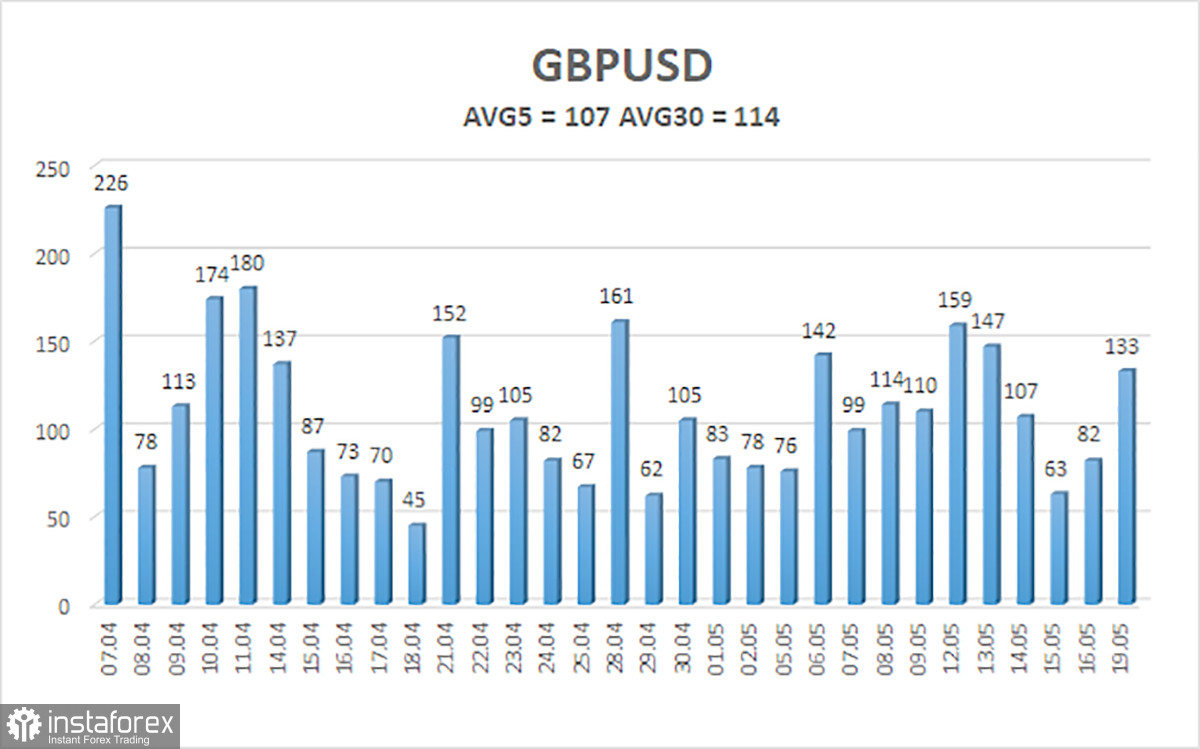
The average volatility for GBP/USD over the past five trading days is 107 pips, which is considered high. On Tuesday, May 20, we expect the pair to move from 1.3247 to 1.3461. The long-term regression channel is pointed up, indicating a clear bullish trend. The CCI indicator previously formed a bearish divergence, which triggered the latest (already completed) decline.
S1: 1.3306
S2: 1.3184
S3: 1.3062
R1: 1.3428
R2: 1.3550
R3: 1.3672
The GBP/USD pair remains in an uptrend and has resumed its correction thanks to a combination of factors (Fed and BoE policy, de-escalation of the trade war). We still believe there is no fundamental basis for the pound's growth. If trade tensions continue to ease—as appears to be the case—the dollar may return to the 1.2300–1.2400 range, from where it began its fall during the "Trump era." However, this scenario seems hard to believe given the market's current reluctance to buy the dollar.
We consider long positions unjustified, but the market also avoids short positions, which means a sharp drop is unlikely. We may see a new leg down with targets at 1.3247 and 1.3184 in the near term, but only if the price consolidates below the moving average.
Linear Regression Channels help determine the current trend. If both channels are aligned, it indicates a strong trend.
Moving Average Line (settings: 20,0, smoothed) defines the short-term trend and guides the trading direction.
Murray Levels act as target levels for movements and corrections.
Volatility Levels (red lines) represent the likely price range for the pair over the next 24 hours based on current volatility readings.
CCI Indicator: If it enters the oversold region (below -250) or overbought region (above +250), it signals an impending trend reversal in the opposite direction.
*La presente analisi del mercato ha un carattere esclusivamente informativo e non rappresenta una guida per l`effettuazione di una transazione.
Le recensioni analitiche di InstaSpot ti renderanno pienamente consapevole delle tendenze del mercato! Essendo un cliente InstaSpot, ti viene fornito un gran numero di servizi gratuiti per il trading efficiente.


