




Nella nostra squadra ci sono più di 7.000.000 trader! Ogni giorno ci impegniamo a far sì che il trading migliori. Conseguiamo grandi risultati e ci muoviamo in avanti.
Il riconoscimento da parte di milioni di trader in tutto il mondo rappresenta l'alta valutazione della nostra attività! Voi avete fatto la vostra scelta e noi faremo la nostra al fine di soddisfare le vostre aspettative!
Assieme siamo una grande squadra!
InstaSpot. Siamo orgogliosi di lavorare per voi!





Attore, campione del mondo di lotta libera e semplicemente un vero maciste russo! Persona venuta dal nulla. Persona che rispecchia i nostri obiettivi. Il segreto del successo di Taktarov consiste nel mirare continuamente al suo scopo.
Dischiudi anche tu tutti gli aspetti del tuo talento! Impara, prova, sbaglia, ma non fermarti!
InstaSpot - la storia delle tue vittorie inizia qui!

The U.S. Dollar Index updated a three-year low on Monday, falling into the 97 range (for the first time since March 2022). The greenback started the trading week with a downward gap amid a nearly empty economic calendar (it is also Easter Monday). Among the reasons for the dollar's sharp decline are the rising risk of a U.S. recession due to the bleak outlook of the trade war and Donald Trump's alleged desire to fire Federal Reserve Chair Jerome Powell. While the former is the key factor weighing on the dollar, the "Trump vs. Powell" conflict is mostly noise—albeit louder than during Trump's first presidential term.
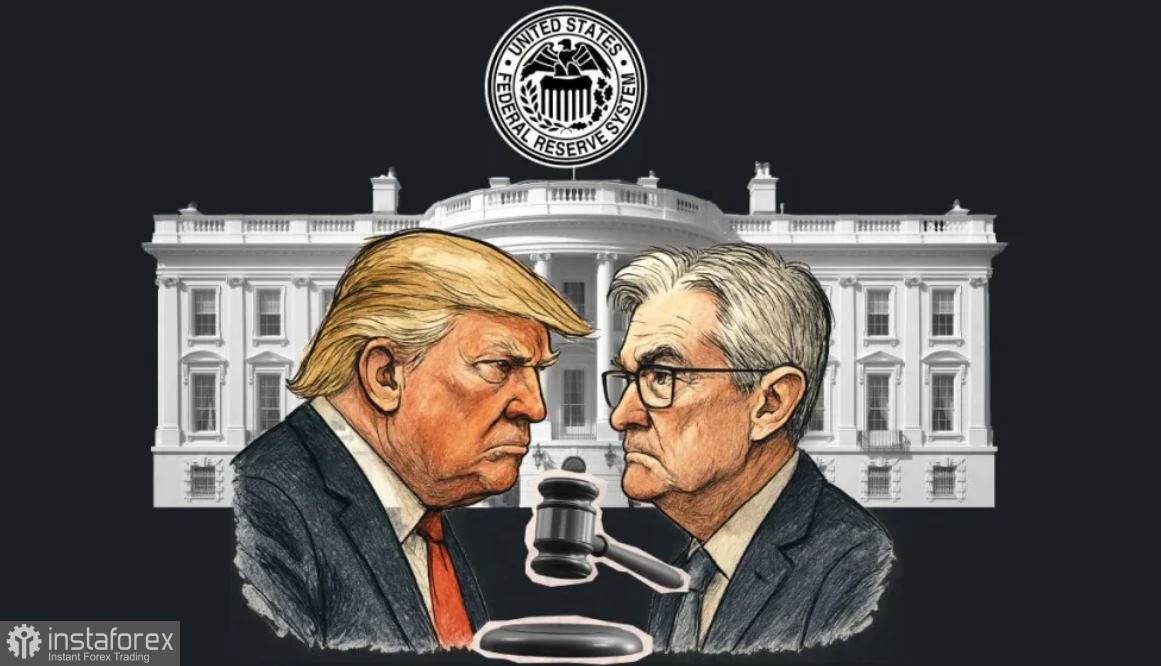
Many analysts now draw parallels with 2019–2020, when Trump also pressured the Fed Chair, demanding looser monetary policy. At the time, he called for rate cuts and a new round of quantitative easing. Trump openly expressed dissatisfaction with Powell and urged him to resign. The president's team even explored legal options to remove Powell, but the Fed Chair's position is well protected from political pressure. As a result, Trump had to back down.
This year, the story continues. However, direct analogies to 2019–2020 are not entirely appropriate. Trump is now making more radical decisions, Congress is controlled by Republicans, and his inner circle is more loyal to his agenda. Therefore, he may also act more aggressively on the Powell issue.
Under U.S. law, the president cannot fire the Fed Chair at will but can initiate the process. Fed Governors, including the Chair, can only be removed "for cause." Though vague, this term legally refers to serious grounds, such as misconduct or dereliction of duty. Disagreements over monetary policy are not sufficient cause. However, Trump could theoretically claim Powell is professionally incompetent and sign an executive order to remove him. Powell would almost certainly appeal to federal court, which would likely side with him—unless the president presents strong evidence.
Another theoretical path is impeachment, which a member of the House of Representatives could initiate. While impeachment is not limited to presidents or judges and can technically apply to any federal official, such precedents are virtually nonexistent. In Powell's case, it would be extremely unlikely—especially since impeachment requires accusations of major misconduct, such as corruption. Political disagreements don't qualify.
In my view, Trump—despite his willingness to act radically—is unlikely to pursue this battle due to its weak legal foundation, not to mention the extreme market volatility such a move would provoke. According to The New York Times, Trump is leaning toward a wait-and-see approach, as Powell's term ends in May next year. Legal complications and market risks are the main reasons.
It's also worth recalling the events of last fall when Trump's ally Elon Musk called for a "restructuring of the Fed" even before the president's inauguration. Musk supported Senator Mike Lee's demand for Powell's resignation, stating that the Fed has strayed from the Constitution. He argued that the central bank should be subordinated to the executive branch, launching the hashtag #EndTheFed on social media. Those calls caused turbulence in markets (including EUR/USD), but as we see now, no legislative action has followed.
Four months into Trump's new term, there's no sign of reforming the Fed—likely, there won't be. Similarly, Powell's removal will likely remain just another unfulfilled threat.
Conclusion: The market will likely absorb this "fundamental factor" quickly—unless Trump tries to remove Powell with a direct executive order.
Technical outlook: On nearly all timeframes, EUR/USD is between the middle and upper Bollinger Bands (H1, H4, D1) or on the upper band (W1, MN). The Ichimoku indicator has produced a bullish "Parade of Lines" signal on H4 and D1, confirming the priority of long positions. The ongoing U.S.–China trade war and lack of a deal with the EU will keep pressure on the dollar—regardless of the Powell situation. Longs remain relevant. Pullbacks should be viewed as opportunities to open long positions with targets at 1.1550 (upper Bollinger Band on H4) and 1.1600 (upper Bollinger Band on D1).
*La presente analisi del mercato ha un carattere esclusivamente informativo e non rappresenta una guida per l`effettuazione di una transazione.
Le recensioni analitiche di InstaSpot ti renderanno pienamente consapevole delle tendenze del mercato! Essendo un cliente InstaSpot, ti viene fornito un gran numero di servizi gratuiti per il trading efficiente.


