




La leggenda nel team InstaSpot!!
Legenda! Pensi che sia troppo patetico? Ma come dobbiamo chiamare un uomo, che è diventato il primo dell'Asia a vincere il campionato mondiale di scacchi a 18 anni e che è diventato il primo Gran Maestro indiano a 19? Fu l'inizio di un duro cammino verso il titolo di campione del mondo, l'uomo che divenne per sempre una parte della storia di scacchi. Un'altra leggenda nel team InstaSpot!





Il Borussia è una delle squadre di calcio più titolate in Germania, che ha ripetutamente dimostrato ai tifosi che lo spirito di competizione e leadership porta al successo. Fai trading nello stesso modo in cui lo fanno i professionisti dello sport - fiduciosamente e attivamente. Segui il Borussia FC e sii avanti con InstaSpot!

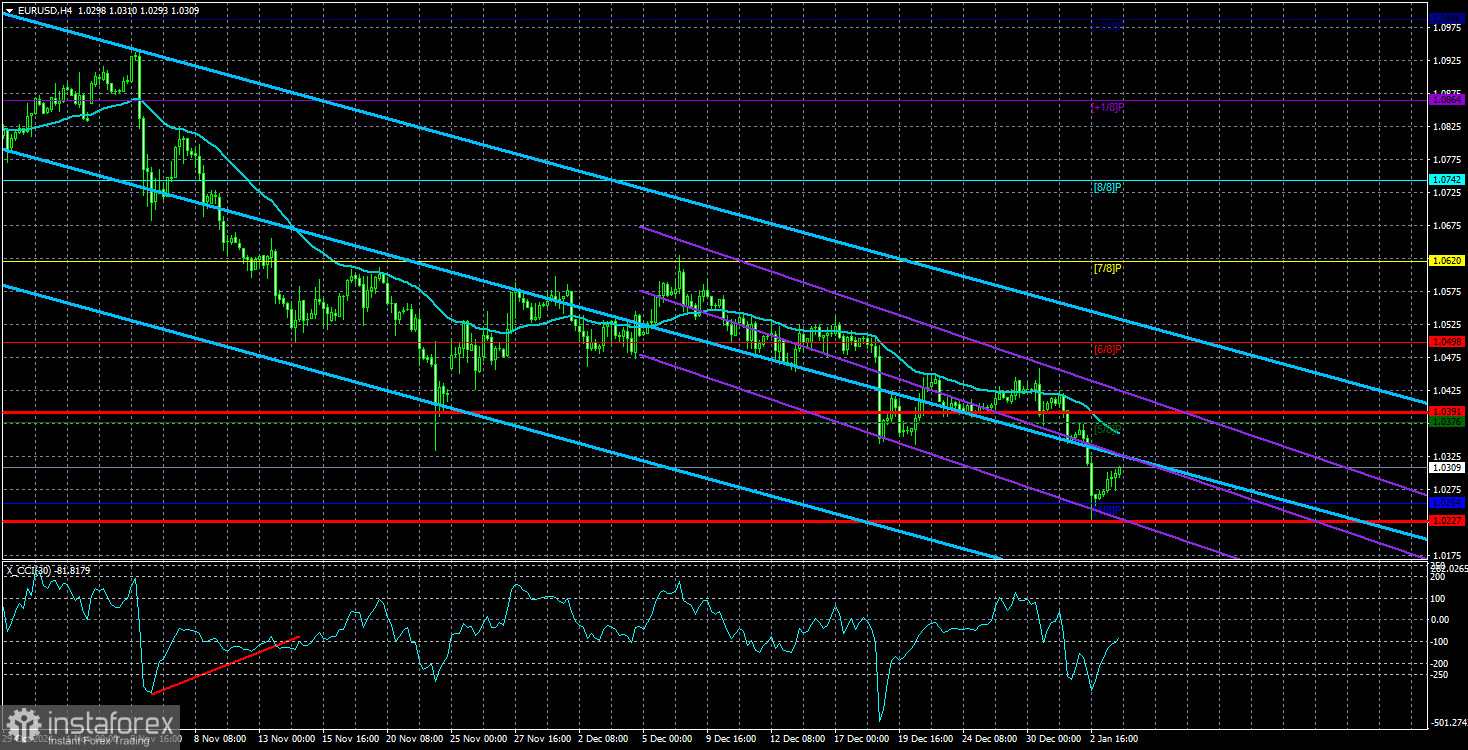
The EUR/USD currency pair experienced a recovery on Friday after a sharp decline on Thursday. On Thursday, the euro dropped over 100 pips without any obvious reason, which is quite significant given that the macroeconomic calendar was nearly empty. However, such a fall in the euro should not be surprising. The pair can decline, rise, or remain stagnant independently of macroeconomic or fundamental factors. There are always global influences affecting price formation, which we often discuss. This means that if a major global factor arises—such as a potential change in monetary policy from any central bank—the market may begin to price in this possibility well in advance, even if the change never actually happens. As the saying goes, "buy the rumor, sell the fact," or vice versa.
Thus, the event might not have occurred yet—or may never happen—but if a strong fundamental factor is on the horizon or already in play, the market may reflect this influence for weeks or months. What we saw on Thursday was simply a continuation of what has been observed over the past several months: the euro's decline. This drop has plenty of justifications and has been brewing throughout 2024, as we've discussed numerous times.
Of course, the euro's decline will not last forever, but technical analysis on higher timeframes indicates that the long-term downtrend, which has lasted 16 years, is not over. If so, why should anyone in the market expect the euro to rise when it has declined for 16 years? Macroeconomic factors will only influence the pair's short-term movements. For instance, weak economic data from the U.S. may temporarily weaken the dollar, but this won't reverse the overarching downtrend. The global trends and factors are currently quite clear: the Federal Reserve is already cutting rates but is doing so very slowly and reluctantly. Meanwhile, contrary to market expectations, the European Central Bank is easing monetary policy much more aggressively.
In the upcoming week, the Eurozone will see a few noteworthy events, though they will be limited in number. The main highlight will be the inflation report for December from Germany and the Eurozone, along with less significant reports on retail sales and unemployment rates. Other reports will have even less impact on the pair's movements. Greater interest will likely be drawn to U.S. macroeconomic data, which we will discuss in the GBP/USD article. However, it is unlikely that this week will see the end of even the medium-term downtrend. At best, the euro can hope for a correction.
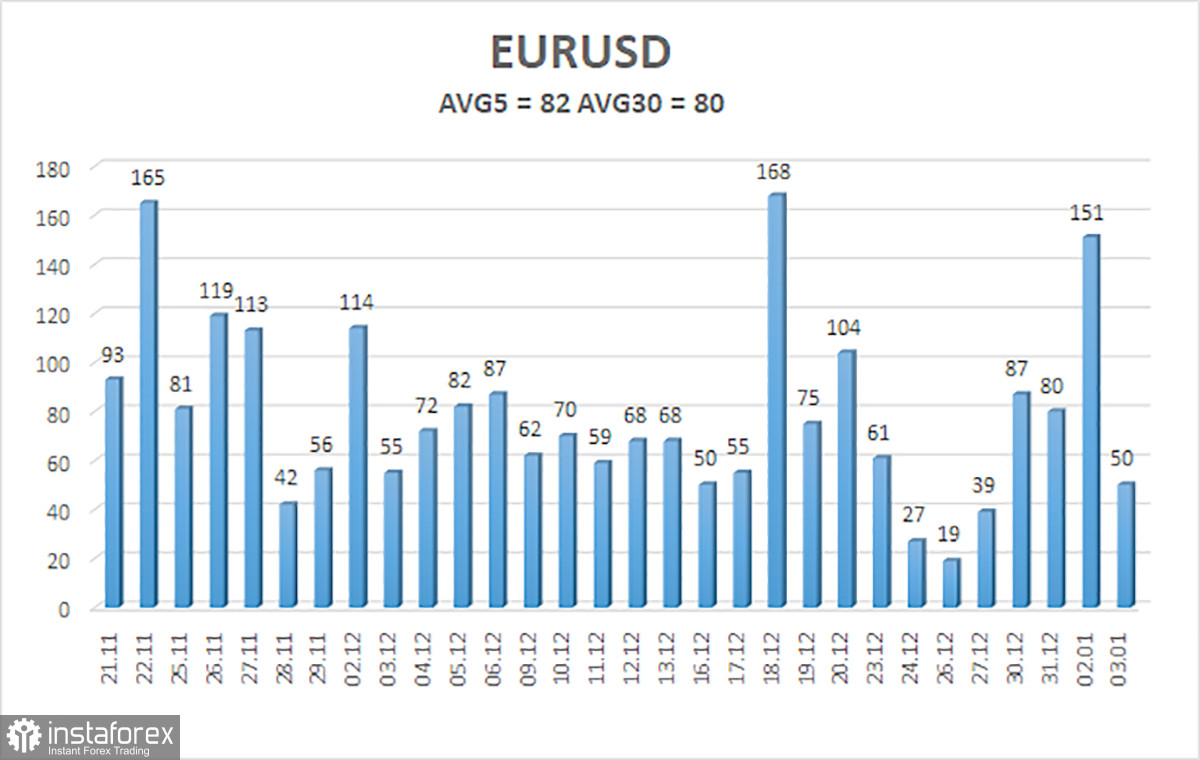
As of January 6, the average volatility of the EUR/USD currency pair over the past five trading days is 82 pips, which is considered "medium." We expect the pair to trade within the range of 1.0227 to 1.0391 on Monday. The upper linear regression channel is trending downward, indicating that the global downtrend continues. Additionally, the CCI indicator has entered the oversold area again and has formed a new bullish divergence. However, this signal suggests only a potential correction at most.
Nearest Support Levels:
Nearest Resistance Levels:
The EUR/USD pair is likely to continue its downward trend. In recent months, we have consistently noted our expectations for euro depreciation in the medium term, strongly supporting the overall bearish outlook, which seems far from complete. The market appears to have already priced in all future rate cuts by the Federal Reserve, making it unlikely that the dollar will experience significant weakening in the medium term.
Short positions remain relevant, with targets set at 1.0254 and 1.0227, as long as the price stays below the moving average. If you trade using a "pure" technique, long positions may be considered if the price rises above the moving average, with a target at 1.0498. However, any upward movement should currently be viewed as a correction.
Linear Regression Channels help determine the current trend. If both channels are aligned, it indicates a strong trend.
Moving Average Line (settings: 20,0, smoothed) defines the short-term trend and guides the trading direction.
Murray Levels act as target levels for movements and corrections.
Volatility Levels (red lines) represent the likely price range for the pair over the next 24 hours based on current volatility readings.
CCI Indicator: If it enters the oversold region (below -250) or overbought region (above +250), it signals an impending trend reversal in the opposite direction.
*La presente analisi del mercato ha un carattere esclusivamente informativo e non rappresenta una guida per l`effettuazione di una transazione.
Le recensioni analitiche di InstaSpot ti renderanno pienamente consapevole delle tendenze del mercato! Essendo un cliente InstaSpot, ti viene fornito un gran numero di servizi gratuiti per il trading efficiente.


