




Nella nostra squadra ci sono più di 7.000.000 trader! Ogni giorno ci impegniamo a far sì che il trading migliori. Conseguiamo grandi risultati e ci muoviamo in avanti.
Il riconoscimento da parte di milioni di trader in tutto il mondo rappresenta l'alta valutazione della nostra attività! Voi avete fatto la vostra scelta e noi faremo la nostra al fine di soddisfare le vostre aspettative!
Assieme siamo una grande squadra!
InstaSpot. Siamo orgogliosi di lavorare per voi!





Attore, campione del mondo di lotta libera e semplicemente un vero maciste russo! Persona venuta dal nulla. Persona che rispecchia i nostri obiettivi. Il segreto del successo di Taktarov consiste nel mirare continuamente al suo scopo.
Dischiudi anche tu tutti gli aspetti del tuo talento! Impara, prova, sbaglia, ma non fermarti!
InstaSpot - la storia delle tue vittorie inizia qui!

The USD/CAD pair is rapidly climbing, setting new highs. On Thursday night, the price stood at 1.3840—its highest level since April, when the pair reached a high of 1.3845 for the year. If the price continues to rise, USD/CAD buyers will surpass the annual high and move into the 1.39 area. Looking ahead, the pair may also reach the 1.40 area.
The U.S. dollar index has been under pressure for two consecutive days. However, this does not prevent USD/CAD bulls from confidently pushing higher, disregarding the greenback's broad weakness. The pair's rise is primarily due to the Canadian dollar's weakness. The reason is the dovish outcome of the Bank of Canada's July meeting, which was announced on Wednesday.
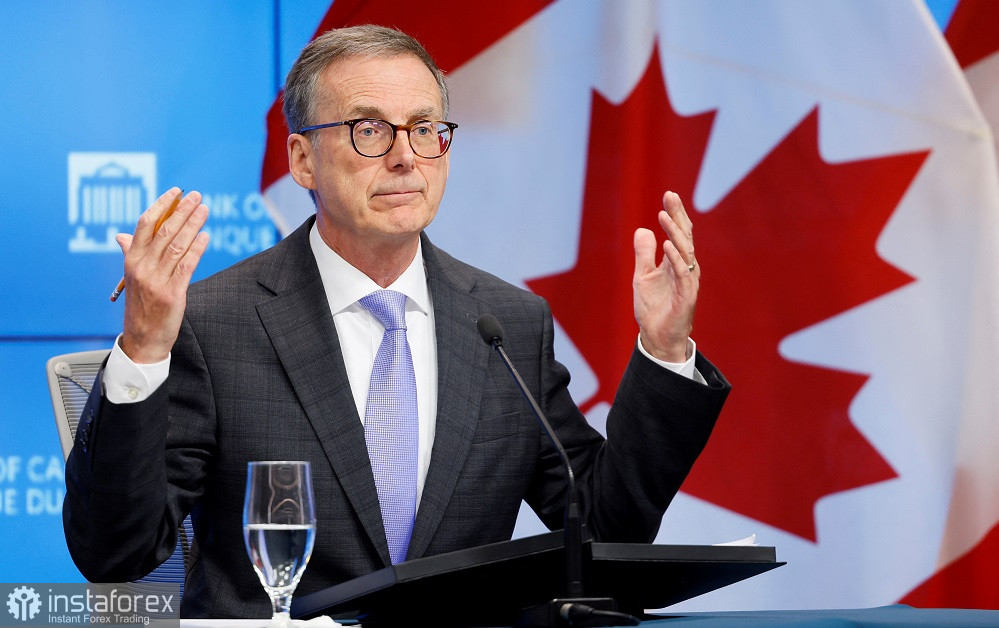
As a result of the July meeting, the central bank lowered the interest rate by 25 basis points, bringing it down to 4.5%. Ahead of this meeting, there was some intrigue due to the contradictory inflation report published in Canada last week. The report reflected a minor slowdown in the Consumer Price Index and an acceleration in the core CPI. The Canadian labor market also showed mixed results: despite rising unemployment, the growth rate of average hourly wages accelerated to 5.4% in annual terms (up from 5.1% in the previous month).
These figures "sowed doubts and confusion" among some experts, who had anticipated that the Bank of Canada would adopt a wait-and-see stance this month, mainly since the central bank head had repeatedly spoken about a cautious approach to the easing process.
But—no! The Bank of Canada lowered the rate and said that if inflation continues to slow down, the central bank will take additional steps to ease monetary policy at one of the upcoming meetings.
Furthermore, the central bank downwardly revised its economic growth forecast for 2024, citing a significant reduction in consumption due to decreased demand for automotive transport and overseas travel. Furthermore, the central bank noted that Canadians are allocating more of their income to pay off current/accumulated debts. In the published report, the Bank of Canada expects GDP to increase by 1.2% this year, whereas the April forecast had predicted a more substantial growth of 1.5%.
Commenting on the July meeting, Bank of Canada Governor Tiff Macklem delivered dovish messages, stating in particular that the central bank expects further easing of inflationary pressure.
"If inflation continues to ease broadly in line with our forecast, it is reasonable to expect further cuts in our policy interest rate. The timing will depend on how we see these opposing forces playing out," Macklem said.
In response to a question about how many rate cuts to expect by the end of 2024, Macklem rejected the idea the Bank of Canada is now on a predetermined cutting path.
Following the July meeting, most experts concluded that the Bank of Canada will cut rates at two of the three remaining meetings this year. The only factor that could hinder this scenario is if inflation unexpectedly accelerates.
Such prospects have put additional pressure on the Canadian dollar. The USD/CAD pair has been in a strong upward trend for the second consecutive week, rising from 1.3590 to the current level of 1.3840.
The upward trend in USD/CAD is also driven by the rise in risk aversion following the People's Bank of China's decision. During the Asian session on Thursday, the PBOC lowered the rate on its one-year medium-term lending facility to 2.3% from 2.5% previously – just a few days after the central bank announced a cut in the benchmark lending rate to stimulate the economy. This was a rather unexpected move that made investors adopt a cautious stance. According to experts interviewed by Bloomberg, this decision indicates a need to support growth in the second quarter, which turned out worse than expected (China's GDP grew by only 4.7% compared to a forecast of 5.1%).
Thus, the prevailing fundamental background supports further growth in USD/CAD. On all the higher time frames (from H4 and above), the pair is either at the upper line or between the middle and upper lines of the Bollinger Bands indicator, as well as above all lines of the Ichimoku indicator, which has formed a bullish "Parade of Lines" signal on the daily chart. The nearest (and currently main) target for the upward movement is 1.3910, corresponding to the upper line of the Bollinger Bands on the MN timeframe.
*La presente analisi del mercato ha un carattere esclusivamente informativo e non rappresenta una guida per l`effettuazione di una transazione.
Le recensioni analitiche di InstaSpot ti renderanno pienamente consapevole delle tendenze del mercato! Essendo un cliente InstaSpot, ti viene fornito un gran numero di servizi gratuiti per il trading efficiente.


