




Tim kami memiliki lebih dari 7.000.000 trader!
Setiap harinya kami bekerja sama untuk meningkatkan trading. Kami memperoleh hasil tinggi dan terus bergerak maju.
Pengakuan dari jutaan trader diseluruh dunia merupakan apresiasi terbaik dari kerja kami! Anda membuat pilihan anda dan kami akan melakukan semua yang dibutuhkan untuk memenuhi ekspektasi anda!
We are a great team together!
InstaSpot. Bangga bekerja bersama anda!





Seorang Aktor, juara 6 turnamen UFC dan pahlawan sesungguhnya!
Pria yang berhasil. Pria yang berusaha keras.
Rahasia dibalik kesuksesan Taktarov adalah pergerakan konstan menuju target.
Tunjukkan seluruh sisi dari bakat anda!
Temukan, coba, gagal - namun jangan pernah berhenti!
InstaSpot. Cerita sukses anda dimulai disini!

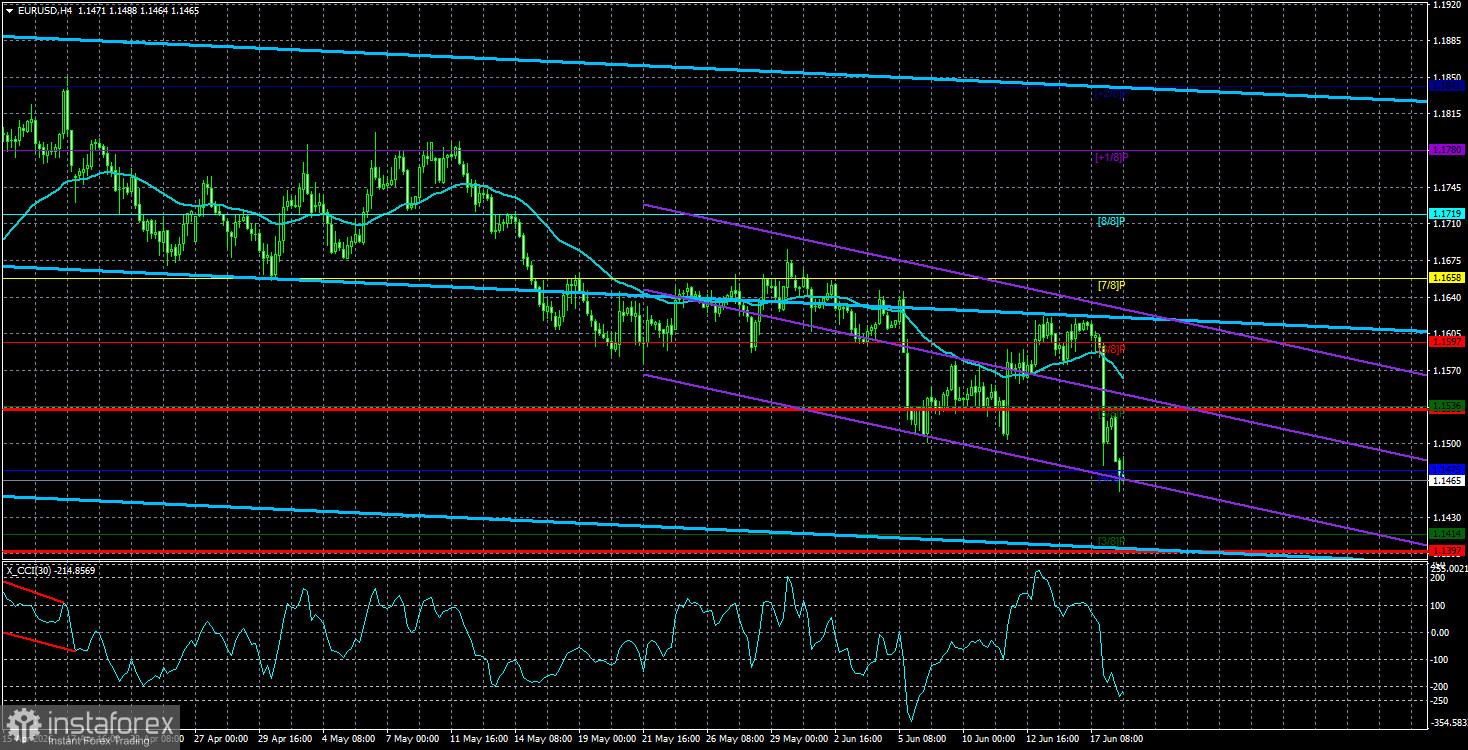
The EUR/USD currency pair lost around 150 pips on Wednesday evening and throughout Thursday. On Wednesday evening, there was a 120-pip collapse, followed by a slight recovery, then another drop. What caused such a significant decline in the euro and such a strong rise in the U.S. dollar? Let's break it down.
To put it plainly, the Federal Reserve raised its inflation forecasts for 2026 from 2.7% to 3.6%, removed any mention of easing monetary policy from the final communique, and half of the FOMC committee indicated through the "dot plot" their readiness for at least one rate hike by the end of the year. Moreover, a third of the committee members forecasted two or more rate hikes by the end of the year. Kevin Warsh notably refrained from providing his forecast.
What did the market expect ahead of the Fed meeting? Expert forecasts clearly indicated that due to rising inflation to 4.2%, the baseline scenario for the end of 2026 was a 0.25% rate hike. That is what the Fed communicated to traders on Wednesday evening. So, what was the conflict? The market was expecting an announcement of one tightening and received it. In our view, the matter lies precisely in that third of the FOMC Committee that forecasted two or more rate hikes. The market reasonably concluded that if, three months ago, the majority of Fed officials were open to one rate cut, and now half the committee supports tightening, it is possible that in another three months the majority will support two or more 0.25% rate hikes. Simply put, "hawkish" sentiment has not only strengthened within the Fed; it is currently intensifying. This is an unfinished process.
Thus, we must acknowledge that the results of the Fed meeting were more "hawkish" than expected, and even Kevin Warsh stated at the press conference that price stability in the U.S. is the central bank's primary goal. It is interesting to consider how Donald Trump will react to a rate hike. Recall that a key condition for Warsh's appointment as Fed Chair was his readiness to follow the White House's directives. This leads to two possibilities: either the White House and the Fed understand that the end of the war in the Middle East will lead to a slowdown in inflation, and in that case, a rate hike may not be necessary, or inflation is quickly brought back to levels close to the target, after which the cycle of monetary policy easing could resume.
Trump cannot fail to understand that, under the current circumstances, it is simply impossible to keep rates at their current levels, as inflation would spike even further. However, a swift conclusion to the war in the Middle East (yesterday it was reported that the deal with Iran has been signed remotely) could indicate that Donald Trump is eager to end the war at any cost. This urgency arises because Congressional elections are approaching, inflation has surged to 4.2%, and the Fed is now compelled to raise the key rate, contrary to the wishes of the American president. As a result, the U.S. economy will slow down, which is something Trump surely does not want.
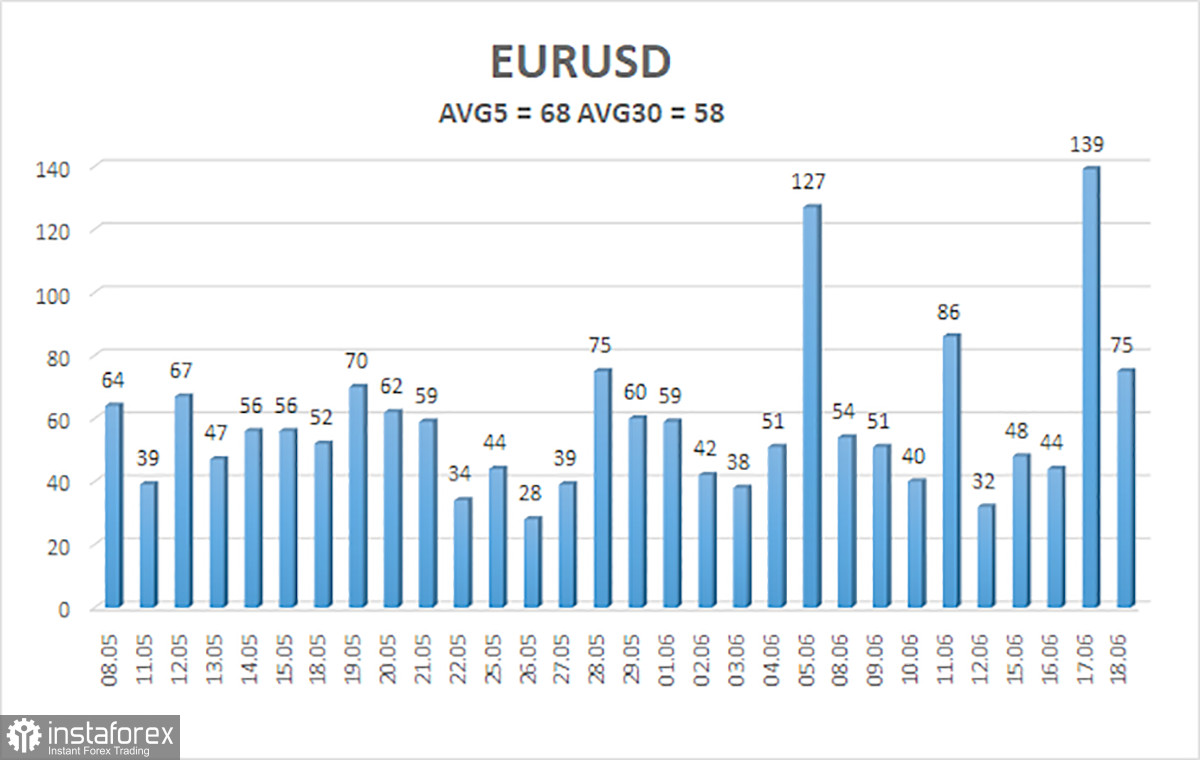
The average volatility of the EUR/USD currency pair over the last five trading days, as of June 19, is 68 pips and is considered "average." We expect the pair to move between 1.1397 and 1.1533 on Friday. The upper linear regression channel has turned sideways, indicating that the downward trend is not yet complete. The CCI indicator has entered the oversold area, signaling a potential end to the correction, and is now preparing to form a "bullish" divergence.
The EUR/USD pair continues its downward movement, presumed to be a correction within the context of a global upward trend. The global fundamental backdrop for the dollar remains extremely negative, but in 2026, geopolitics and, later, the Fed's hawkish stance provided strong support for the U.S. currency. When the price is below the moving average, short positions can be considered with targets at 1.1414 and 1.1397. Above the moving average, long positions are relevant with targets of 1.1597 and 1.1658. The conclusion of the conflict in the Middle East has not created any issues for the dollar. Bears are notably strong at this time, but sideways movement persists on the daily timeframe, and the dollar's growth potential is limited.
*Analisis pasar yang diposting disini dimaksudkan untuk meningkatkan pengetahuan Anda namun tidak untuk memberi instruksi trading.
Tinjauan analitis InstaSpot akan membuat Anda menyadari sepenuhnya tren pasar! Sebagai klien InstaSpot, Anda dilengkapi dengan sejumlah besar layanan gratis untuk trading yang efisien.


