




我们的团队有超过700万的操盘手!
我们每天都在一起努力改善交易。我们得到了很高的成绩,并继续前进。
世界各地数以百万计的操盘手的认可是我们工作的最大赞赏! 您做出了您的选择,我们将尽一切努力来满足您的期望!
我们是一个共同的伟大团队!
InstaSpot. 自豪地为您工作!



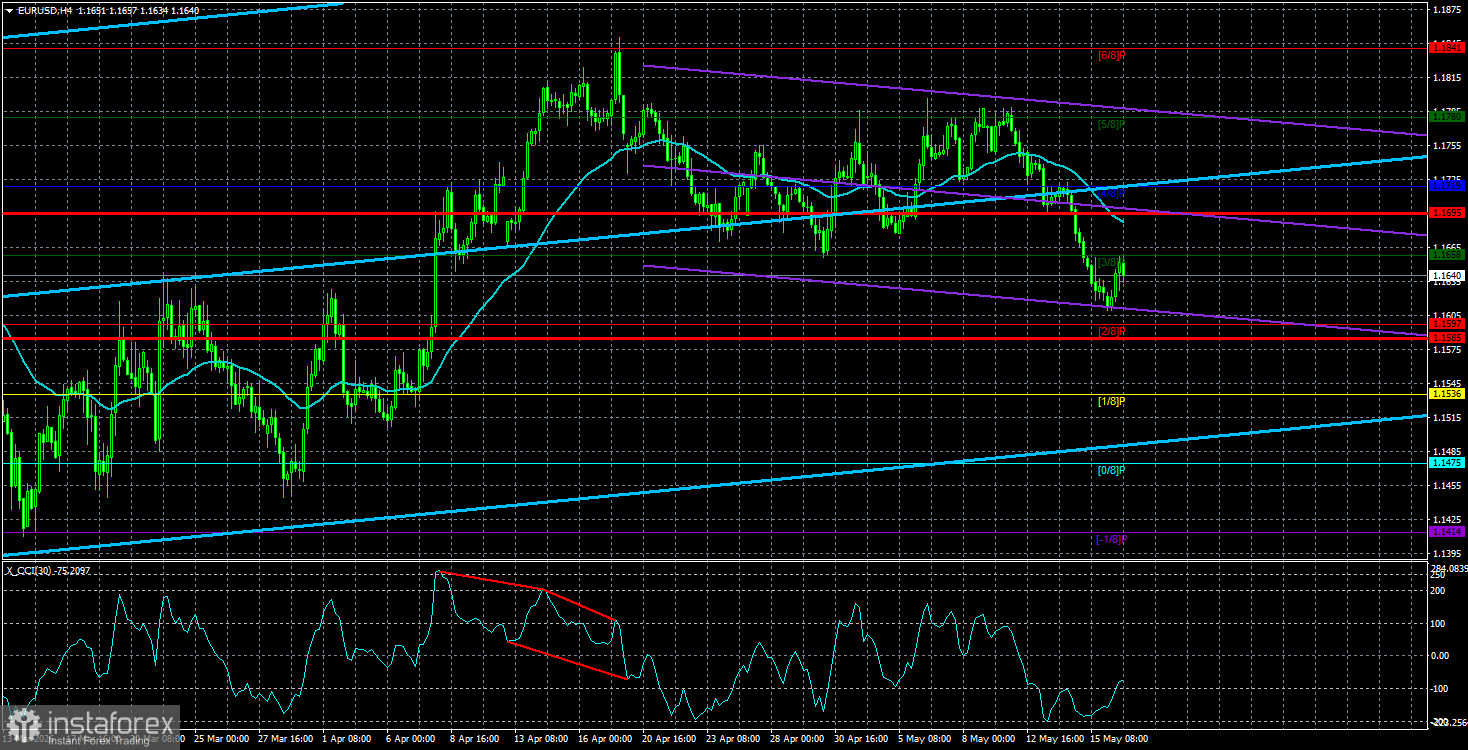
The EUR/USD currency pair halted its dramatic decline on Monday that began last week. Recall that the euro was down for four consecutive days with relatively low volatility, which alarmed traders and raised many new questions. For instance, what does the decline last week mean? Does the market no longer believe in a ceasefire between Iran and the US, and is it certain of a resumption of war? Or was it merely a reaction to temporary difficulties in the negotiations between Tehran and Washington? Or is the market concerned about a sharp rise in inflation in the US, anticipating even greater increases, and consequently, a tightening of the Federal Reserve's monetary policy—something that nobody expected just two weeks ago?
Answering these questions is quite difficult. We believe this was a temporary, somewhat random market reaction to events in the Middle East, with the other factors mentioned above merely amplifying the "bearish" effect. US inflation is likely to continue accelerating. In just two months, it rose by 1.4%, and experts note the depletion of oil reserves in the US strategic storage. Trump's desire to generate as much revenue as possible for the budget amid the Strait of Hormuz blockade has played a cruel joke on the US. Now the US is selling more jet fuel, oil, gas, and gasoline, but at the same time, production of energy resources cannot be increased by one and a half times in one or two months. In simple terms, America is depleting its own strategic reserves, and fuel prices within the US are rising due to internal shortages. Consequently, these prices will continue to rise, as will the prices of all related goods and services.
However, we still maintain that the dollar's strengthening last week had nothing to do with the Fed or inflation. Geopolitics genuinely worsened, and the chances of ending the war, achieving a "nuclear deal," and reopening the Strait of Hormuz decreased to near zero. As a result, the market began to turn back to the dollar as a safe haven, but we do not believe this demand will be sustainable or long-lasting. On the daily timeframe, it is clear that the current decline is another wave of correction within the upward trend.
Over the weekend, Iran carried out a modest drone strike on a nuclear power plant in the UAE. The reasons for this are unclear. The UAE immediately stated that it reserves the right to respond to the act of aggression from Tehran; however, we would not take these claims too seriously. If Trump is still counting on a deal with Iran, the response may only be a similar, formal strike. Surely, if Iran's goal were to destroy the nuclear power plant, it would not deploy just one drone—and not just a drone. Therefore, we still believe that the parties may at least agree to the possibility of further negotiations. As long as a full-scale war has not resumed, we would not adopt an overly pessimistic outlook. In the past three weeks, the parties have already violated the ceasefire four times, so war could have resumed several times. But it has not.
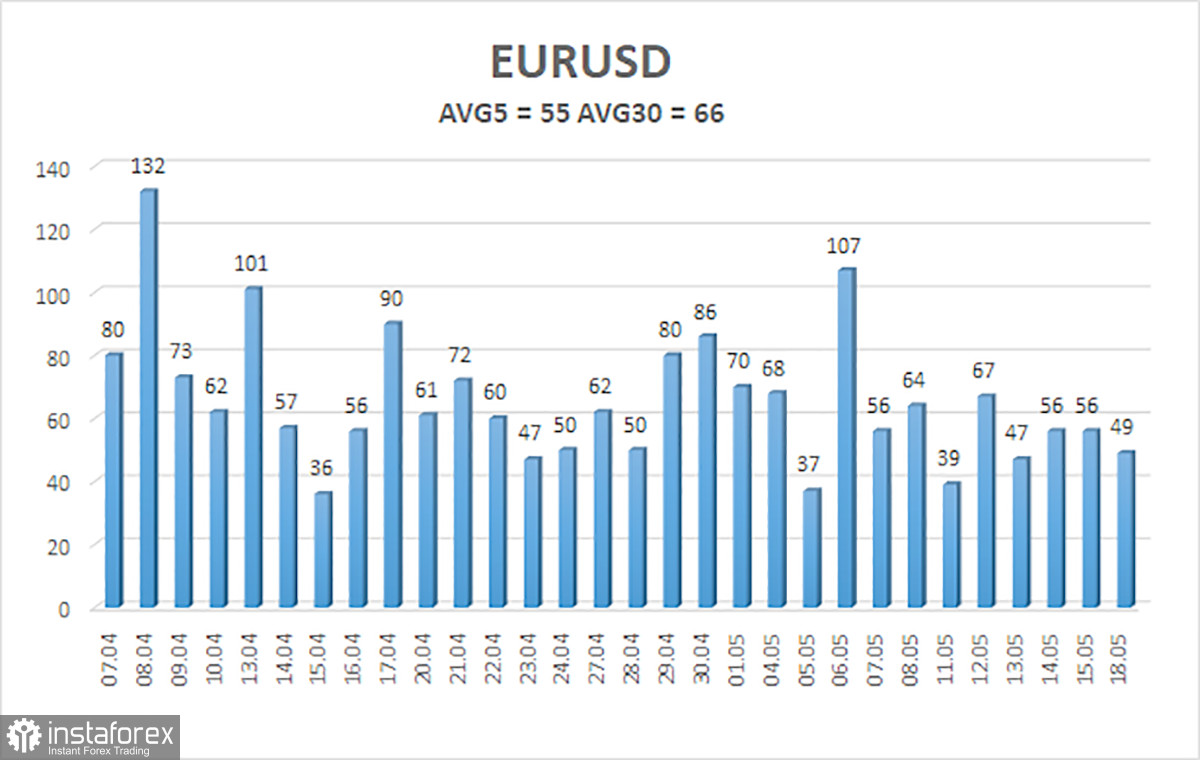
The average volatility of the EUR/USD currency pair over the last 5 trading days, as of May 19, is 55 pips and is characterized as "average." We expect the pair to trade between 1.1585 and 1.1695 on Tuesday. The upper linear regression channel has turned upward, indicating a trend change to bullish. In fact, the upward trend of 2025 could have resumed a month ago. The CCI indicator has entered the overbought zone and formed two bearish divergences, signaling the start of a downward correction that is still ongoing.
S1 – 1.1597
S2 – 1.1536
S3 – 1.1475
R1 – 1.1658
R2 – 1.1719
R3 – 1.1780
The EUR/USD pair continues its downward movement, which is presumably a correction within the broader upward trend. The overarching fundamental backdrop for the dollar remains extremely negative, and only the factor of geopolitics provides it with regular support. If the price is below the moving average, shorts can be considered with targets at 1.1597 and 1.1585. Long positions are relevant when the price is above the moving average line, with targets at 1.1780 and 1.1841. The market continues to move away from the geopolitical factor, but last week was disappointing for the euro currency. A more significant decline is not anticipated yet, but no one knows how relations between Iran and the US will develop moving forward.
*这里的市场分析是为了增加您对市场的了解,而不是给出交易的指示。
InstaSpot分析评论将让您充分了解市场趋势! 作为InstaSpot的客户,您将获得大量的免费服务以实现有效的交易。