




The legend in the InstaSpot team!
Legend! You think that's bombastic rhetoric? But how should we call a man, who became the first Asian to win the junior world chess championship at 18 and who became the first Indian Grandmaster at 19? That was the start of a hard path to the World Champion title for Viswanathan Anand, the man who became a part of history of chess forever. Now one more legend in the InstaSpot team!




Borussia is one of the most titled football clubs in Germany, which has repeatedly proved to fans: the spirit of competition and leadership will certainly lead to success. Trade in the same way that sports professionals play the game: confidently and actively. Keep a "pass" from Borussia FC and be in the lead with InstaSpot!
The dollar is having a hard time right now. Expectations of a recession is hanging over it like a sword of Damocles. And neither weak nor strong data on the U.S. economy changes the balance of power on Forex. If disappointing statistics come out, investors believe it's a recession. If the release is full of positivity, as in the case of American employment in April, investors remember the tight monetary policy of the Federal Reserve. It will provoke a recession sooner or later anyway. No wonder that after the initial decline, EUR/USD quotes soared sharply.
The dynamics of the pair was likely influenced by the revision of February–March data downwards by 149,000, which offset the impact of the employment growth of 253,000 in April. However, it is difficult for the U.S. dollar to strengthen when investors' minds are deeply ingrained with the ideas of the end of the monetary tightening cycle and a "dovish" reversal.
At their core lies the history and the decline of 2-year inflation expectations in the U.S. to the Fed's required 2%. Since 1974, the Federal Reserve has begun to lower borrowing costs on average five months after they peak. Assuming that May's 5.25% is the ceiling, September–October is a suitable period for a "dovish" reversal. The problem is that the current monetary tightening cycle is special. It's not every time inflation climbs to a 40-year high. Inflation expectations also often fail.
The evolution of inflation expectations and inflation in the U.S. with a time lag
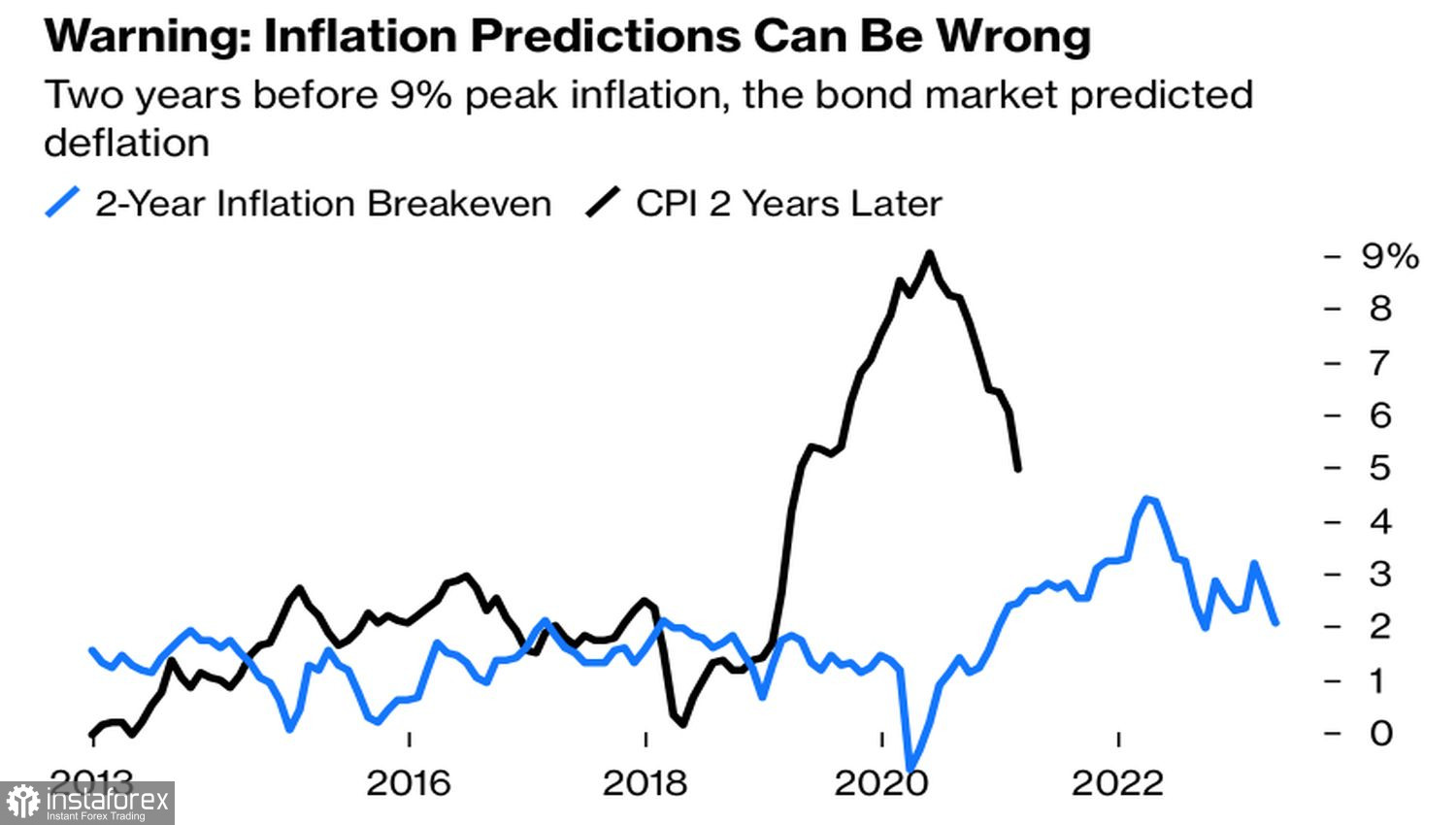
In my opinion, the 75% chance that the Fed will lower the federal funds rate in September is too high. The more strong statistics are released for the U.S., the lower they will drop. This will support the U.S. dollar. The market clearly underestimates its potential. Investors believe that the end of the monetary tightening cycle is a verdict. In reality, it's not.
However, the euro is not in a better position either. After the ECB's May meeting, derivatives lowered the assumed deposit rate ceiling from 3.9% to 3.6%. That is, they expect only one act of monetary tightening. Nevertheless, stable inflation, a strong labor market, and the absence of a recession in the eurozone hint that rates could be higher. In any case, investors overestimate the risks of "dovish" reversals for both the Fed and the European Central Bank.
Market expectations for Fed and ECB rates
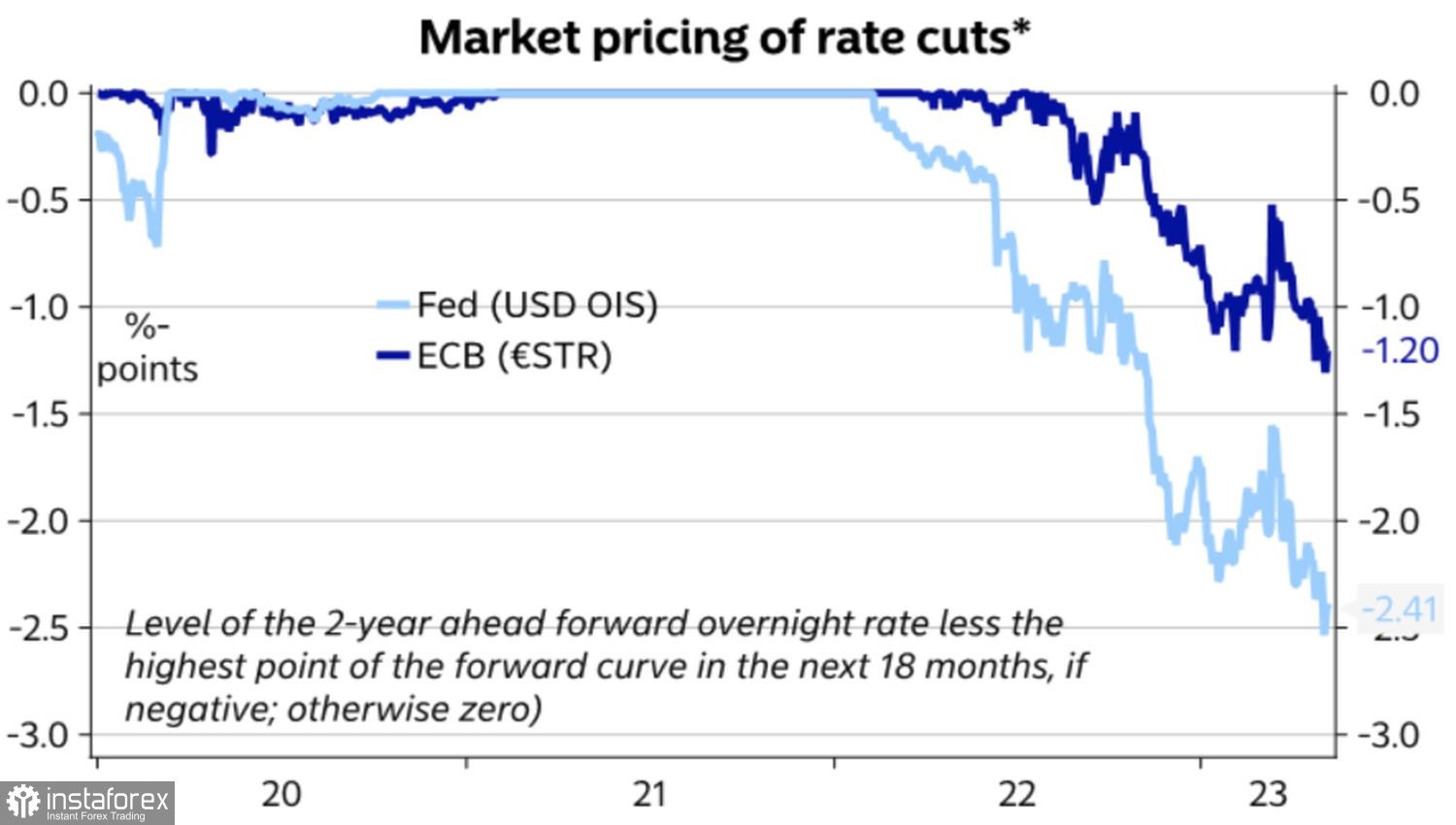
In my opinion, strong U.S. statistics will reduce the chances of lowering the federal funds rate in 2023, while in the eurozone, it will increase the likelihood of the ECB continuing the monetary tightening cycle. Their alternation increases the risks of EUR/USD transitioning to a medium-term trading range of 1.085–1.12.
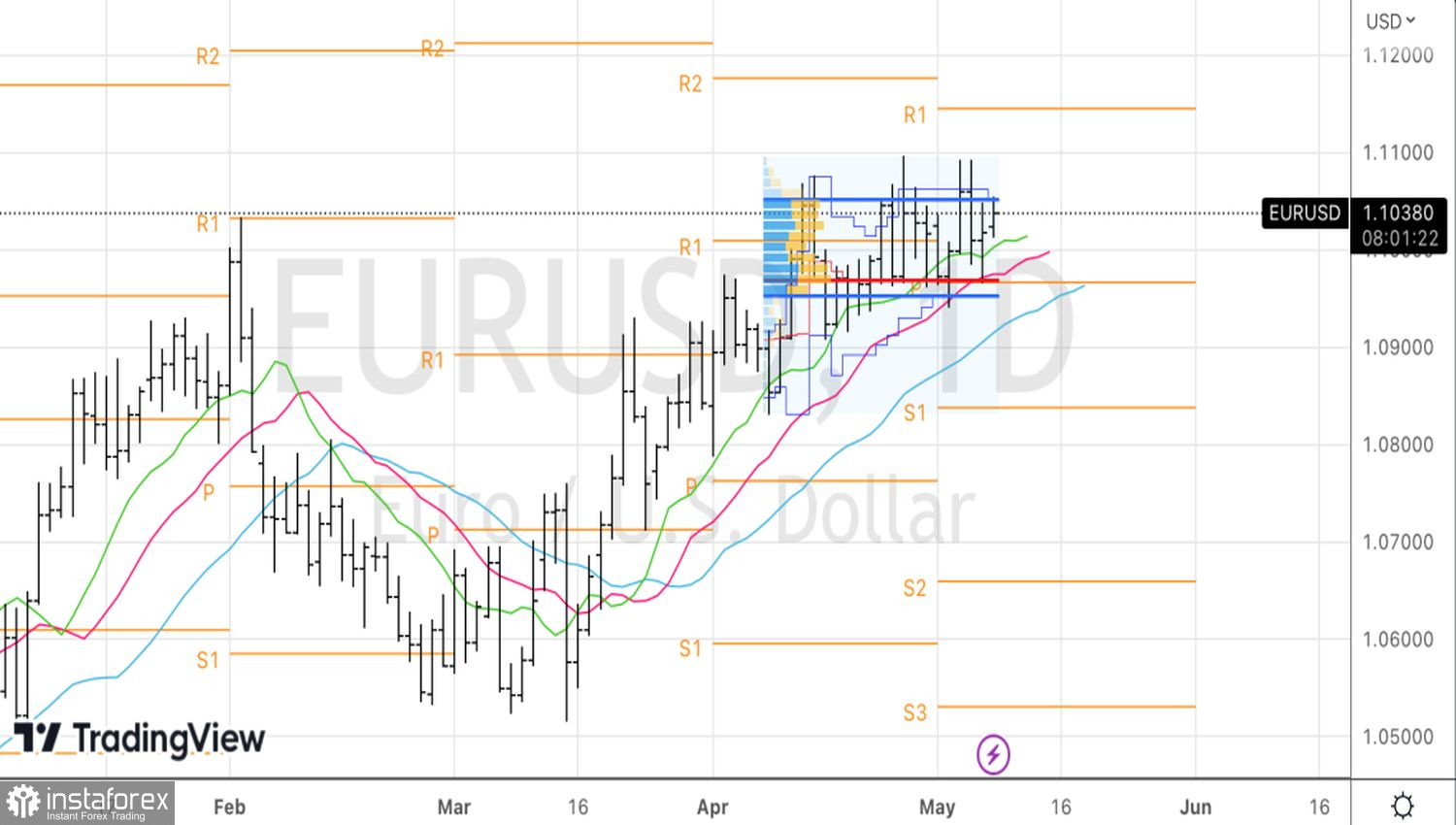
Technically, on the daily chart of the currency pair, there is an accumulation of speculative positions, expressed in consolidation. Breaking beyond the upper boundary of the fair value range of 1.097–1.1055 threatens to continue the rally to 1.109, 1.1125, and 1.114, where sellers will take over. A drop in EUR/USD below 1.101 will be a signal to open short positions.
*这里的市场分析是为了增加您对市场的了解,而不是给出交易的指示。
InstaSpot分析评论将让您充分了解市场趋势! 作为InstaSpot的客户,您将获得大量的免费服务以实现有效的交易。


