




The legend in the InstaSpot team!
Legend! You think that's bombastic rhetoric? But how should we call a man, who became the first Asian to win the junior world chess championship at 18 and who became the first Indian Grandmaster at 19? That was the start of a hard path to the World Champion title for Viswanathan Anand, the man who became a part of history of chess forever. Now one more legend in the InstaSpot team!




Borussia is one of the most titled football clubs in Germany, which has repeatedly proved to fans: the spirit of competition and leadership will certainly lead to success. Trade in the same way that sports professionals play the game: confidently and actively. Keep a "pass" from Borussia FC and be in the lead with InstaSpot!
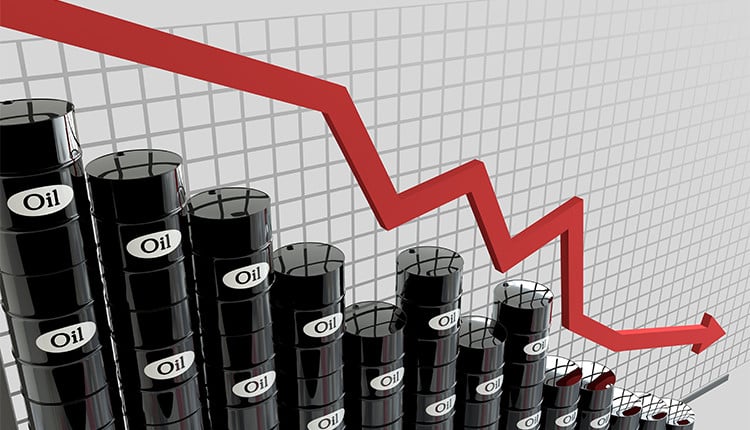
Oil quotes fell again. The reason for that is anxiety about demand amid rising oil reserves over the week in the United States and an increase in the number of COVID-19 cases in Europe.
Futures for Brent crude fell by 1.03% to trade at $41.29 per barrel, while WTI futures dropped by 1.23% to settle at $39.31 per barrel. The difference between the current contracts for Brent and WTI is about $1.9 in favor of Brent.
In France, Spain, and Great Britain, the epidemiological situation is deteriorating. There are risks of quarantine re-introduction, which may lead to a drop in fuel demand. On Monday, oil prices dropped by more than 4%. This is the maximum for the last two weeks.
According to the American Petroleum Institute, US oil reserves rose by 0.69 million barrels, although the indicator should have declined by 2.3 million barrels. Reserves at the Cushing terminal increased by 0.3 million barrels. At the same time, gasoline stocks slid by 7.7 million barrels, distillate stocks fell by 2.1 million barrels. Oil imports advanced by 88,000 barrels per day. The statistical data is mixed. The market's reaction is mainly negative.
The Eurasia Group reported that this year global oil demand will decrease by more than 10% compared to last year and will amount to about 90 million barrels per day due to the COVID-19 pandemic.
The difficult situation in the world does not allow counting on a quick recovery above $44. Most likely, prices will continue to fall.
Moreover, the Libyan National Oil Company intends to increase production from 0.1 million barrels per day to 0.26 million barrels per day. Before the coronavirus crisis, oil output was around 1.2-1.3 million barrels per day. This could put additional pressure on prices. Moreover, the situation in the country is extremely difficult, therefore, the oil output revival may be unstable and take a lot of time.
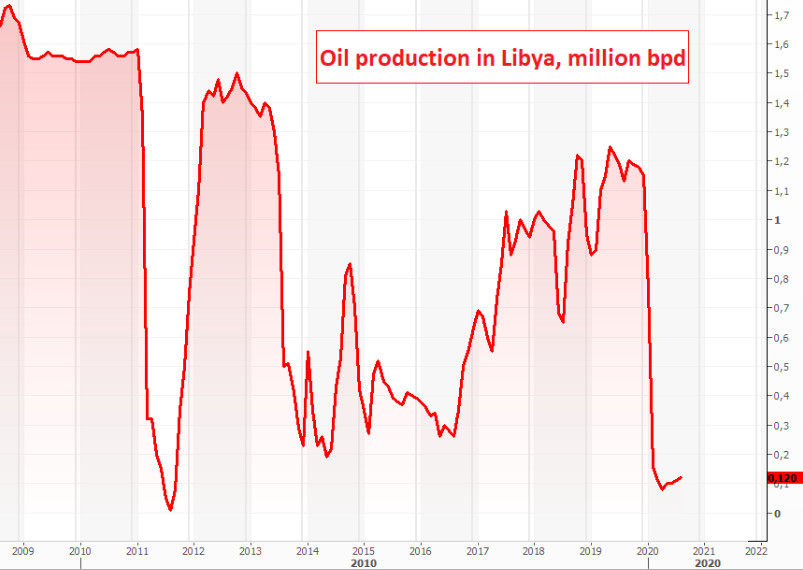
However, Goldman Sachs analysts argue that the increase in oil output in Libya could be offset by a higher level of output cuts from other OPEC members. Therefore, this should not greatly affect prices. Experts also noted the existing risks for rapid and sustainable production growth. In their opinion, Libyan output would rise by 0.4 million barrels per day by December.
InstaSpot分析评论将让您充分了解市场趋势! 作为InstaSpot的客户,您将获得大量的免费服务以实现有效的交易。


