




The legend in the InstaSpot team!
Legend! You think that's bombastic rhetoric? But how should we call a man, who became the first Asian to win the junior world chess championship at 18 and who became the first Indian Grandmaster at 19? That was the start of a hard path to the World Champion title for Viswanathan Anand, the man who became a part of history of chess forever. Now one more legend in the InstaSpot team!





Borussia is one of the most titled football clubs in Germany, which has repeatedly proved to fans: the spirit of competition and leadership will certainly lead to success. Trade in the same way that sports professionals play the game: confidently and actively. Keep a "pass" from Borussia FC and be in the lead with InstaSpot!

Last week's published Australian Q2 GDP data looked positive on the surface, but a closer look shows that growth of 1.5% in H1 is nearly half the pace seen in H2 2025, which speaks less to an economic recovery than to residual momentum that has not yet fully faded.
For the Reserve Bank of Australia, the situation favors a continued pause, since domestic demand is clearly insufficient to justify a rate hike. Inflation is also concerning: in July the core measure remained at 3.6% y/y and rose 0.5% m/m, exceeding market expectations. Market pricing shows about a 30% chance of a hike at the September meeting and up to an 80% chance of at least one hike before year-end.
The NAB business confidence index fell for a second consecutive month to -8 and remains well below its long?term average of +5. Despite recovery from much of the initial slump caused by the Middle East conflict, business confidence is about 7 points below the February level.
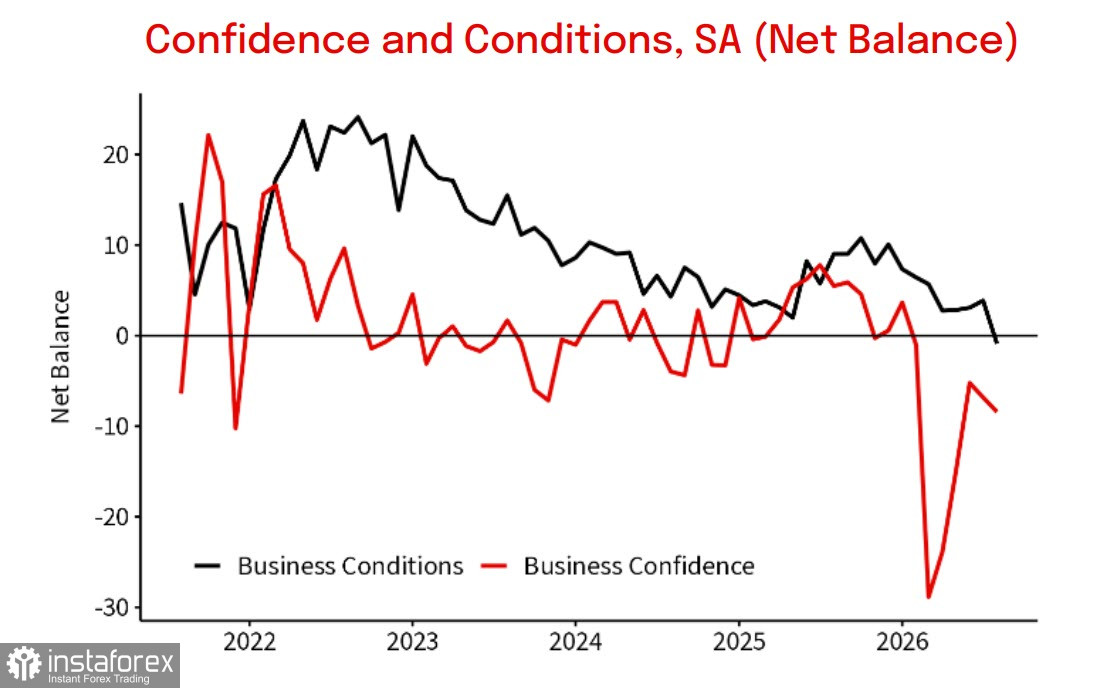
Trump's war with Iran has turned into a protracted conflict that disproportionately affects the Australian economy because of its unique energy structure: Australia imports nearly 90% of its petroleum products through the Strait of Hormuz. Although government warnings of a "largest-ever oil shock" with prices to $200/bbl and inflation above 7% have not materialized, current price levels are already doing real damage to the economy.
A deeper structural problem lies in the vulnerability of energy infrastructure. In early August, the Loy Yang coal plant in Victoria sharply raised tariffs due to coal shortages, causing wholesale electricity prices during the evening peak to spike to AUD 300/MWh across the National Electricity Market. Aging coal plants are becoming less reliable, and domestic energy-infrastructure degradation compounds external problems.
Persistent inflation prints, combined with expectations of rate hikes, provided the main support for the Aussie, and now another danger looms — an overvalued AUD resting on a far shakier foundation than the US dollar, precisely because of these energy problems.
Net short AUD positions fell to -2.82 billion, and the implied price is slightly above the long-term average.
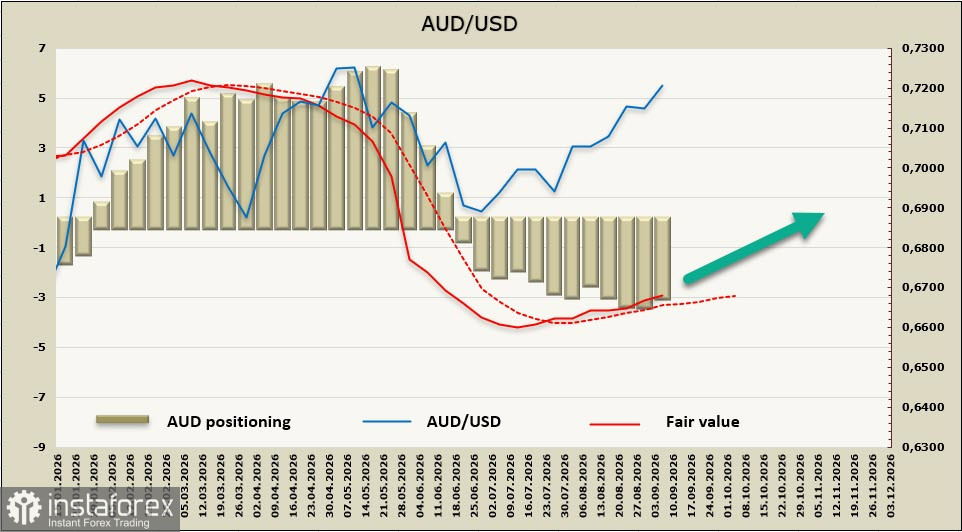
In the previous review, we expected AUD/USD to continue higher, which it did. The near target of 0.7200 has been cleared and turned into support; we await further upside toward the year high of 0.7277. But given that energy problems can hit industry and exports at any moment, this rally looks fragile and could end at any time.
*এখানে পোস্ট করা মার্কেট বিশ্লেষণ আপনার সচেতনতা বৃদ্ধির জন্য প্রদান করা হয়, ট্রেড করার নির্দেশনা প্রদানের জন্য প্রদান করা হয় না।
ইন্সটাফরেক্স বিশ্লেষণমূলক পর্যালোচনাগুলো আপনাকে মার্কেট প্রবণতা সম্পর্কে পুরোপুরি সচেতন করবে! ইন্সটাফরেক্সের একজন গ্রাহক হওয়ায়, দক্ষ ট্রেডিং এর জন্য আপনাকে অনেক সেবা বিনামূল্যে প্রদান করা হয়।


