



Our team has over 7,000,000 traders!
Every day we work together to improve trading. We get high results and move forward.
Recognition by millions of traders all over the world is the best appreciation of our work! You made your choice and we will do everything it takes to meet your expectations!
We are a great team together!
InstaSpot. Proud to work for you!





Actor, UFC 6 tournament champion and a true hero!
The man who made himself. The man that goes our way.
The secret behind Taktarov's success is constant movement towards the goal.
Reveal all the sides of your talent!
Discover, try, fail - but never stop!
InstaSpot. Your success story starts here!

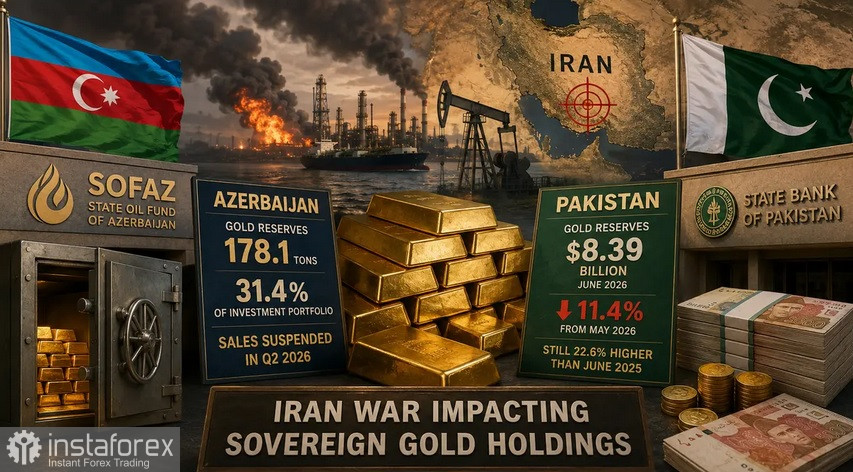
The conflict with Iran is having a material impact on sovereign gold reserves, the latest examples being Azerbaijan and Pakistan.
The Iranian conflict is significantly influencing central-bank and government purchases and sales of gold, destabilizing one of the fundamental drivers of years?long gains in the metal's price.
On Thursday, the State Oil Fund of the Republic of Azerbaijan (SOFAZ) announced a suspension of gold sales in Q2 2026. As of the end of June, the fund's gold holdings totaled 178.1 tonnes, with gold accounting for 31.4% of SOFAZ's investment portfolio.
SOFAZ's report said that "as a result of the conflict between the US and Iran, which began in Q1 2026, there is high volatility in global financial and energy markets, and the war has negatively affected all investment directions. In Q2, prices of various financial instruments recovered and showed positive returns, while gold made a negative contribution to the fund's overall asset performance."
The report also notes that "in early Q1, thanks to structural factors such as a weaker US dollar and investors' shift from government bonds and currencies to real assets, the price of gold rose significantly. However, at the end of Q1 prices fell sharply, and this decline continued in Q2 amid rising real interest rates."
Meanwhile, data published by the State Bank of Pakistan (SBP) show Pakistan's gold reserves fell by more than 11.4% from May to June. At the end of June, the country's gold reserves, including gold deposits and gold acquired under swaps, stood at $8.39 billion, down from $9.47 billion in May, although still 22.6% higher than $6.84 billion in June 2025.
The SBP's total reserves, taking into account forward and swap liabilities, rose to $18.5 billion in June from $17.27 billion the previous month — an increase of $1.23 billion, or 7.1% month-on-month, and $3.86 billion, or 26.4% year-on-year.
The conflict with Iran has had a sizeable impact on global gold reserves, especially in emerging economies where high oil prices have forced some central banks and state entities to reduce purchases. Others have been compelled to sell gold reserves to finance energy imports or to support their currencies.
In March, the Central Bank of the Republic of Turkey reported a reduction in its gold holdings of more than 118 tonnes amid difficulties defending the lira. That fall was Turkey's largest since 2013. The bank said it sold part of its gold but monetized much of the remainder via swap agreements; proceeds were used to buy lira and foreign currency to support the economy.
Russia has also been a significant seller of gold this year amid budget strains caused by military spending in Ukraine and international sanctions. As of 20 July, the Central Bank of Russia (CBR) reported a reduction in gold reserves of 1.4 million ounces — or 43.5 tonnes — since the start of the year.
According to the CBR, Russia's sovereign gold reserves stood at 73.4 million troy ounces, or 2,282 tonnes, at the beginning of July, with a market valuation of $299 billion.
This marks the sixth consecutive month of declines in Russia's official gold reserves, and the pace of reduction has been dramatic. In April, the CBR reported the largest fall in its gold reserves in a quarter of a century.
ইন্সটাফরেক্স বিশ্লেষণমূলক পর্যালোচনাগুলো আপনাকে মার্কেট প্রবণতা সম্পর্কে পুরোপুরি সচেতন করবে! ইন্সটাফরেক্সের একজন গ্রাহক হওয়ায়, দক্ষ ট্রেডিং এর জন্য আপনাকে অনেক সেবা বিনামূল্যে প্রদান করা হয়।


