




Our team has over 7,000,000 traders!
Every day we work together to improve trading. We get high results and move forward.
Recognition by millions of traders all over the world is the best appreciation of our work! You made your choice and we will do everything it takes to meet your expectations!
We are a great team together!
InstaSpot. Proud to work for you!





Actor, UFC 6 tournament champion and a true hero!
The man who made himself. The man that goes our way.
The secret behind Taktarov's success is constant movement towards the goal.
Reveal all the sides of your talent!
Discover, try, fail - but never stop!
InstaSpot. Your success story starts here!

This week, the market's attention will once again be focused—if not entirely, then almost entirely—on the U.S. dollar. More precisely, on the U.S. news cycle surrounding the dollar. Let's recall that last week marked the beginning of a government shutdown, and a new vote in the Senate to extend funding deadlines failed. Republicans are still a few votes short of passing the budget for the next fiscal year. As a result, it's currently impossible to say with certainty when the shutdown will end.
Meanwhile, the shutdown continues to evolve with increasingly complex political baggage. Democrats still demand that social and healthcare programs not be cut, effectively pushing for a partial repeal of Trump's "one big, beautiful bill." Republicans, on the other hand, insist that the budget must be reduced to allow for increased defense spending. And since the Department of Defense is now being dubbed the "Department of War," those military expenditures are expected to grow—perhaps for future conflicts, such as those with Venezuela.
The longer the shutdown lasts, the more nervous market participants will become. Even without the shutdown, the dollar has already been experiencing a "black year." Recent economic data has delivered no support. Just last week, the ADP labor market report posted a negative figure, and ISM business activity indices came in notably weak.
Jerome Powell may address the ongoing shutdown and explain how the Fed will make interest rate decisions if the Bureau of Labor Statistics remains furloughed. It's worth noting that the latest unemployment and payroll reports were not released, which are critical inputs for the Fed's monetary policy decisions. Therefore, Powell's speech on Thursday will be the most important event of the week for the U.S. dollar outlook.
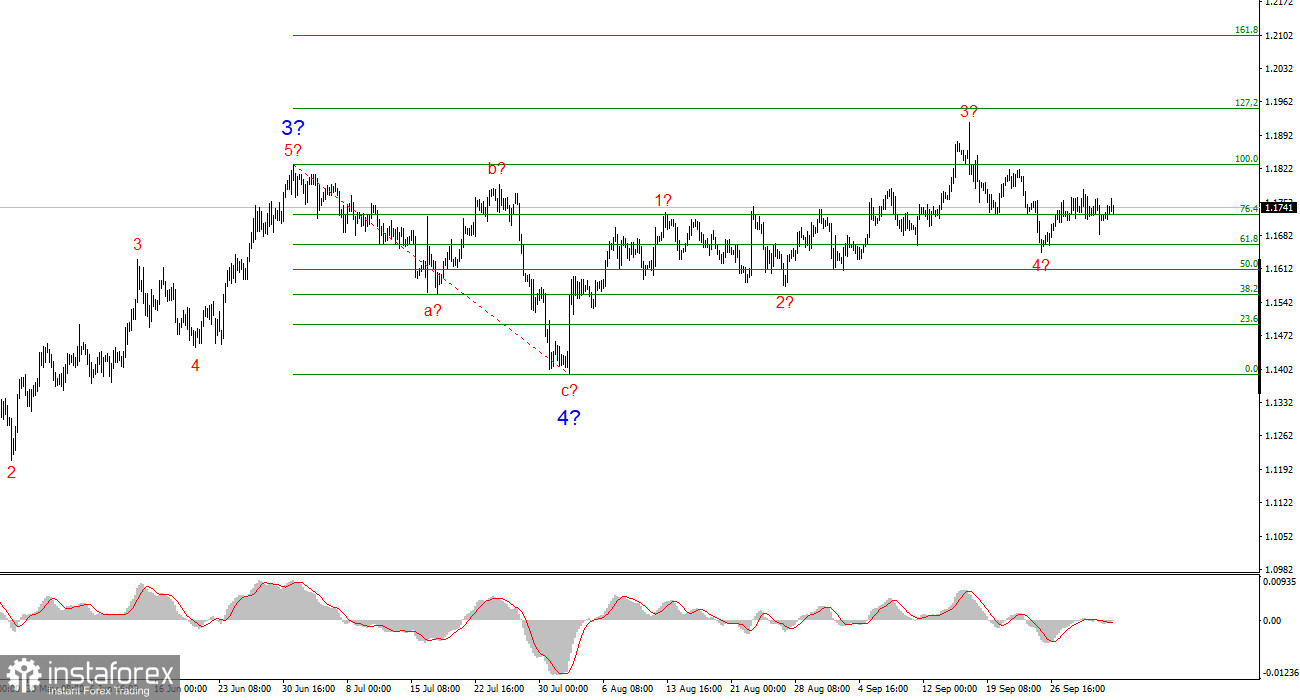
From my analysis of EUR/USD, I conclude that the pair is still in the process of developing an upward trend segment. The wave structure remains heavily dependent on the news flow related to Trump's decisions and the internal and external policies of the current U.S. administration. The trend has potential targets as high as the 1.2500 level (25th figure). We're currently seeing the formation of a corrective wave 4, which may have already completed. The overall bullish wave structure remains valid. Therefore, I'm currently only considering long positions. By year-end, I expect the euro to rise to 1.2245, which corresponds to the 200.0% Fibonacci level.
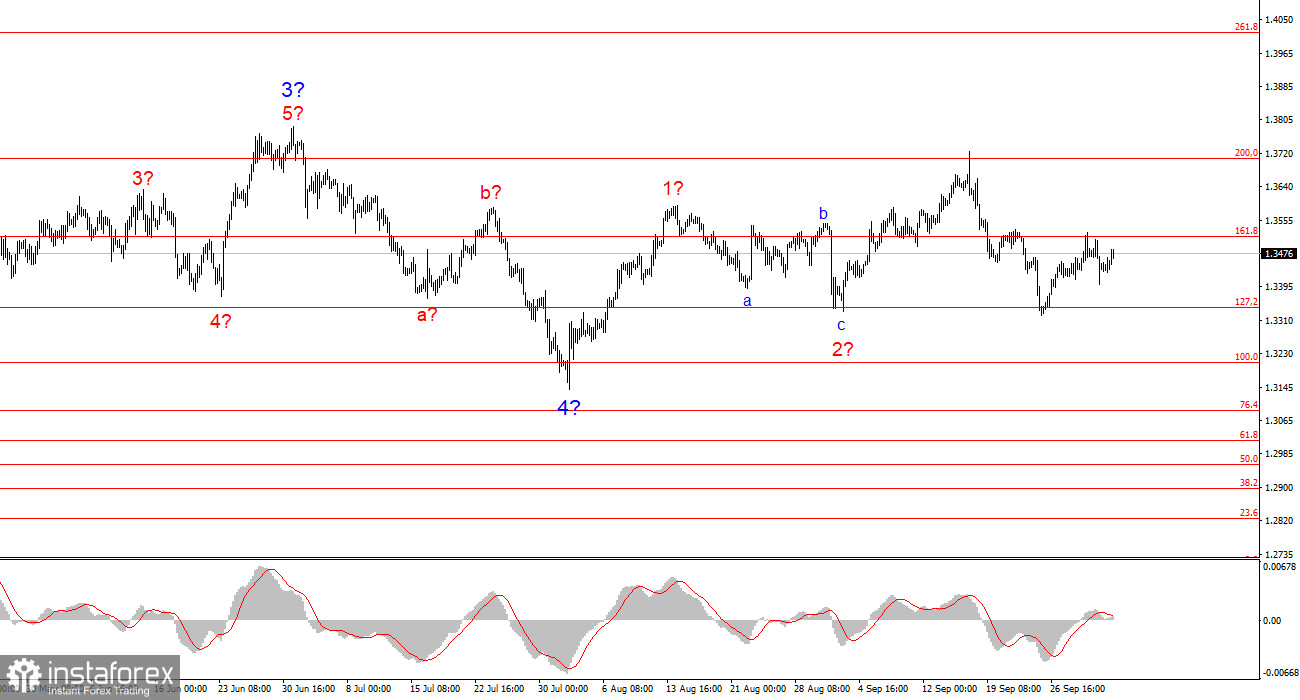
The wave structure for GBP/USD has evolved. We're still dealing with an impulsive bullish leg, but its internal wave structure has become difficult to interpret. If wave 4 turns into a complex three-wave formation, the structure will normalize—but this would also make wave 4 significantly more prolonged than wave 2. In my view, the key level to monitor is 1.3341, which corresponds to the 127.2% Fibonacci. Two unsuccessful breakout attempts at this level indicated the market's readiness to resume buying. My targets for GBP/USD remain above the 1.3800 mark (the 38th figure).
*এখানে পোস্ট করা মার্কেট বিশ্লেষণ আপনার সচেতনতা বৃদ্ধির জন্য প্রদান করা হয়, ট্রেড করার নির্দেশনা প্রদানের জন্য প্রদান করা হয় না।
ইন্সটাফরেক্স বিশ্লেষণমূলক পর্যালোচনাগুলো আপনাকে মার্কেট প্রবণতা সম্পর্কে পুরোপুরি সচেতন করবে! ইন্সটাফরেক্সের একজন গ্রাহক হওয়ায়, দক্ষ ট্রেডিং এর জন্য আপনাকে অনেক সেবা বিনামূল্যে প্রদান করা হয়।


