




Our team has over 7,000,000 traders!
Every day we work together to improve trading. We get high results and move forward.
Recognition by millions of traders all over the world is the best appreciation of our work! You made your choice and we will do everything it takes to meet your expectations!
We are a great team together!
InstaSpot. Proud to work for you!





Actor, UFC 6 tournament champion and a true hero!
The man who made himself. The man that goes our way.
The secret behind Taktarov's success is constant movement towards the goal.
Reveal all the sides of your talent!
Discover, try, fail - but never stop!
InstaSpot. Your success story starts here!

The less you know, the better you sleep. Encouraged by a 21% rally in the S&P 500 from its April lows, the crowd continues to buy the dip—completely unbothered by the United States' difficulties in trade negotiations with the European Union, Donald Trump's threats to double the 25% auto tariffs, or the escalation of conflict in the Middle East. Meanwhile, well-informed company executives or insiders close to them prefer to sell stocks. This raises doubts about the sustainability of the uptrend in the broad equity index.
The market has reacted inconsistently to similar inflation data. Initially, the slow growth of consumer prices was seen as a signal of weakening domestic demand and a looming recession in the U.S. economy. The S&P 500 fell. However, after producer prices also came in below Bloomberg experts' forecasts, the broad index unexpectedly rose. The reasons cited included a decline in Treasury yields and an increased probability (up to 35%) of three rounds of Fed monetary easing in 2025.
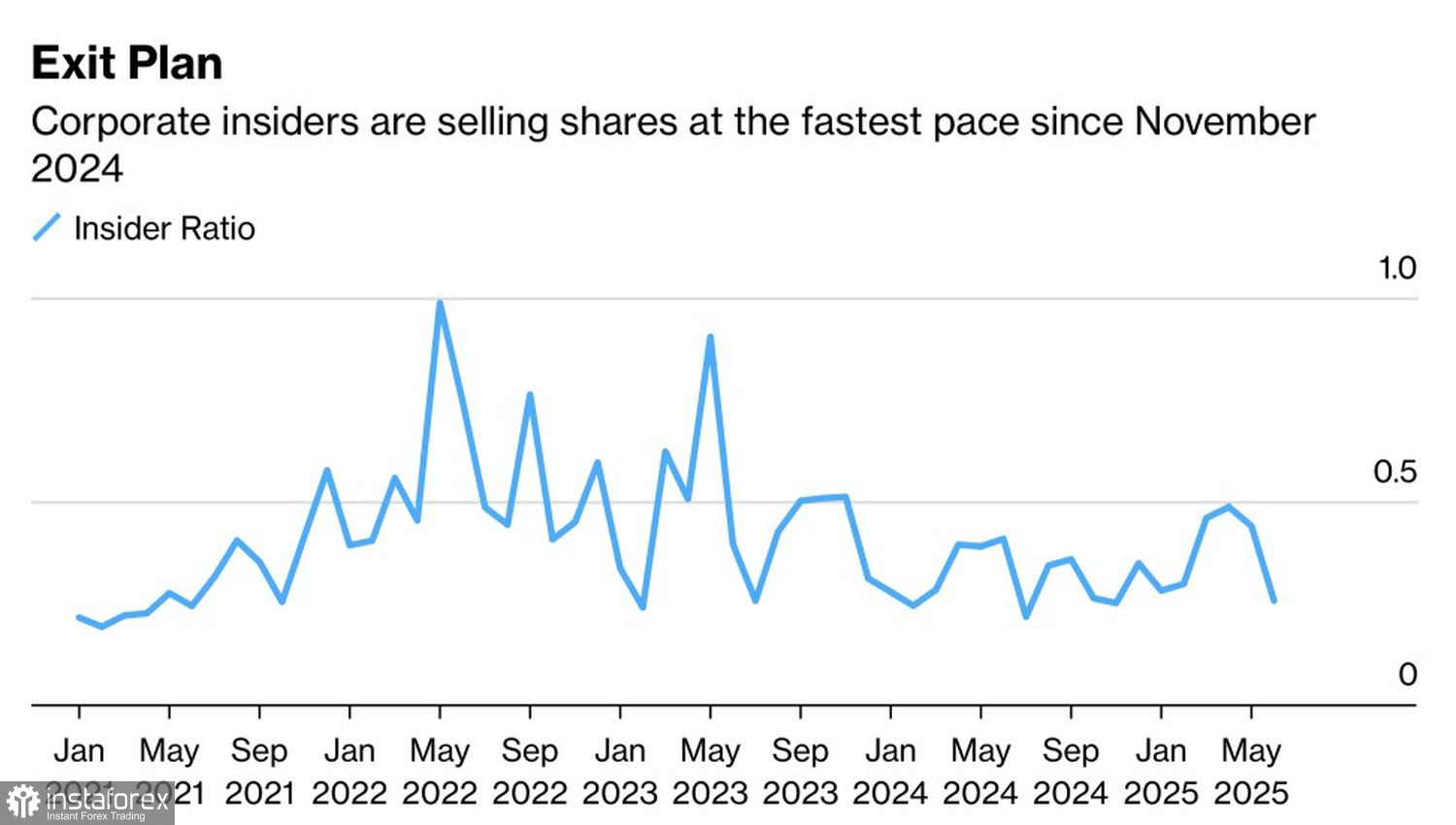
The market supposedly rejoiced that tariffs hadn't triggered an inflation shock. But the natural question is: who pays the import tariffs? Unlikely foreign suppliers. Unlikely consumers. American companies pay the bills, and shrinking corporate profits is bad news for stocks. Knowing this, insiders prefer to sell equities during market rallies. Their sentiment had dropped to its lowest point since November when Donald Trump won the presidential election.
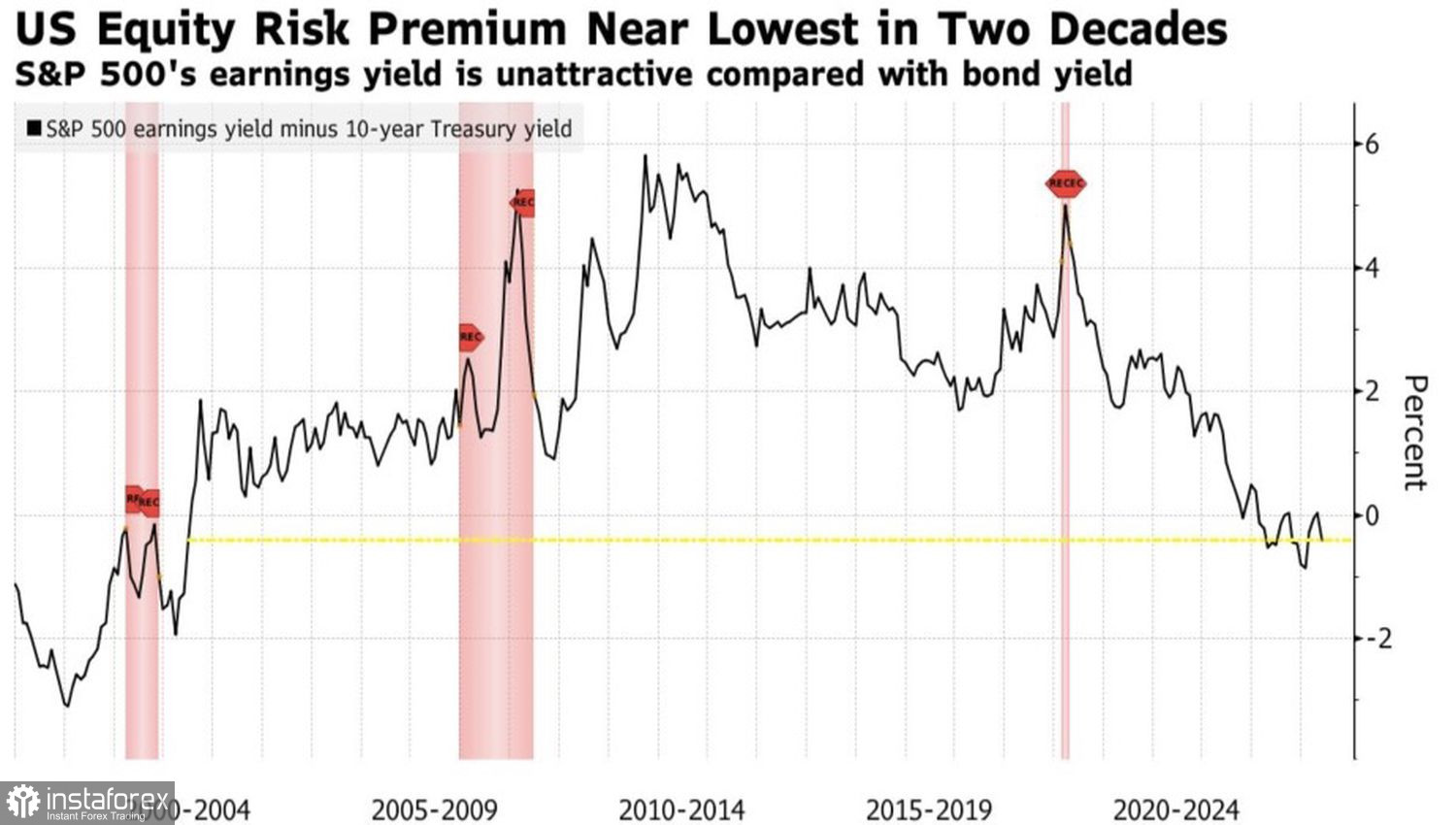
Alongside deteriorating corporate earnings beginning in Q2, investors should also be concerned about the risk premium dropping to its lowest levels since the early 2000s. Investing in Treasury bonds currently looks just as effective as investing in stocks. That's inherently illogical. Equities are riskier assets than bonds. Therefore, stocks are overpriced.
Fueled by crowd greed and the urge to buy the dip, the S&P 500 has climbed too high. Retail investors are inflating a bubble while ignoring negative developments. They only hear what they want to hear: that the worst of the trade wars is behind us, that the labor market is still strong, that the Federal Reserve will cut rates.
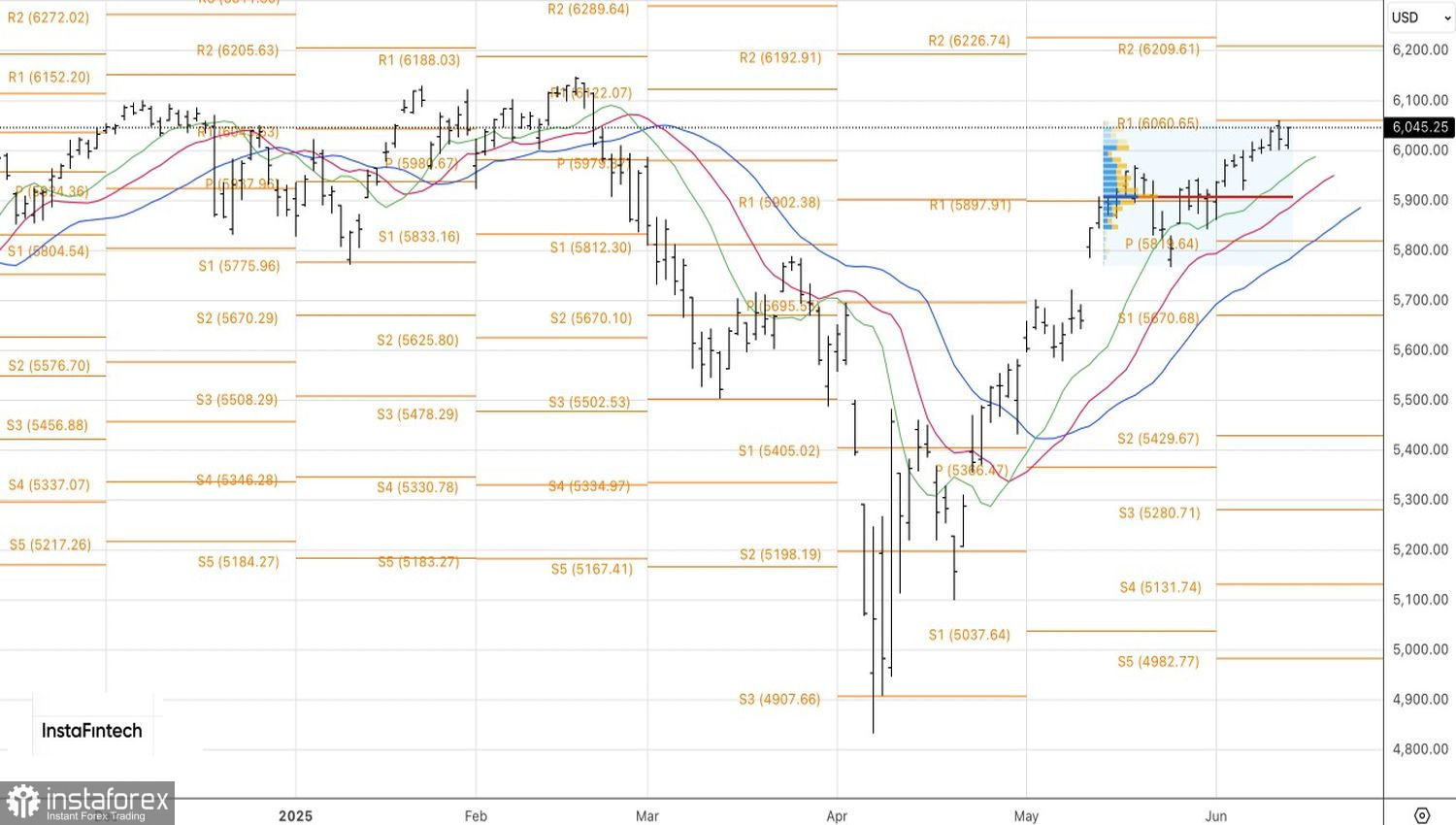
Meanwhile, the S&P 500 is ignoring slowing U.S. economic growth, rising recession risks, worsening corporate earnings, overpriced stocks, and potential inflation acceleration due to escalating armed conflict in the Middle East—all at its peril.
Technical Outlook
On the daily chart, S&P 500 bulls are trying to push prices back toward the key resistance level at 6060. Failure to break through this level will signal buyer weakness. As long as the broad equity index trades below this level, the focus should remain on selling.
*এখানে পোস্ট করা মার্কেট বিশ্লেষণ আপনার সচেতনতা বৃদ্ধির জন্য প্রদান করা হয়, ট্রেড করার নির্দেশনা প্রদানের জন্য প্রদান করা হয় না।
ইন্সটাফরেক্স বিশ্লেষণমূলক পর্যালোচনাগুলো আপনাকে মার্কেট প্রবণতা সম্পর্কে পুরোপুরি সচেতন করবে! ইন্সটাফরেক্সের একজন গ্রাহক হওয়ায়, দক্ষ ট্রেডিং এর জন্য আপনাকে অনেক সেবা বিনামূল্যে প্রদান করা হয়।


