




الأسطورة فى فريق إنستافوركس!
الأسطورة! هل تعتقد أن هذا هو الخطاب المنمق؟ ولكن كيف ينبغي أن نطلق على الرجل، الذي أصبح أول آسيوي يفوز ببطولة العالم للشطرنج للشباب بعمر 18 سنة والذي أصبح أول أستاذ كبير هندي في سن 19؟ وكانت هذه بداية طريق صعب إلى لقب بطل العالم لـ فيسواناثان أناند، الرجل الذي أصبح جزءًا من تاريخ الشطرنج إلى الأبد. والآن أسطورة آخر في فريق إنستافوركس!





يعتبر بوروسيا دورتموند أحد أكثر أندية كرة القدم حصولاً على الألقاب في ألمانيا، وقد أثبت ذلك مرارًا وتكرارًا للجماهير: فإنّ روح المنافسة والقيادة ستؤدي بالتأكيد إلى النجاح. قم بالتداول بنفس الطريقة التي يلعب بها المحترفون الرياضيون اللعبة: بثقة ونشاط. احتفظ بـ "ترخيص دخول" من نادي بوروسيا دورتموند لكرة القدم وكن في الصدارة مع إنستافوركس!
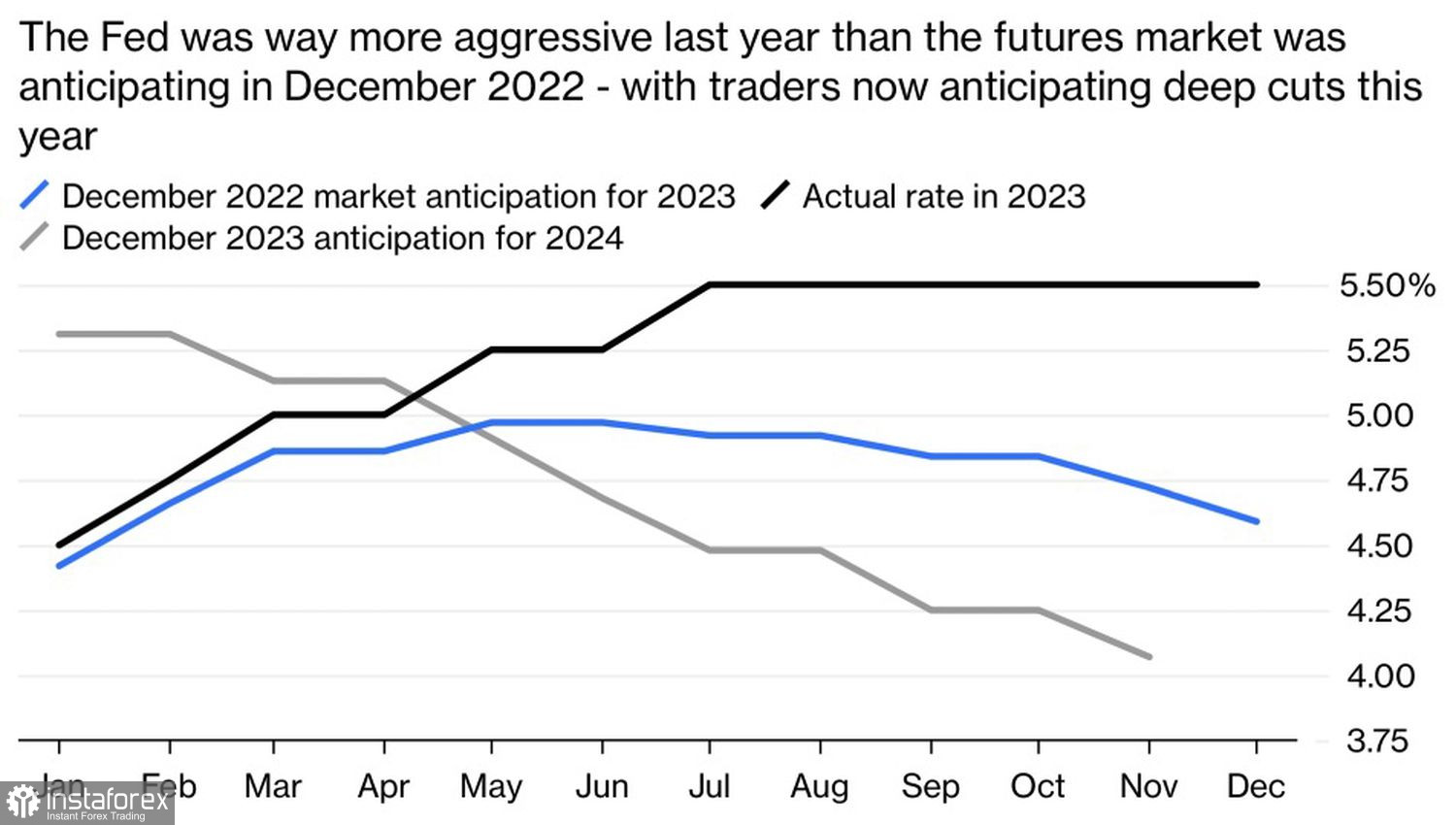
The Federal Reserve quickly moved away from its "higher and longer" policy, which entails maintaining the federal funds rate at a high level for an extended period. However, in December, the Fed decided it was time to consider monetary expansion. Now, the main question for EUR/USD and all financial markets is how long the cost of borrowing will remain high. The answer can be found in a wealth of macroeconomic statistics.
In fact, monetary expansion does not necessarily mean stimulating the economy. If rates are high, their reduction will still constrain GDP growth. That's why the Fed opted for a "dovish pivot." The easing of monetary policy should be seen more as a lesser application of the brakes rather than stepping on the gas.
Dynamics of Fed's Rate and Market Expectations
Central banks usually act in unison. They follow their leader – the Federal Reserve. However, this time, regulators are not in a hurry to talk about lowering borrowing costs. And it's understandable. Despite a slowdown in inflation in the eurozone to 2.4% in November, Bloomberg experts expect it to accelerate to 3% in December. If consumer prices start showing a new peak, the ECB will keep the deposit rate at 4% much longer than markets anticipate. Derivatives expect to see its first reduction in March or April.
The ECB's slow pace could inspire EUR/USD "bulls" for new attacks. However, the pair clearly needs a pause as the global appetite for risk is high. Markets are starting to realize they might have gotten ahead of themselves. Therefore, the risks of a correction in the S&P 500 and the euro in January are quite significant.
Dynamics of European Inflation
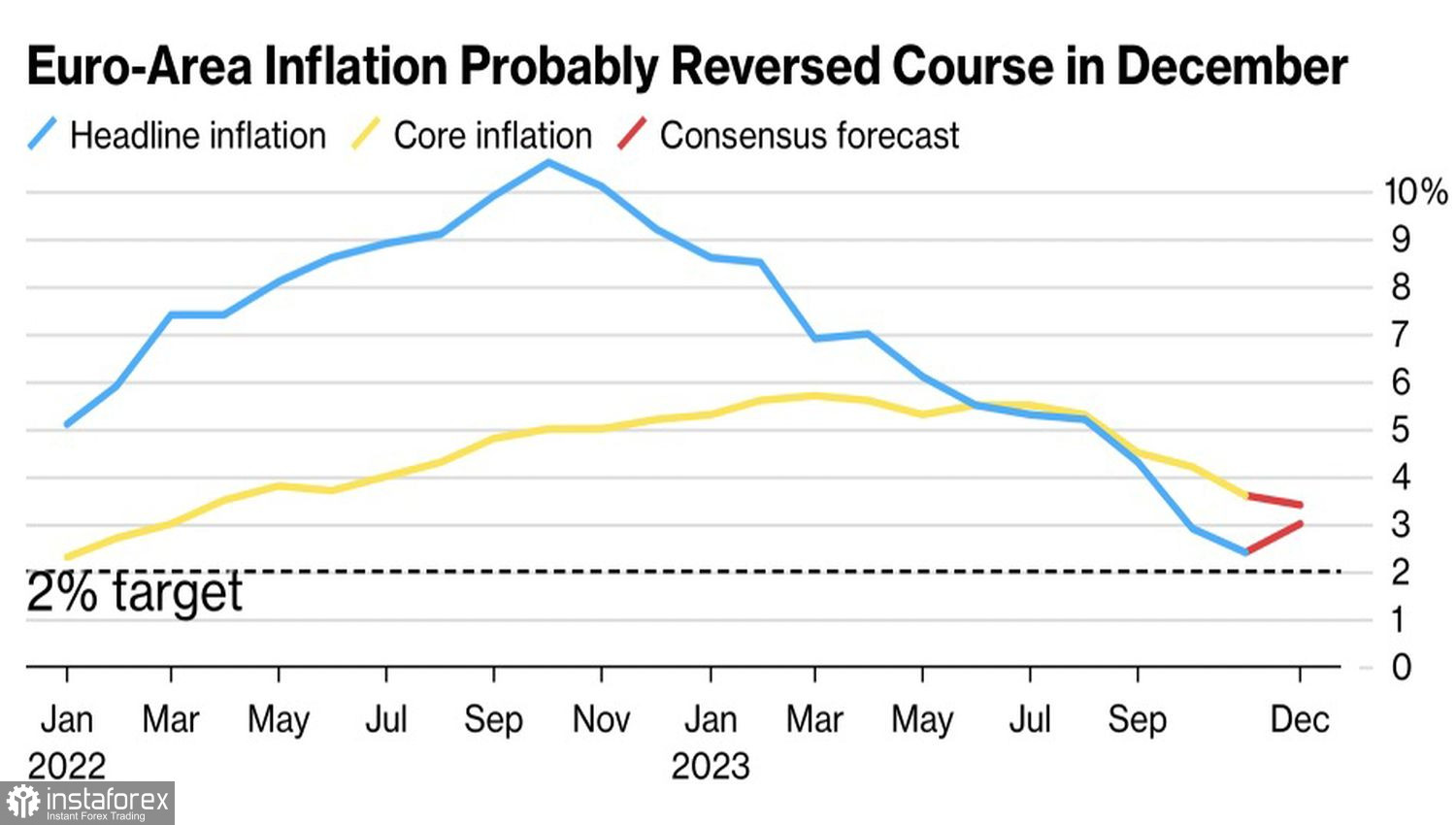
Thus, a fall in U.S. stock indices could lead to a pullback of the regional currency. However, expectations of a rise in European inflation from 2.4% to 3% YoY will support buying in EUR/USD. Adding to this the presence of important events in the economic calendar, such as the publication of the minutes of the December FOMC meeting and the release of non-farm employment data in the U.S., the first week of January promises to be very eventful.
Investors will be particularly attentive to the December report on the American labor market. Bloomberg experts predict a slowdown in employment from 199,000 to 163,000. It is expected that this indicator will continue to cool, aligning with the Fed's plans. The central bank aims to bring the U.S. economy to a soft landing—lowering inflation to the 2% target without triggering a recession. However, if employment unexpectedly increases, it could indicate a surge and an acceleration in inflation, which is good news for the "bears" on the major currency pair.
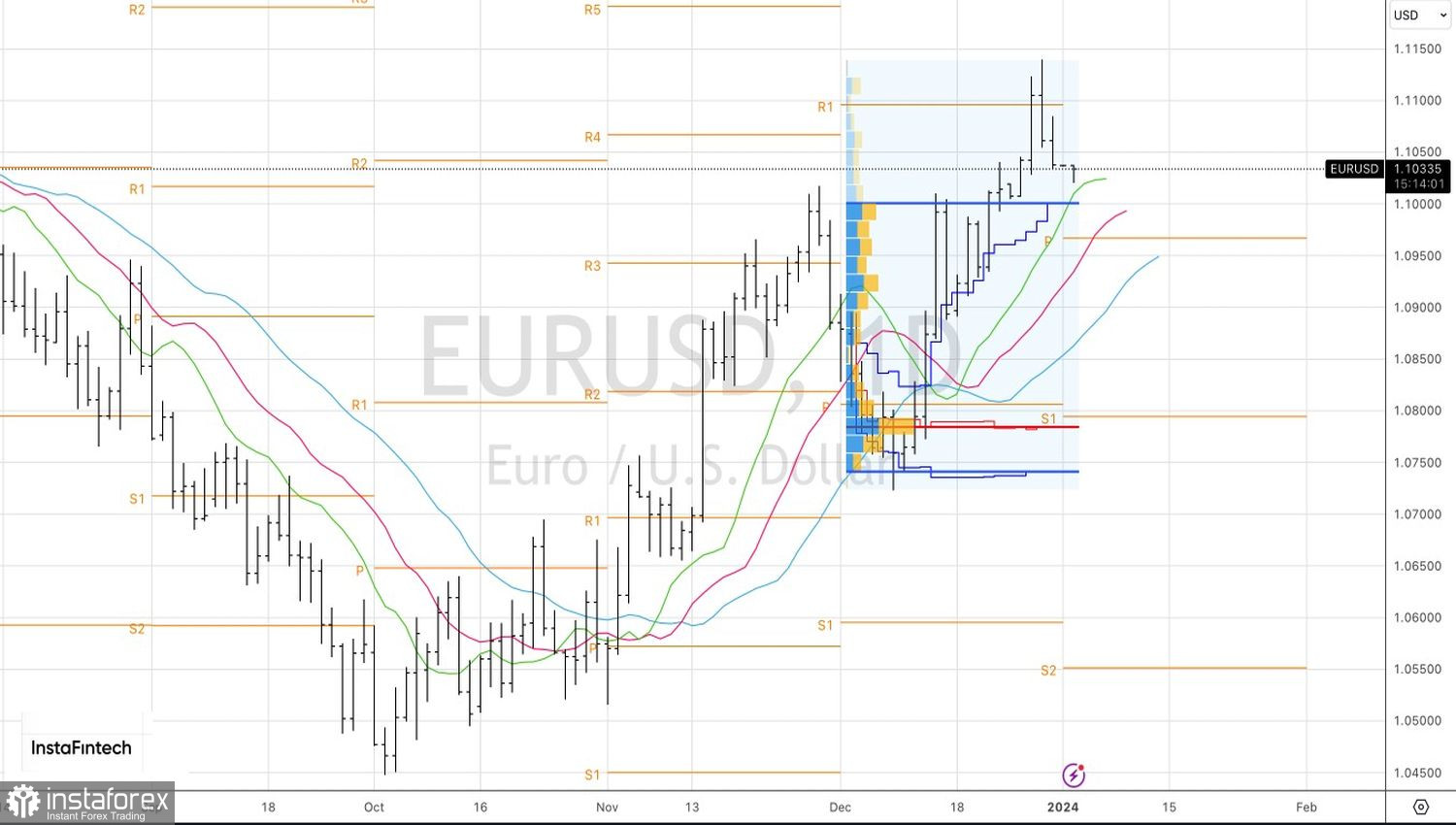
Technically, on the daily chart, EUR/USD continues its pullback towards the upward trend. Nevertheless, the bears' inability to storm the support near the upper boundary of the fair value range of 1.074–1.1 or the pivot level of 1.0965 will be a sign of their weakness and a reason to shift from previously formed shorts to longs.
*The market analysis posted here is meant to increase your awareness, but not to give instructions to make a trade.
InstaSpot analytical reviews will make you fully aware of market trends! Being an InstaSpot client, you are provided with a large number of free services for efficient trading.


