




Đội ngũ của chúng tôi có hơn 7,000,000 thương nhân!
Hàng ngày chúng tôi làm việc cùng nhau để cải thiện việc giao dịch. Chúng tôi nhận được kết quả cao và luôn tiến lên phía trước.
Sự công nhận của hàng triệu thương nhân trên toàn thế giới là sự đánh giá tốt nhất cho công việc của chúng tôi! Bạn đã đưa ra quyết định của mình và chúng tôi sẽ làm mọi thứ cần thiết để đáp ứng mong đợi của bạn!
Chúng ta cùng với nhau sẽ là một nhóm tuyệt vời!
InstaSpot. Tự hào làm việc cho bạn!





Diễn viên, nhà vô địch mùa giải UFC 6 và là người hùng thật sự!
Người tự mình làm nên tất cả. Người đàn ông đáng kể học hỏi.
Bí mật đằng sau thành công của Taktarov là sự cố gắng liên tục hướng tới mục tiêu.
Hãy khai phá tất cả các mặt tài năng của bạn!
Khám phá, thử, thất bại - nhưng không bao giờ dừng lại!
InstaSpot. Câu chuyện thành công của bạn bắt đầu từ đây!
The crisis of 2008 forced the Federal Reserve to take emergency measures. Including the introduction of the so-called quantitative easing program. Its essence boils down to buying various securities from various financial institutions, primarily bonds, with an obligation to buy them back. Through this program, the regulator injected huge amounts of money into the economy. At the same time, the terms for the repurchase of assets were not initially set. And even when the program was completed, it was actually extended by the introduction of new ones.
As a result, a lot of securities accumulated on the balance sheet of the Federal Reserve System, and not of the highest quality. After all, the events of 2008 showed that many issuers of securities, especially bonds, are in principle insolvent. But urgent action had to be taken. So the Federal Reserve System was ready to provide financing even on the security of securities, which are usually called "junk." All to save the economy. But after the financial position of the banking system stabilizes, the regulator should begin the reverse process. That is, financial institutions redeem previously sold papers from the Federal Reserve System and return the funds poured into the economy.
The fact that this is inevitable was known back in 2009. No one really knew exactly when that would happen. Initially, it was assumed that just a couple of years after the start of the very first program. More than ten years have passed since then. And this happened yesterday.
The Federal Reserve has embarked on what is known as quantitative tightening. Within three months, buyback volumes will gradually increase and reach $95 billion per month. Against the backdrop of several trillion dollars poured into the financial sector over the years, this is a drop in the ocean. So the program will stretch for years. Nevertheless, the very fact of the reversal of funds flows immediately led to a noticeable strengthening of the dollar and a decrease in stock indices. After all, the funds received through quantitative easing programs were directed to all kinds of financial markets. Especially in the stock market. And not only in the United States, but throughout the world.
American banks have begun to liquidate their positions en masse and prepare the necessary funds, which they must now return to the Federal Reserve System. This is such a large-scale and even epoch-making event that all others fade against its background. So there is no point in considering some kind of macroeconomic statistics.
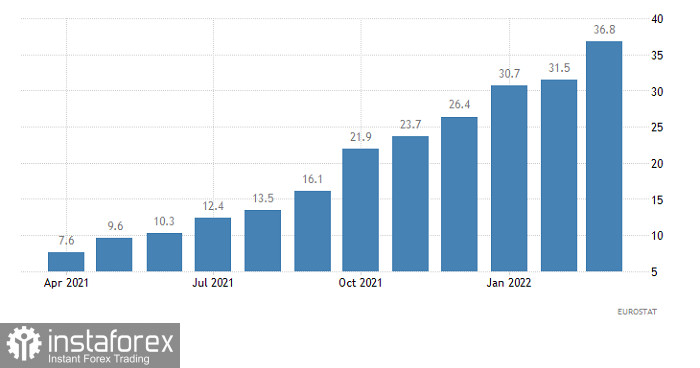
But the initial shock has already passed. Of course, the action of the quantitative tightening program will permanently put pressure on all financial markets without exception. So, ceteris paribus, the dollar will rather strengthen than depreciate. Macroeconomic statistics can only influence the speed of this process. And apparently, the single European currency will continue to lose its positions just at the expense of statistics. The fact is that the growth rate of producer prices may accelerate from 36.8% to 39.0%. In other words, inflationary pressure continues to rise. Although inflation in Europe is already at a record high.
Producer price index (Europe):
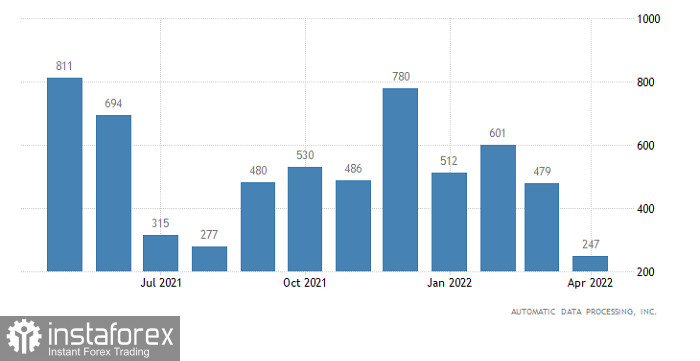
However, the strengthening of the dollar will not be as impressive as yesterday. It will be held back by American statistics. It is quite possible that it will even lead to a slight weakening after the opening of the American session. After all, employment data in the United States is to be released today. Employment should rise by 205,000, which is noticeably less than 247,000 last month. We are referring to a slowdown in the positive dynamics in the labor market, which looks more like a negative factor.
Employment change (United States):
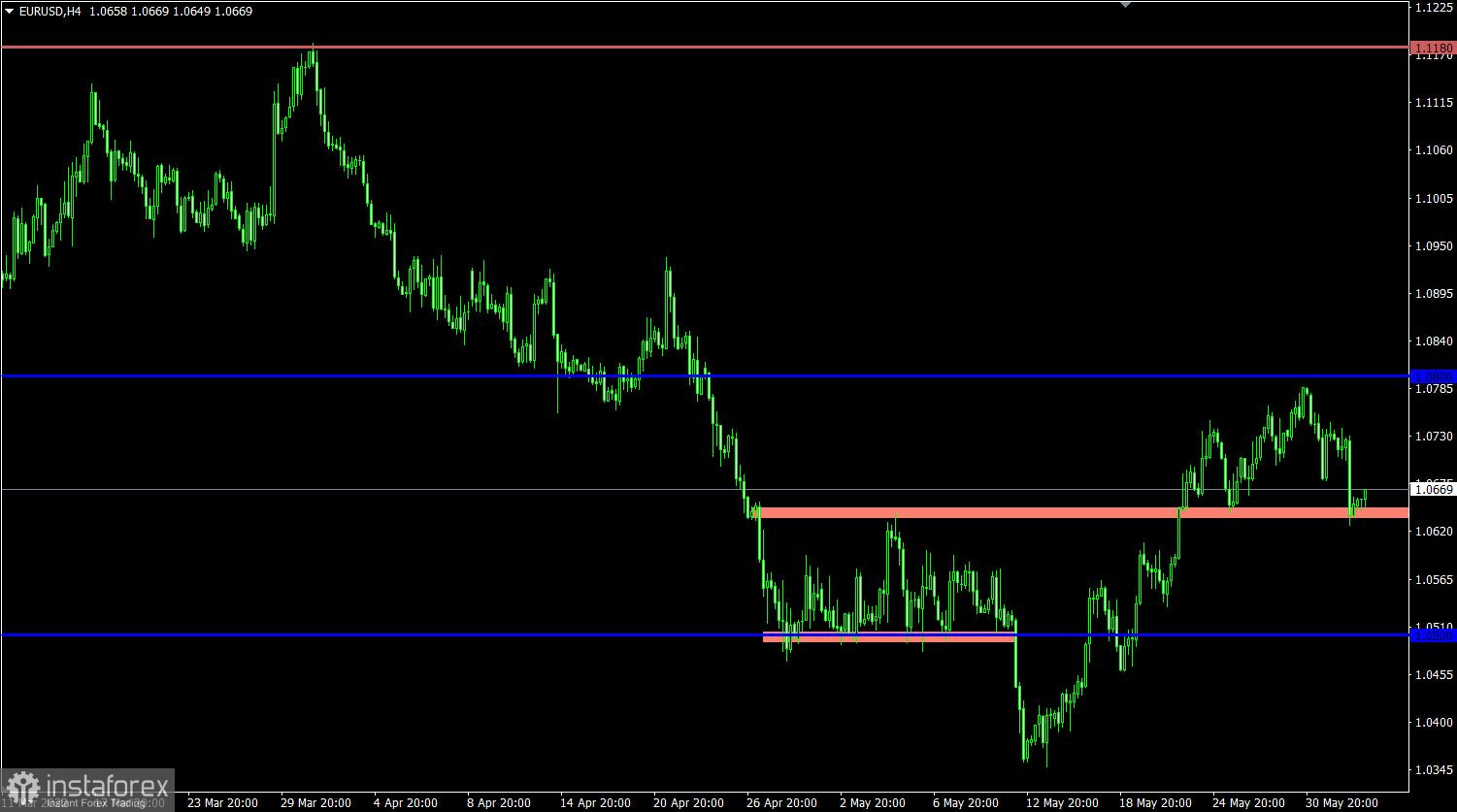
The EURUSD currency pair returned to 1.0636 during an intensive downward cycle, which indicates the completion of the correction. At the moment, there is a slight pullback, while the downward movement is considered the main one. Thus, keeping the price below 1.0636 may well lead to a subsequent increase in the volume of short positions.
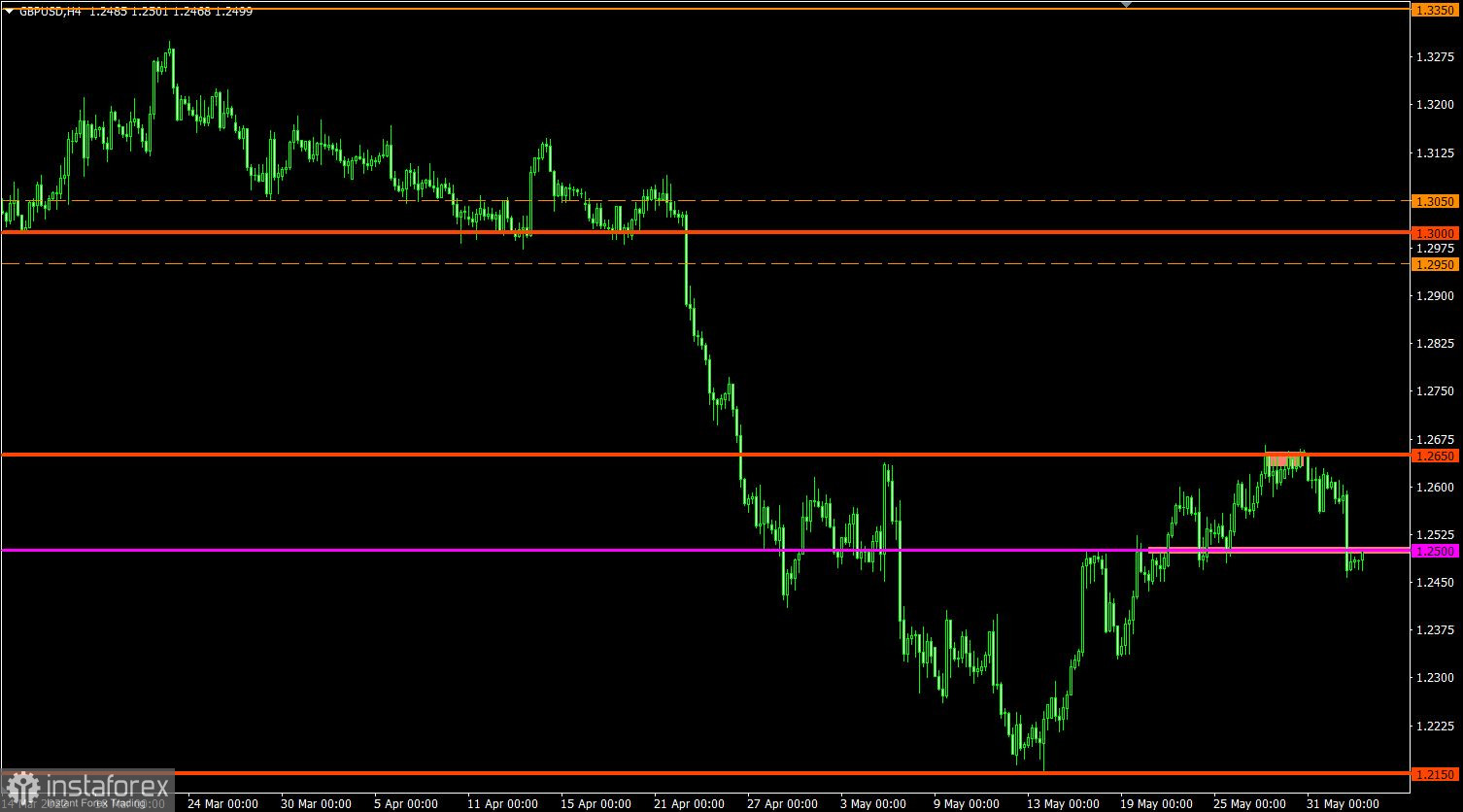
The GBPUSD currency pair rushed down by more than 100 points, eventually breaking the level of 1.2500 on the way. In fact, a signal was received about the completion of the correction, where the dollar positions are again considered the main ones in the market.
*Phân tích thị trường được đăng tải ở đây có nghĩa là để gia tăng nhận thức của bạn, nhưng không đưa ra các chỉ dẫn để thực hiện một giao dịch.
InstaSpot analytical reviews will make you fully aware of market trends! Being an InstaSpot client, you are provided with a large number of free services for efficient trading.


