




Naš tim čini više od 7.000.000 trgovaca!
Svakog dana zajedno radimo na unapređenju trgovanja. Ostvarujemo vrhunske rezultate i krećemo se samo napred.
Priznatost od strane miliona trgovaca širom sveta najbolje pokazuje koliko se naš rad ceni! Napravili ste svoj izbor i mi ćemo učiniti sve što je neophodno da zadovoljimo vaša očekivanja!
Zajedno činimo sjajan tim!
InstaSpot. Sa ponosom radi za Vas!





Glumac, šampion UFC turnira i pravi heroj!
Čovek koji je ostvario sebe. Čovek koji hoda uz nas.
Tajna uspeha Taktarova jeste stalno kretanje ka svom cilju.
Otkrijte sve strane svog talenta!
Istražuj, pokušaj, padni - ali se nikad ne zaustavljaj!
InstaSpot. Priča Vašeg uspeha započinje ovde!

Iran's refusal to accept a deal on Trump's terms has once again increased pressure on the energy market, driving prices higher. However, while the situation in the Middle East is still unclear, and it is unlikely we will see any serious diplomatic compromises in the near future, it is timely to discuss how high prices may affect the global economy.
Yesterday, Larry Fink, CEO of BlackRock, gave a significant interview, expressing a troubling forecast regarding the potential impact of a spike in oil prices on the global economy. According to him, reaching the mark of $150 per barrel could provoke a full-scale global recession, threatening economic growth and stability worldwide.
Fink emphasized that the ultimate outcome of the conflict in the Middle East remains uncertain, but he outlined two key scenarios for future developments. The first scenario involves resolving the conflict and integrating Iran into the global economy, which, he said, could lead to oil prices falling below pre-crisis levels. This prospect opens up opportunities for recovery and stabilization of energy markets.
Conversely, the second scenario paints a much darker picture. In the absence of a resolution and amid escalating tensions—a situation that is increasingly likely—Fink does not rule out the possibility that oil prices could remain above $100, reaching $150 in the coming years. Such prices, he stated, would have profound consequences for the global economy, exacerbating inflationary pressures and slowing economic growth.
Of particular concern is the fact that Fink views rising energy prices as a regressive tax. This means that such increases will disproportionately impact the most vulnerable segments of the population—the poor—while the effect on wealthier segments will be less pronounced. This dynamic could lead to increased social inequality and further destabilization of society.
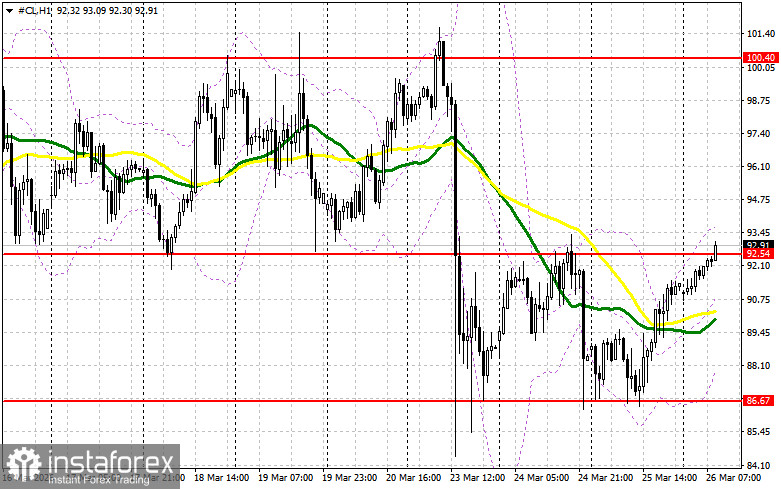
As for the current technical picture of oil, buyers need to reclaim the nearest resistance at $92.54. This will allow them to target the $100.40 mark, above which it will be quite problematic to break through. The farthest target will be around $106.83. In the event of a decline in oil prices, bears will attempt to gain control over $86.67. If they succeed, breaking through this range will deliver a serious blow to bullish positions and could drive oil down to a low of $81.38, with a prospect of reaching $74.85.
*Analiza tržišta koja se ovde nalazi namenjena je boljem razumevanju tržišta i ne pruža instrukcije za vršenje trgovanja.
Uz InstaSpot-ove analitičke preglede uvek ćete biti u toku sa tržišnim trendovima! Klijentima InstaSpot-a su dostupni mnogobrojni besplatni servisi za uspešno trgovanje.


