




Nossa equipe tem mais de 7,000,000 traders!
Todos os dias, trabalhamos juntos para melhorar a negociação. Obtivemos resultados elevados e avançamos.
O reconhecimento de milhões de traders em todo o mundo é a melhor apreciação do nosso trabalho! Você nos escolheu e faremos tudo o que for necessário para atender às suas expectativas!
Nós somos uma ótima equipe juntos!
InstaSpot. Orgulho de trabalhar para você!





Ator, hexacampeão do UFC e um verdadeiro herói!
Um homem de sucesso. Um homem que mostra o nosso caminho.
O segredo por trás do sucesso de Taktarov é um movimento constante em direção ao objetivo.
Revele todos os lados do seu talento!
Descubra, tente, falhe, mas nunca pare!
I InstaSpot. Sua história de sucesso começa aqui!
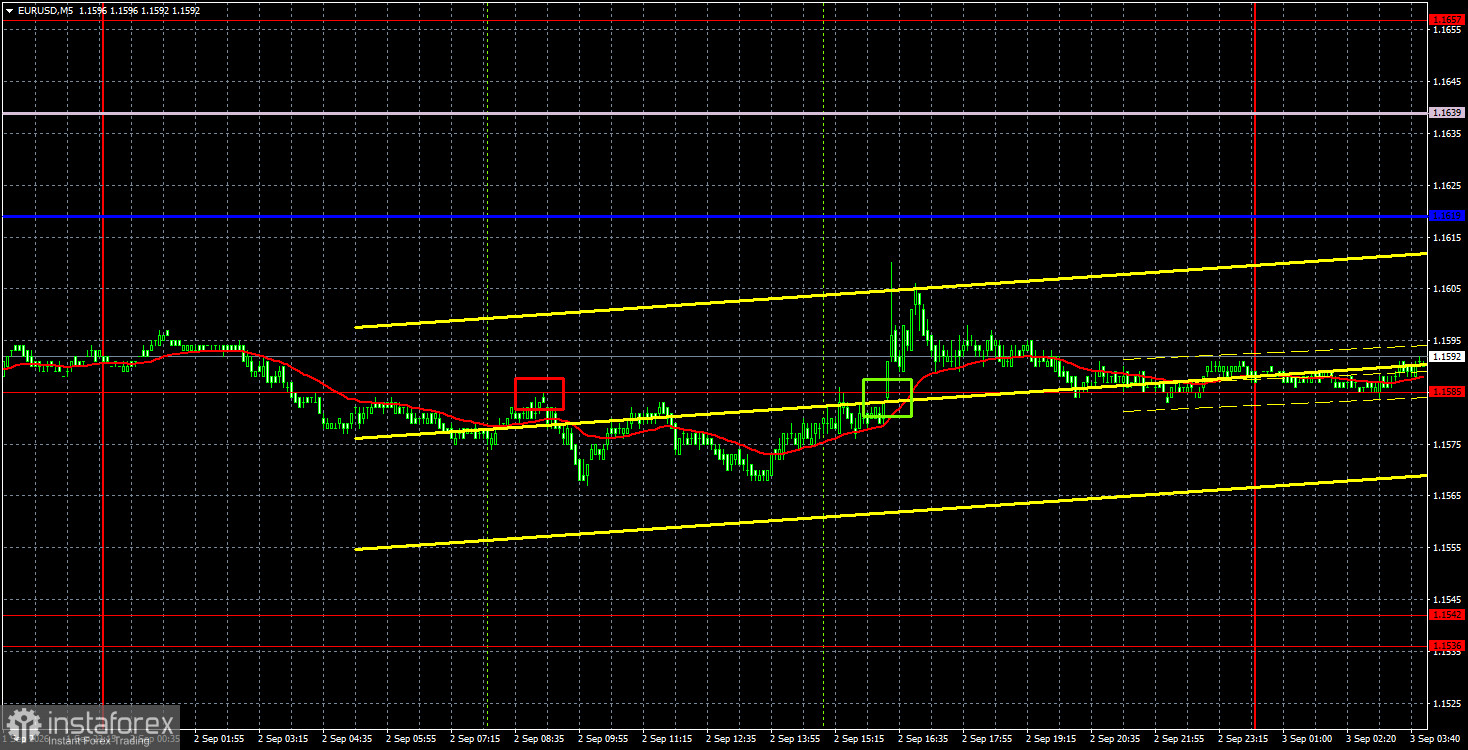
The EUR/USD pair failed to extend its downward move on Wednesday, but it did refresh its most recent local low. The downtrend remains intact, as shown by the trendline, so the dollar can feel relatively calm and stable until that trendline is broken. That said, there is little real cause for further (even local) dollar strength. The decline began after a month of growth, so this is primarily a correction. This week, none of the U.S. macro releases have supported the dollar. Tomorrow, the most important reports will arrive — Nonfarm Payrolls and the unemployment rate for August. The market effectively ignored last Friday's weak annual Nonfarm report. The only thing currently allowing the dollar to rise is market belief in Federal Reserve tightening in September. But belief is not a concrete fact. In our view, the chances of a September rate hike remain low, and Friday's labor data could bury hopes for tightening. Nevertheless, the dollar can remain more or less stable for now.
Technically, the pair continues the downward trend supported by its trendline. Thus, the decline may continue in the near term. Several more important reports will be released this week, but the market already shows that it is mainly focused on the Nonfarm payrolls.
On the 5-minute timeframe, several trade signals formed on Thursday. First, the pair bounced from 1.1585 from below, then it breached that level. In both cases, the price failed to move even 15 pips in traders' favor. That is because market volatility has been extremely weak over the past month. On average, the pair moves 30–40 pips per day and only occasionally shows medium-strength moves.
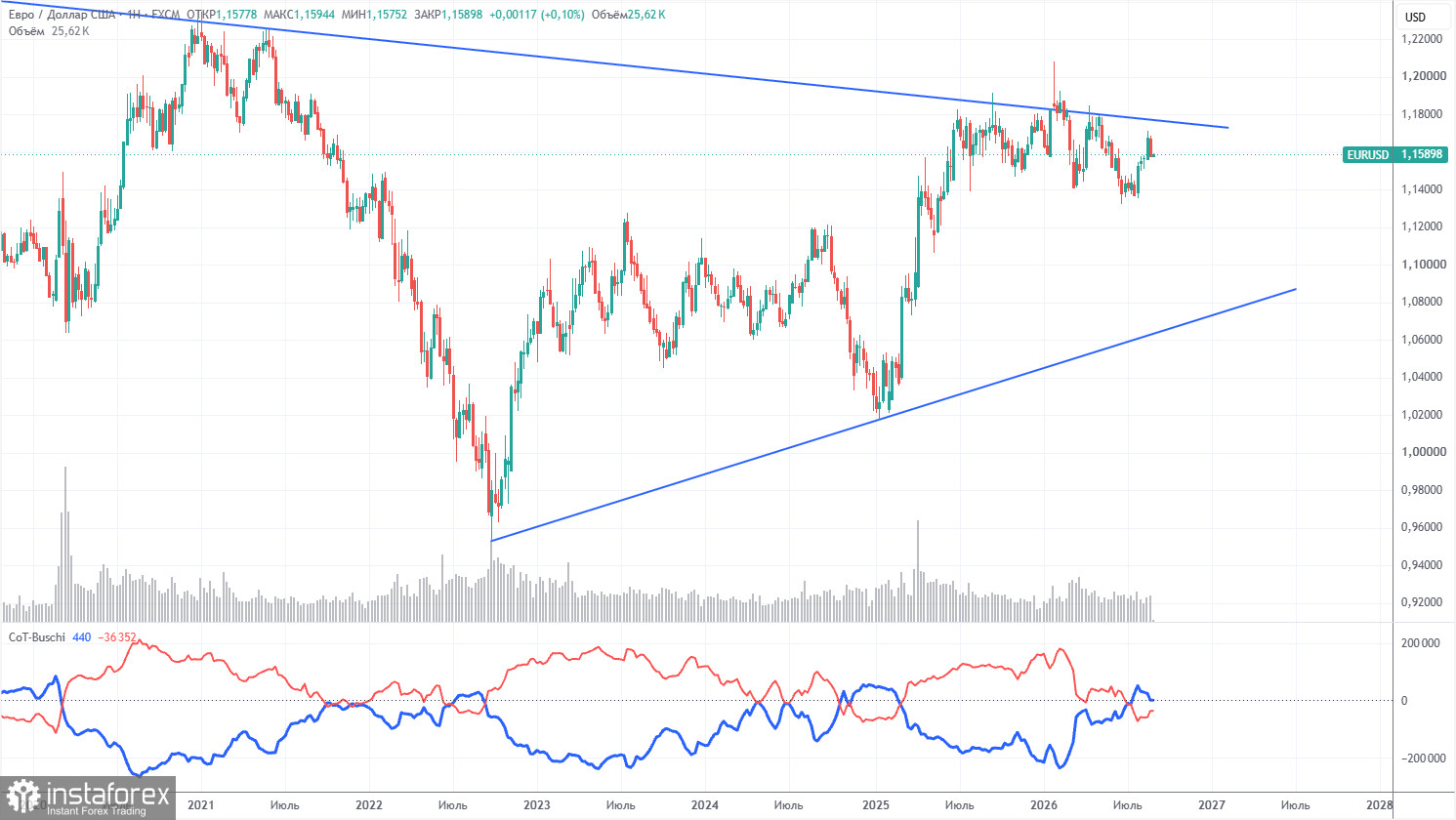
The latest COT report is dated August 25. On the weekly chart, it is clear that net positions of non-commercial traders have turned bearish and have fallen markedly in 2026 due to geopolitical events. Traders have been reducing exposure to the euro in favor of the U.S. dollar in recent months. Donald Trump's policy has not changed, and for a time the dollar acted as a reserve currency.
We still do not see fundamental factors that support sustained dollar strength. The war in the Middle East made the dollar temporarily very attractive, but when that factor expires, markets should revert to normal — and that process may already be underway. In the long run, the euro could fall as low as the $1.08 trend line, but the multi-year uptrend remains relevant, and the pair has not approached that line despite recent months of dollar growth.
The positions of the red and blue lines on the COT indicator indicate approximate parity between bulls and bears. Over the last reporting week, the number of long positions in the "Non-commercial" group rose by 2,700 while shorts decreased by 20,000. Accordingly, the net position increased by 22,700 contracts for the week.
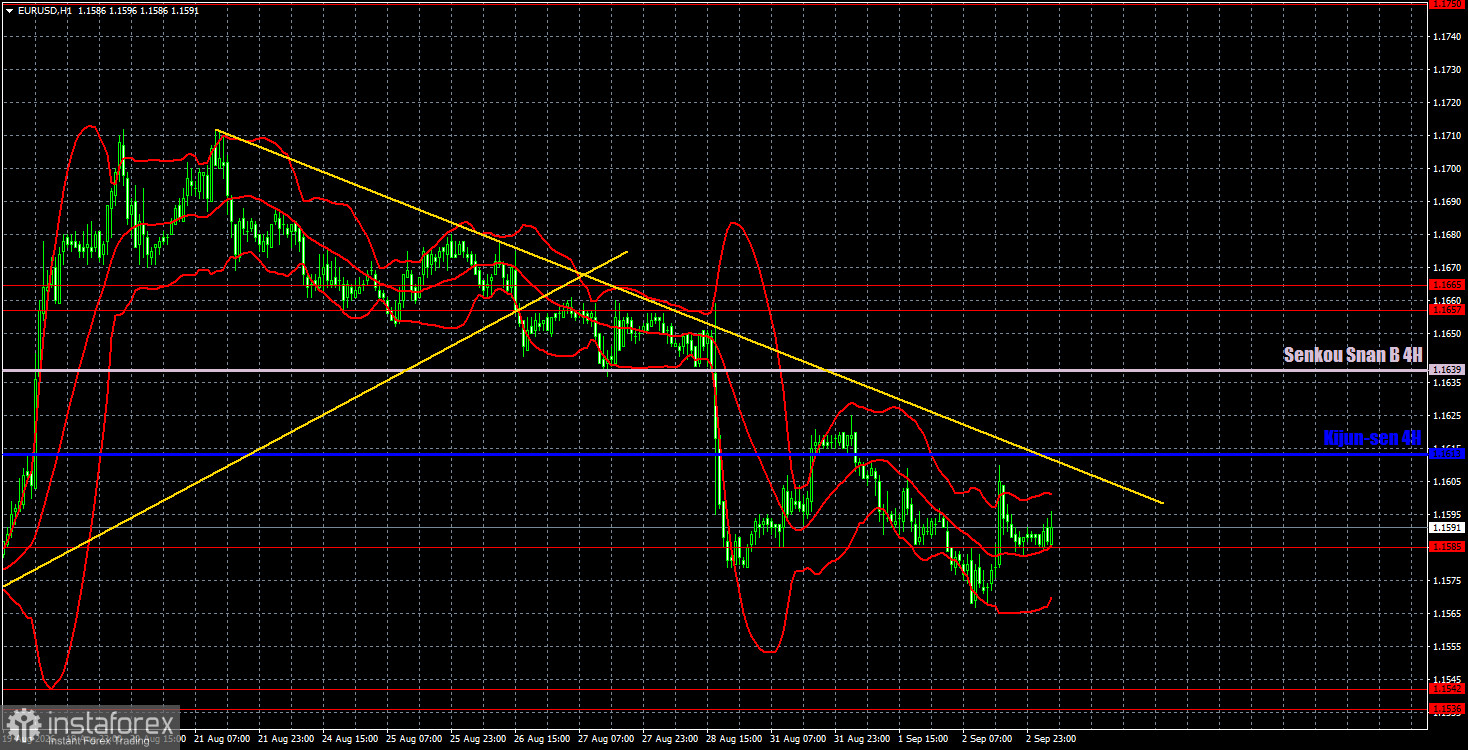
On the hourly timeframe, the EUR/USD pair continues to form a downward trend. The situation in the Middle East remains tense and shows no improvement, but that alone is not enough to fuel a new strong rally for the dollar. Kevin Warsh's remarks and the annual Nonfarm Payrolls supported the dollar, yet we see few solid reasons for sustained dollar strength. This week the dollar's advance looks more like a technical correction.
For September 3, we highlight the following trading levels — 1.1234, 1.1274, 1.1362–1.1368, 1.1461–1.1473, 1.1536–1.1542, 1.1585, 1.1657–1.1665, 1.1750–1.1760, 1.1786, 1.1830–1.1837, as well as the Senkou Span B line (1.1639) and Kijun-sen (1.1613). Ichimoku lines may shift during the day, so take that into account when determining trade signals. Remember to move Stop Loss to break even after a 15-pip move in your favor to protect against false signals.
On Thursday, second-estimate services PMIs will be published in European countries — these are secondary releases and are unlikely to move the market. Pay special attention to the ISM services index in the U.S.; however, at least until Friday, the market is biased toward buying the dollar and tends to ignore weak U.S. data.
Today, traders may consider short positions targeting 1.1536–1.1542 if price consolidates below 1.1585. A fresh rebound from 1.1585 would allow opening long positions targeting 1.1613 and 1.1639.
*A análise de mercado aqui postada destina-se a aumentar o seu conhecimento, mas não dar instruções para fazer uma negociação.
InstaSpot analytical reviews will make you fully aware of market trends! Being an InstaSpot client, you are provided with a large number of free services for efficient trading.


