




हमारी टीम के पास 7,000,000 से अधिक ट्रेडर हैं!
प्रतिदिन हम ट्रेडिंग को बेहतर बनाने के लिए एक साथ काम करते हैं। हम उच्च परिणाम प्राप्त कर रहे हैं और आगे की ओर बढ़ रहे हैं।
दुनियाभर के लाखों लोगों द्वारा हमारे काम को पहचानना, हमारे काम की सबसे अच्छी सराहना है! आपने आपनी पसंद बनाई है और हम आपकी अपेक्षाओं को पूरा करने के लिए हर संभव प्रयास करेंगे!
हम एक साथ एक अच्छी टीम हैं!
इंस्टाफॉरेक्स को इस बात का गर्व है कि वह आपके लिए काम कर रहा है!





एक्टर, यूएफसी 6 टूर्नामेंट का विजेता और एक सच्चा हीरो!
वह आदमी, जिसने अपनी मेहनत से सब किया है। वह आदमी, जो हमारे रास्तों पर चलता है.
टैक्टारोव की सफलता का राज लक्ष्य की ओर लगातर अग्रसर रहना है।
अपनी प्रतिभा के सभी पक्षों को प्रकट करें!
खोज करें, कोशिश करें, विफल हो-लेकिन कभी न रूकें!
इंस्टाफॉरेक्स- हमारी सफलताओं की कहानी यहाँ से शुरू होती है!

The EUR/USD pair resumed its upward movement on Monday and consolidated above the 76.4% retracement level at 1.1696, then continued rising toward the 61.8% Fibonacci level at 1.1770. A rebound from this level would favor the US dollar and lead to some decline toward 1.1696. Consolidation above 1.1770 would increase the likelihood of continued growth in the euro toward the next Fibonacci level of 50.0% at 1.1830.
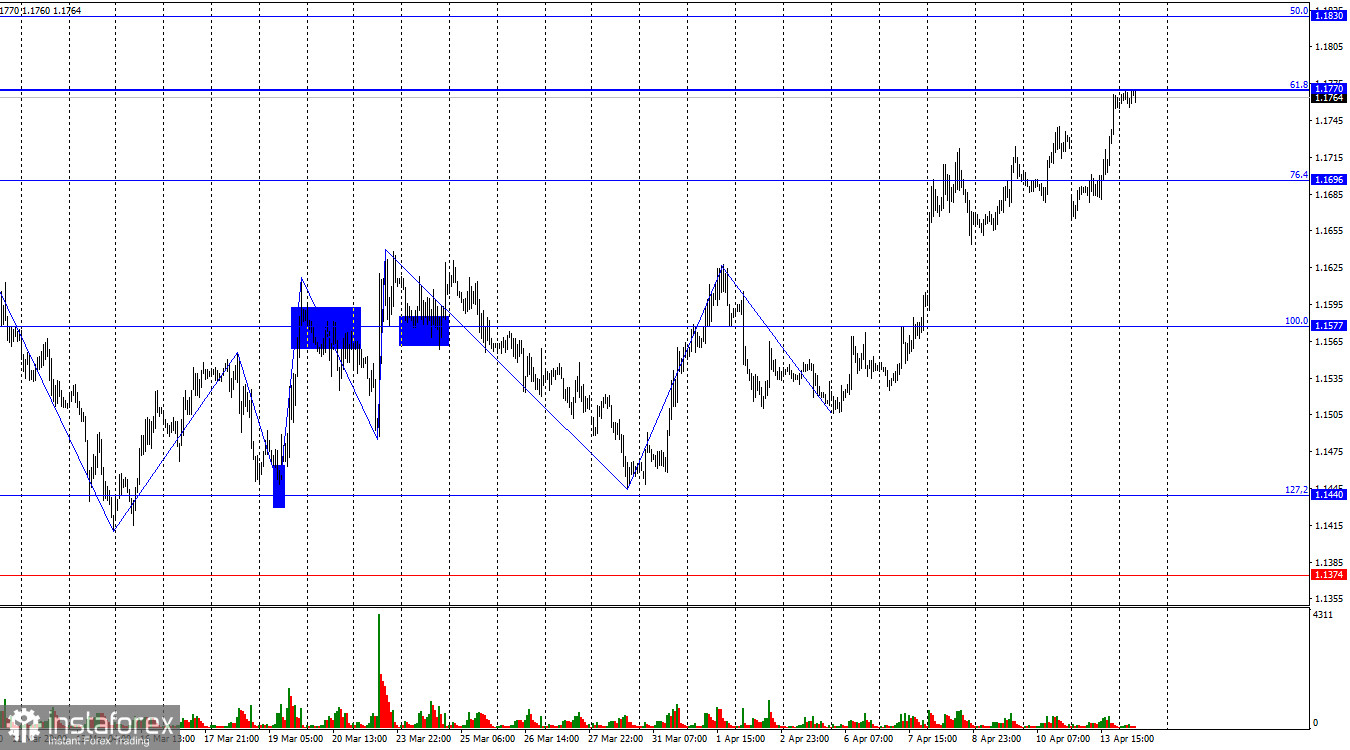
The wave structure on the hourly chart has become quite complex but is starting to clarify. Recent news about a two-week ceasefire between Iran and the United States supported the bulls, allowing them to form a new bullish wave. The picture now resembles the beginning of a new bullish trend. However, over the weekend, the geopolitical backdrop turned negative again, which will make it much more difficult for bulls to continue their advance compared to last week.
On Monday, there was only one major piece of news. Donald Trump announced a full naval blockade of the Strait of Hormuz. What is the point, if the strait has already been blocked by Iran for more than a month, which triggered a sharp rise in energy prices? The point is precisely to make the blockade complete, including Iranian tankers transporting oil to China and other Asian countries. Donald Trump decided to strike Iran's financial sector, which relies almost entirely on oil sales—especially under current difficult energy conditions. Thus, the volume of oil entering the market should decrease even further, but surprisingly, benchmark oil prices barely changed yesterday. Moreover, the US dollar declined throughout the day, something traders may have grown unaccustomed to over the past month and a half. Why is the dollar falling instead of rising? In my view, the situation in the Middle East has not worsened due to the additional blockade, the oil shortage has not become critical, military actions have not resumed, and negotiations between Iran and the US may continue this week. Therefore, the market remains cautiously optimistic.
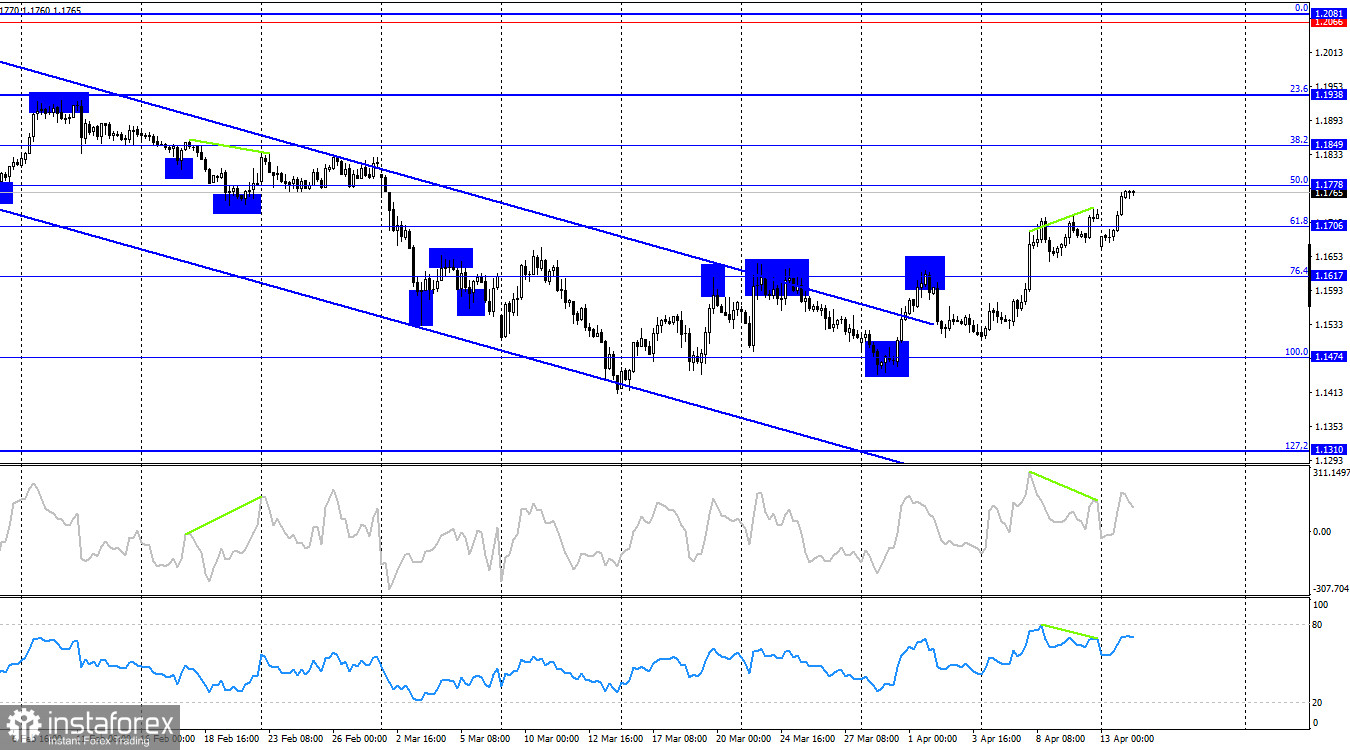
On the 4-hour chart, the pair consolidated above the 61.8% retracement level at 1.1706, allowing continued growth toward the next Fibonacci level of 50.0% at 1.1778. A rebound from this level would favor the US dollar and lead to some decline toward 1.1706 and 1.1617. Consolidation above 1.1778 would increase the chances of further growth. Bulls have managed to exit the descending trend channel, opening up additional opportunities. There are currently no emerging divergences.
Commitments of Traders (COT) report:
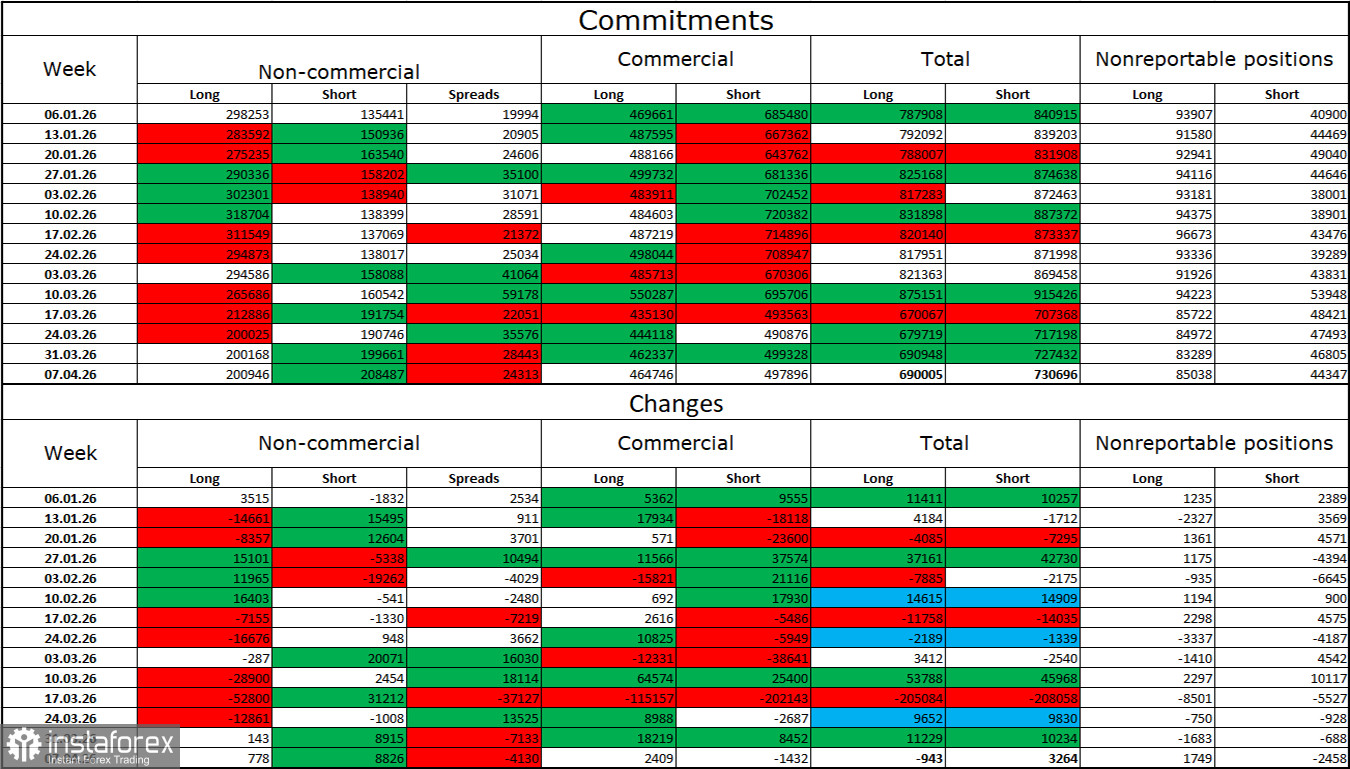
During the last reporting week, professional traders opened 778 long positions and 8,826 short positions. Over seven weeks, the bulls' total advantage has disappeared. The total number of long positions held by speculators now stands at 201,000, while short positions total 208,000. Two months ago, bulls held more than a twofold advantage among non-commercial traders.
Overall, in the long term, major players remain interested in the euro. However, global events—of which there has been no shortage in recent years—continue to influence investor sentiment. At present, the market's attention remains focused on the Middle East, where the conflict shows no sign of ending. Thus, in the near term, the euro and dollar exchange rates will depend not on Federal Reserve or ECB monetary policy or economic data, but on the war involving Iran. The US dollar may once again benefit from this situation.
Economic calendar for the US and the Eurozone:
On April 14, the economic calendar contains only two minor entries. The impact of the news background on market sentiment on Tuesday will be very weak or absent.
EUR/USD forecast and trading advice:
Selling the pair is possible today if there is a rebound from 1.1770 on the hourly chart, with a target of 1.1696. Buying positions are advisable upon a close above 1.1770, with a target of 1.1830.
Fibonacci retracement levels are drawn from 1.1577–1.2082 on the hourly chart and from 1.1474–1.2082 on the 4-hour chart.
*यहां पर लिखा गया बाजार विश्लेषण आपकी जागरूकता बढ़ाने के लिए किया है, लेकिन व्यापार करने के लिए निर्देश देने के लिए नहीं |
InstaSpot analytical reviews will make you fully aware of market trends! Being an InstaSpot client, you are provided with a large number of free services for efficient trading.


