




हमारी टीम के पास 7,000,000 से अधिक ट्रेडर हैं!
प्रतिदिन हम ट्रेडिंग को बेहतर बनाने के लिए एक साथ काम करते हैं। हम उच्च परिणाम प्राप्त कर रहे हैं और आगे की ओर बढ़ रहे हैं।
दुनियाभर के लाखों लोगों द्वारा हमारे काम को पहचानना, हमारे काम की सबसे अच्छी सराहना है! आपने आपनी पसंद बनाई है और हम आपकी अपेक्षाओं को पूरा करने के लिए हर संभव प्रयास करेंगे!
हम एक साथ एक अच्छी टीम हैं!
इंस्टाफॉरेक्स को इस बात का गर्व है कि वह आपके लिए काम कर रहा है!





एक्टर, यूएफसी 6 टूर्नामेंट का विजेता और एक सच्चा हीरो!
वह आदमी, जिसने अपनी मेहनत से सब किया है। वह आदमी, जो हमारे रास्तों पर चलता है.
टैक्टारोव की सफलता का राज लक्ष्य की ओर लगातर अग्रसर रहना है।
अपनी प्रतिभा के सभी पक्षों को प्रकट करें!
खोज करें, कोशिश करें, विफल हो-लेकिन कभी न रूकें!
इंस्टाफॉरेक्स- हमारी सफलताओं की कहानी यहाँ से शुरू होती है!

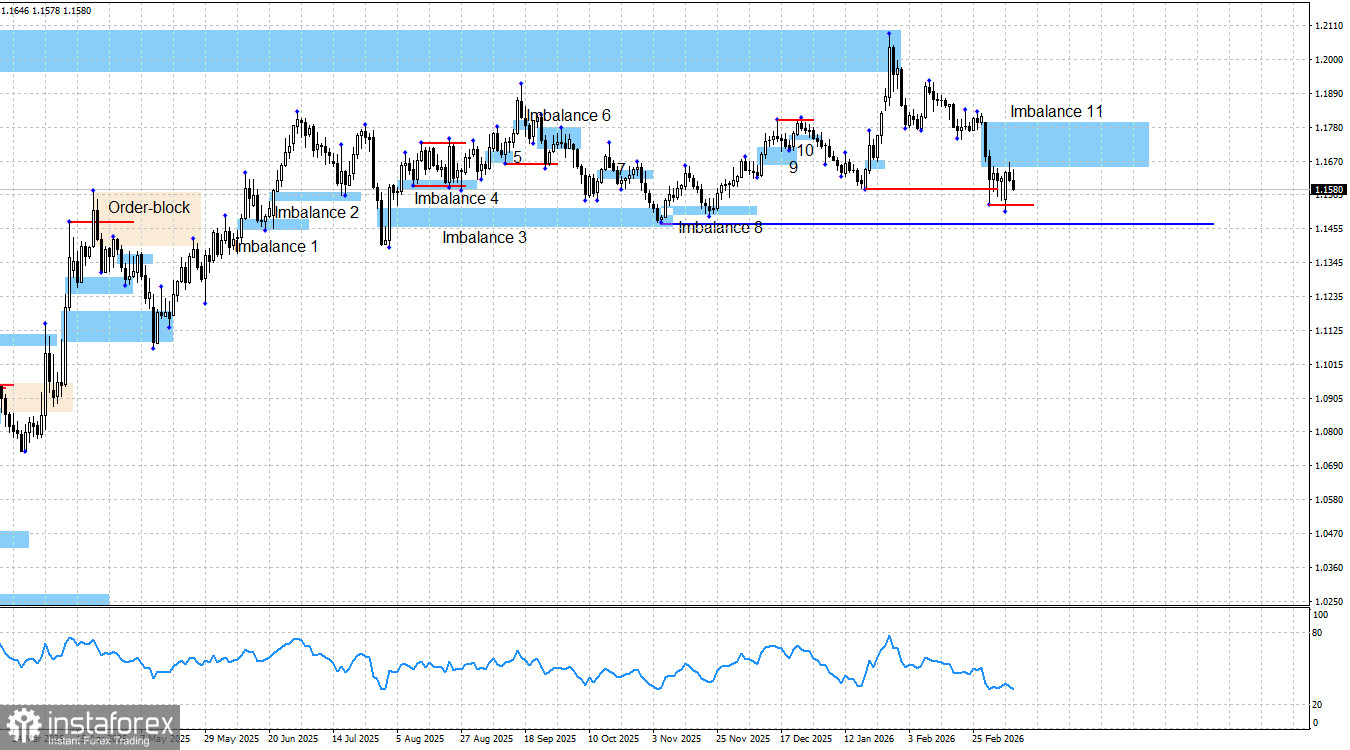
The EUR/USD pair is currently at another crossroads. Briefly outlining the key technical points: the pair swept buy-side liquidity last week, swept buy-side liquidity again this week, completed a precise fill of imbalance 11, and even a small drop in quotes would cancel the current bullish trend.
Thus, in the near future one of two things must happen. Either imbalance 11 will be invalidated, which would lead to the resumption of the bullish trend—this is the more preferable scenario. Or the bullish trend will be broken. At the moment, everything is pointing toward the bullish trend being broken. Yesterday, the price showed a clear reaction to imbalance 11, which means a bearish signal has formed. If this signal leads to a drop of at least 100 points, the bullish trend could be broken. The only chance left for the bulls lies in additional liquidity sweeps.
In my opinion, without a new escalation of the conflict in the Middle East, it will be extremely difficult for the dollar to continue rising and for the bears to keep pushing forward. However, the situation in the Middle East—if it is not escalating further—is certainly not improving either. Yesterday it became known that Iran struck several tankers, confirming its intention to block passage through the Strait of Hormuz.
Naturally, Donald Trump may now launch new strikes against Iran—but what would that change? American missiles might eliminate the new leader Ali Khamenei, but the very next day someone else with the same anti-American views would likely take his place.
Last week, as expected, a bearish imbalance 11 was formed, and this week it was worked out. The sell signal formed quite quickly under pressure from the geopolitical background. Now bulls can only rely on new liquidity sweeps from the last three lows: 1.1508, 1.1470, and 1.1392. But if geopolitics does not improve, even that may not save the bulls.
The graphical picture still signals bullish dominance. The bullish trend remains intact, but at the moment bullish traders do not have enough reasons to launch a new offensive. For the European currency to rise, the war in Iran would need to de-escalate, and oil and gas prices would need to continue declining. To open new long positions, traders need new bullish patterns or at least a liquidity sweep from the last three bearish swings.
The news background on Wednesday was fairly interesting, but almost no one paid attention to it. The German inflation report did not attract traders' interest, while the U.S. inflation report did—but only for a very short time.
In recent months, bulls have had plenty of reasons to attack, and even the start of the war in the Middle East has not reduced them. Structurally and globally, Trump's policies, which led to a sharp drop in the dollar last year, have not changed. In the near future, the U.S. currency may show growth amid investors fleeing risk, but this factor cannot support it permanently. Meanwhile, the conflict in Iran does not cancel the dovish outlook for FOMC monetary policy, Trump's global trade war, the weakness of the U.S. labor market, two government shutdowns, U.S. military aggression, the legal pressure on Jerome Powell, slowing GDP growth, and other factors unfavorable for the United States.
I still do not believe in a bearish trend. The dollar has received temporary support from the market, but it is not certain that this situation will last long. The blue line shows the price level below which the bullish trend can be considered completed. Bears need to push the market down about 120 points to reach it, and even if they succeed, I would still doubt the formation of a lasting bearish trend. In my opinion, the pair is showing strong declines purely due to geopolitical factors. When this factor disappears, what will bears rely on to continue attacking?
News Calendar for the U.S. and the Eurozone
United States
On March 12, the economic calendar contains three entries, none of which are considered important. The influence of the news background on market sentiment on Thursday may therefore be very limited.
EUR/USD Forecast and Advice for Traders
In my view, the pair is still in the formation stage of a bullish trend. The news background shifted sharply about a week ago, but the trend itself remains intact. Therefore, traders will need new patterns and signals in the near future to form short-term forecasts.
If bearish signals appear (which is more likely), it is important to remember that the trend remains bullish and that geopolitical factors usually do not have a long-term impact. If bullish signals appear (which would be much more preferable), traders will have the opportunity to open new long positions that do not contradict the trend.
A sell signal formed this week, but the proximity of the three important swings still makes me doubtful about it.
*यहां पर लिखा गया बाजार विश्लेषण आपकी जागरूकता बढ़ाने के लिए किया है, लेकिन व्यापार करने के लिए निर्देश देने के लिए नहीं |
InstaSpot analytical reviews will make you fully aware of market trends! Being an InstaSpot client, you are provided with a large number of free services for efficient trading.


