




A lenda da equipe InstaSpot!
Lenda! Você acha que isso é retórica bombástica? Mas como devemos chamar um homem que se tornou o primeiro asiático a vencer o campeonato mundial de xadrez aos 18 anos e que se tornou o primeiro grande mestre indiano aos 19? Esse foi o começo de um caminho difícil para o título de campeão do mundo para Viswanathan Anand, o homem que se tornou parte da história do xadrez para sempre. Agora mais uma lenda na equipe InstaSpot!





O Borussia é um dos clubes de futebol com mais títulos da Alemanha, que provou repetidamente aos fãs: o espírito de competição e liderança certamente levará ao sucesso. Negocie da mesma maneira que os profissionais do esporte jogam: com confiança e ativamente. Mantenha o "ritmo" do Borussia FC e esteja na liderança com a InstaSpot!
At the end of 2024, many analysts were discussing the possibility of EUR/USD reaching parity. The U.S. economy was noticeably stronger than its European counterpart, with the Federal Reserve's December projections suggesting two rate cuts instead of four. Additionally, the derivatives market anticipated that the European Central Bank would lower its deposit rate by 100 basis points in 2025. The AI-driven rally had propelled U.S. stock indices well ahead of European equities. So, what else could the dollar do to weaken the euro further? It turns out that the situation is not that straightforward.
Markets thrive on expectations, reacting to dynamic conditions rather than static ones. It appeared that nearly all the bearish factors for EUR/USD had already been priced in, leading to a pullback and consolidation. However, this interpretation has nuances. The derivatives market is currently pricing in fewer Fed rate cuts than indicated in the December FOMC projections. Meanwhile, ECB derivatives still anticipate a total cut of 100 basis points by the end of the year, without even considering the 25-basis-point deposit rate cut anticipated in January.
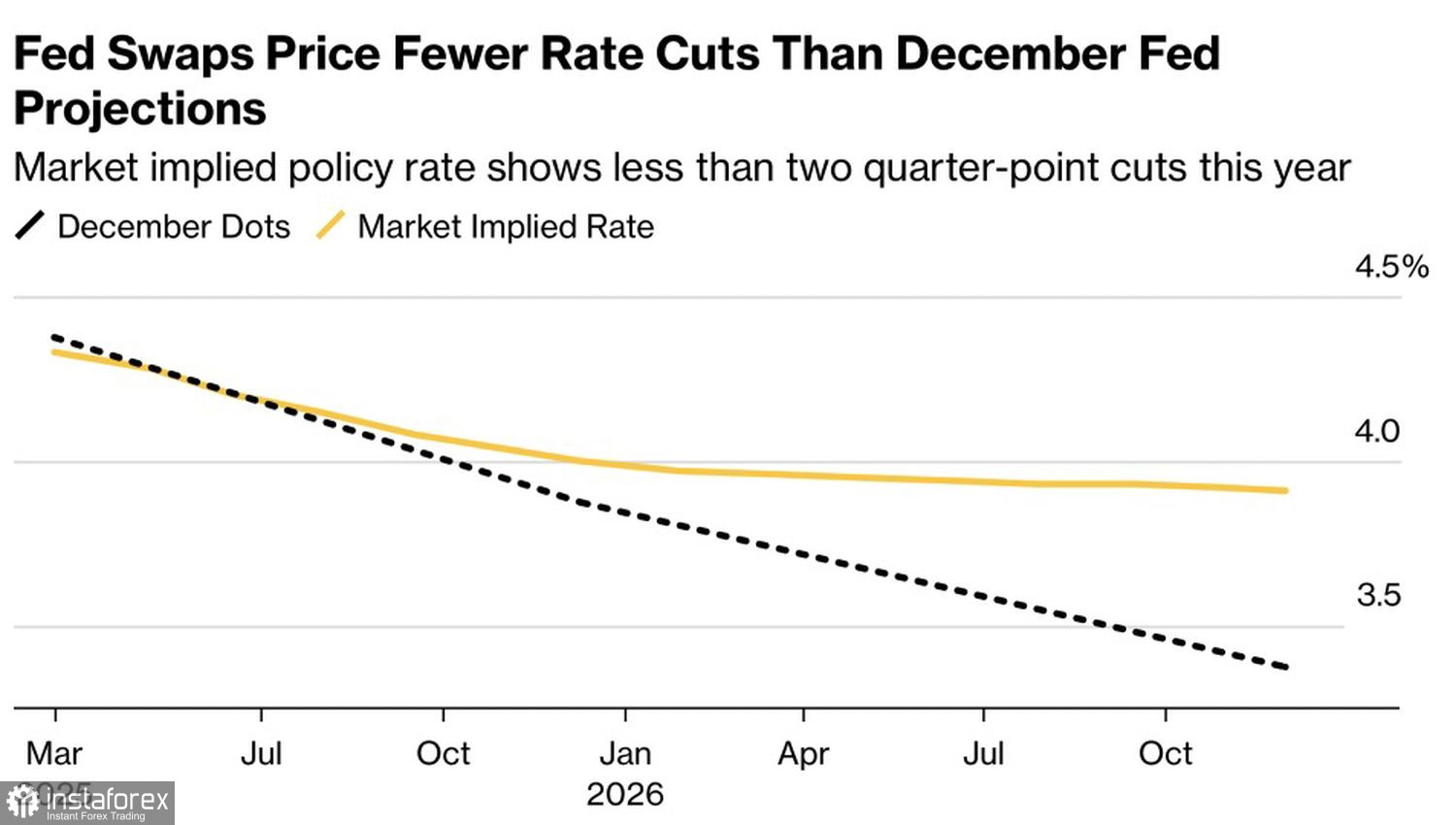
At first glance, the divergence in monetary policy between the Fed and the ECB has widened. So why hasn't EUR/USD continued its downward trend? Several factors come into play. European economic activity is showing signs of improvement, as reflected in recent business sentiment data. European stock indices are performing better, driven by declining bond yields and expectations of continued monetary policy easing. Additionally, Donald Trump has not been as aggressive as many had feared.
Is there really a significant difference between 60% and 10% tariffs on China? What about the impact of 25% tariffs on Mexican and Canadian imports compared to their postponement? Or consider the difference between universal steel and aluminum tariffs versus exemptions for Australia. The U.S. president seems to be exercising more caution than anticipated. If the intention is to pressure other economies into submission, it appears to be executed with great restraint.
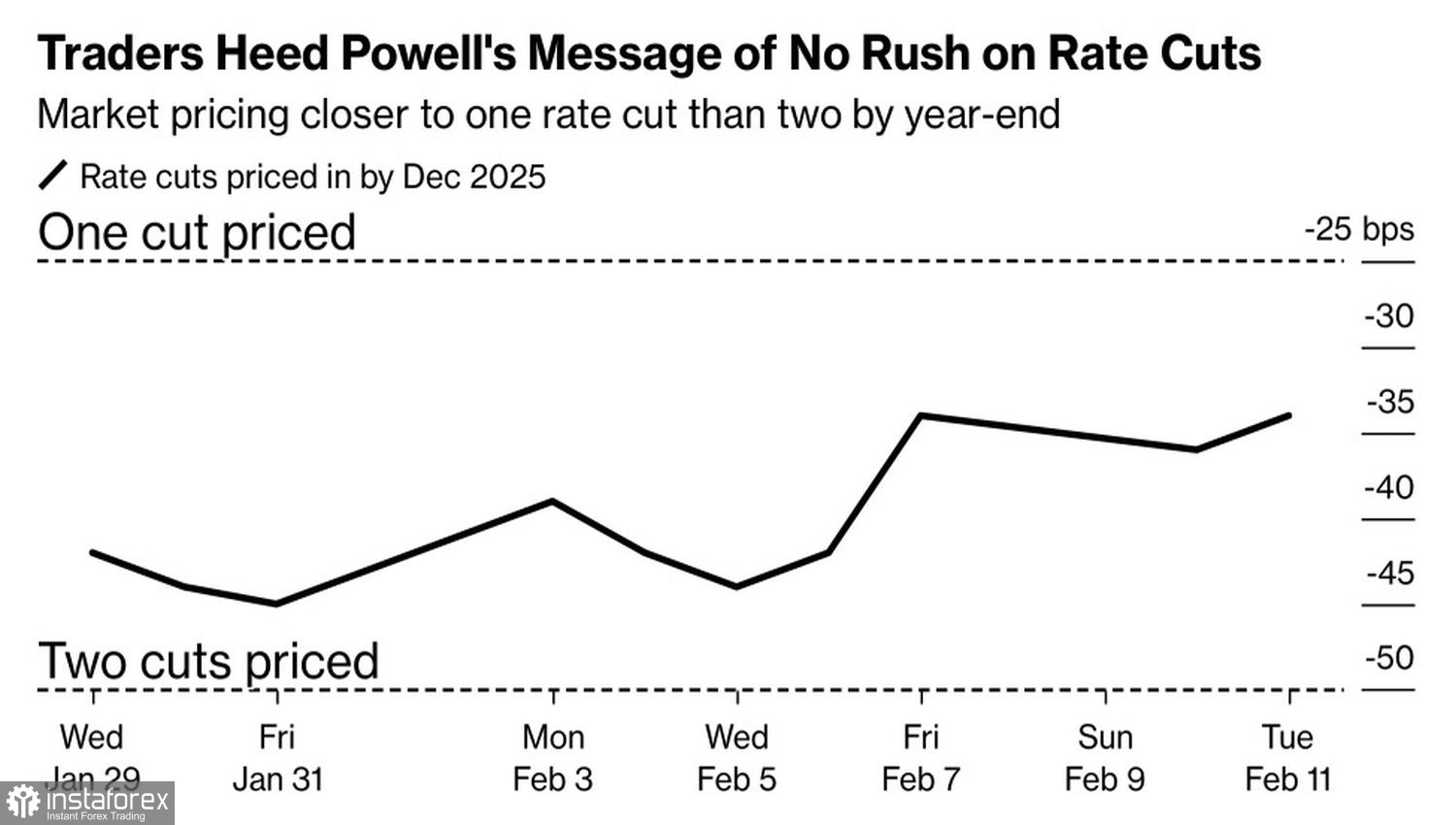
The decline of Trump-era trade policies, the diminishing dominance of the U.S. stock market—partially due to the DeepSeek controversy—and signs of economic recovery in the Eurozone have empowered EUR/USD bulls to make a comeback. The market is increasingly convinced that large-scale tariffs of 10-20% on all goods from the White House are unlikely, leading to a reassessment of expectations regarding imminent parity in this currency pair.
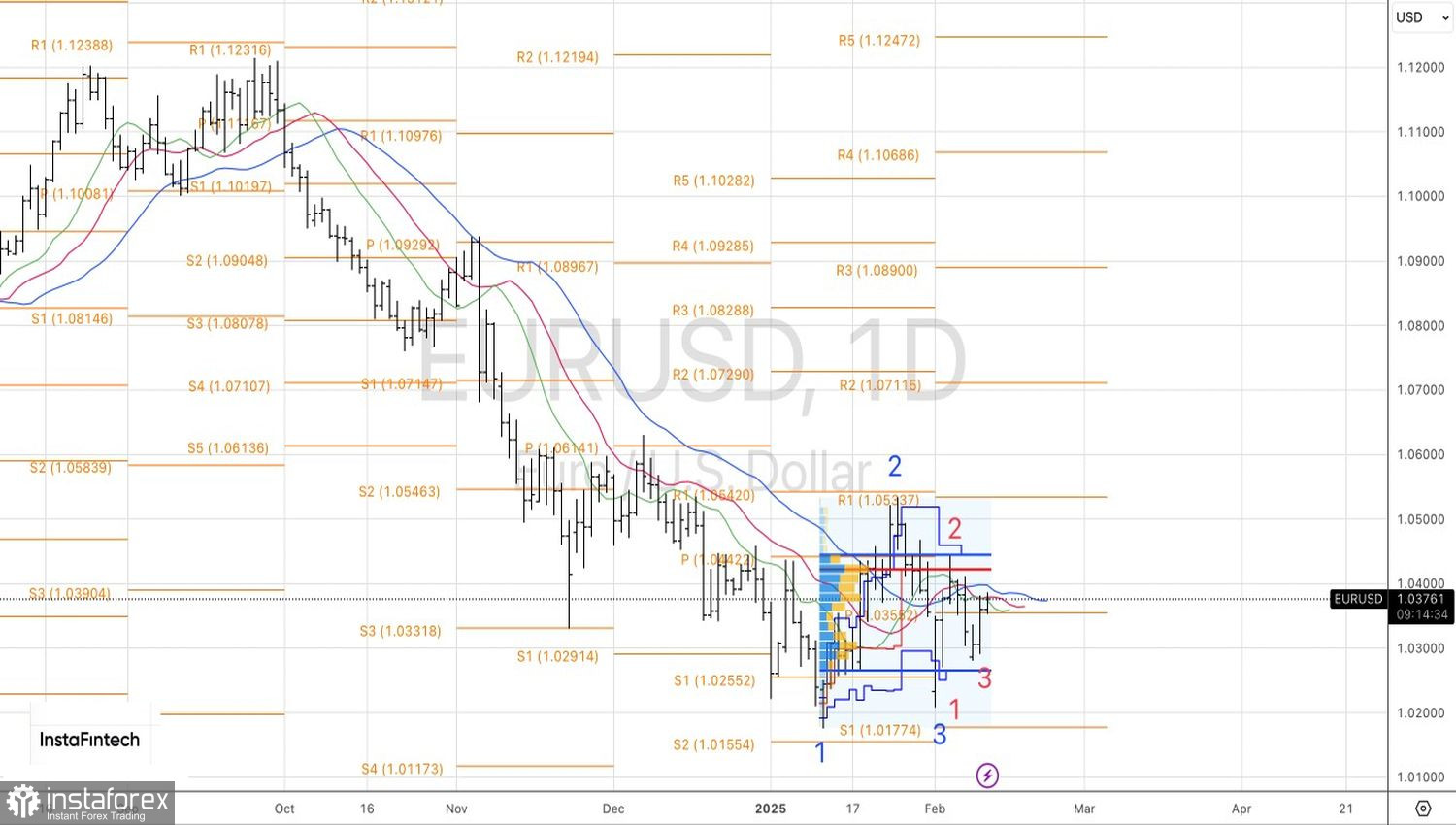
From a technical standpoint, the daily chart for EUR/USD reveals a pattern within a pattern, highlighting a combination of a parent and child 1-2-3 formation. If the bulls can break through the dynamic resistance of the moving averages around 1.040 and the fair value at 1.042, the chances of a rally toward 1.054 and beyond will increase. Does it make sense to consider buying the euro on a breakout?
*A análise de mercado aqui postada destina-se a aumentar o seu conhecimento, mas não dar instruções para fazer uma negociação.
InstaSpot analytical reviews will make you fully aware of market trends! Being an InstaSpot client, you are provided with a large number of free services for efficient trading.


