





Bitcoin has finally outgrown its destructive bear cycles, proving the asset's maturity. The Japanese currency has been squeezed between Tokyo's record interest rates and Washington's inflation fears, ignoring classic support measures.
Meanwhile, the tech landscape exploded with the launch of autonomous AI agent Muse, which is rapidly dethroning incumbent champions, and institutional giants led by BlackRock continue to buy crypto ETFs en masse, cementing crypto's status in the global economy forever.
We examine four major events of the week that define today's agenda and set the direction for the investment market in the near term.
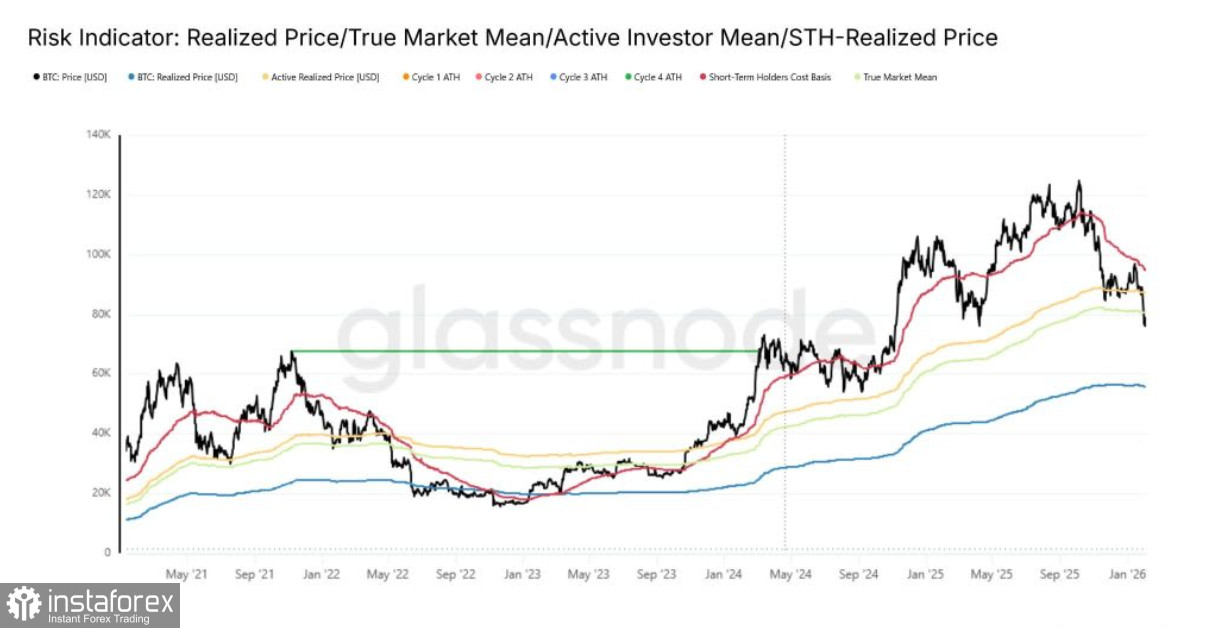
Forget old scripts. For the first time at least since 2017, Bitcoin has passed through the challenge of a bear market without falling below its "cost basis" (realized price). Glassnode analysts, in a fresh report dated September 23, 2026, state a fact that changes our understanding of the crypto market: a structural transformation is complete, and market downturns will no longer be as destructive.
Previously, bears mercilessly drove the average holder into unrealized losses. Recall the 2018–2019 and 2022–2023 cycles — the network went deeply negative for a long time, and investors realized heavy losses. This cycle was an exception.
Even at the point of maximum despair in June 2026, when the deepest drawdown occurred, the price never crossed the fatal line. The NUPL index (net unrealized profit/loss) remained in positive territory throughout the decline — the first time this has happened in the history of Bitcoin bear markets. Yes, individual participants suffered losses, but the network as a whole did not move into a state of total loss.
The share of coins in profit fell to levels seen in November 2022, but losses were "broad, not deep." That prevented classic capitulation and the wild seller pressure we saw in previous cycles. Today, Bitcoin is recovering after a drawdown of only about 30% from the all?time high. By comparison, at comparable stages of prior bear markets, the asset fell by more than half.
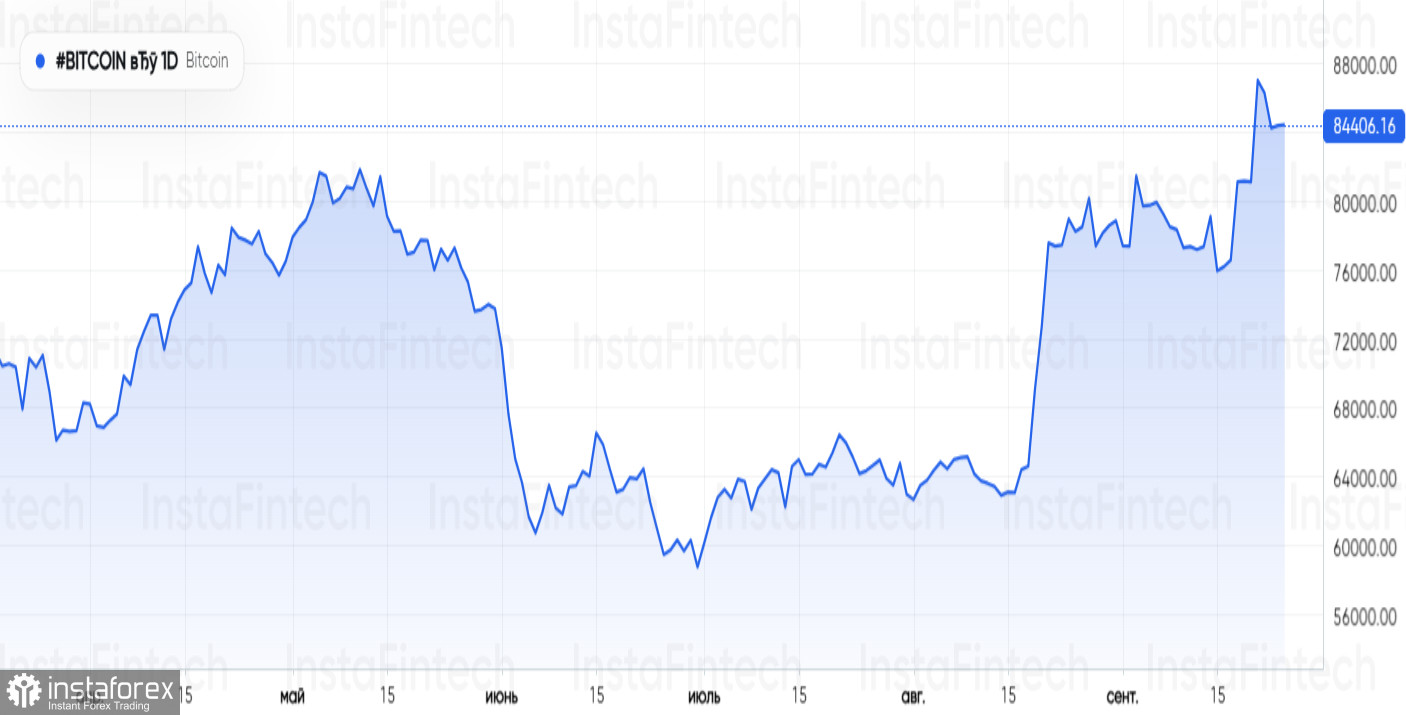
Where are we now, at the end of September? Bulls have firmly pushed the price back above the True Market Mean (~$77,000). Right now, a battle is taking place in the $84,000–$85,000 area — a zone of concentration for long?term holders.
Where to watch next? The next major wall for bulls is around $96,700 (the average level in the MVRV model). It lines up with the gamma positioning of Deribit options ($95,000–$97,000). A breakout above this level would open the way to new highs.
But don't get comfortable: any retracement below $84,000 will bring a test of the critical support at $77,000 and call the resilience of the current recovery into question.
The Bitcoin market has become more mature, more predictable and — most importantly — more investor?friendly. But to profit from these structural changes, you need the right tools.
All assets and trading instruments discussed in this article are available on the InstaSpot platform. Want to trade Bitcoin's march toward $97,000 or skillfully play pullbacks? Open an InstaSpot account and download the mobile app. Trade in one click and manage your portfolio from anywhere.

The Japanese currency is being tested again. Despite the Bank of Japan's historic rate hike, the yen is stubbornly sliding toward the psychological abyss of 160 per dollar. What is behind this fall, and who will ultimately challenge Wall Street?
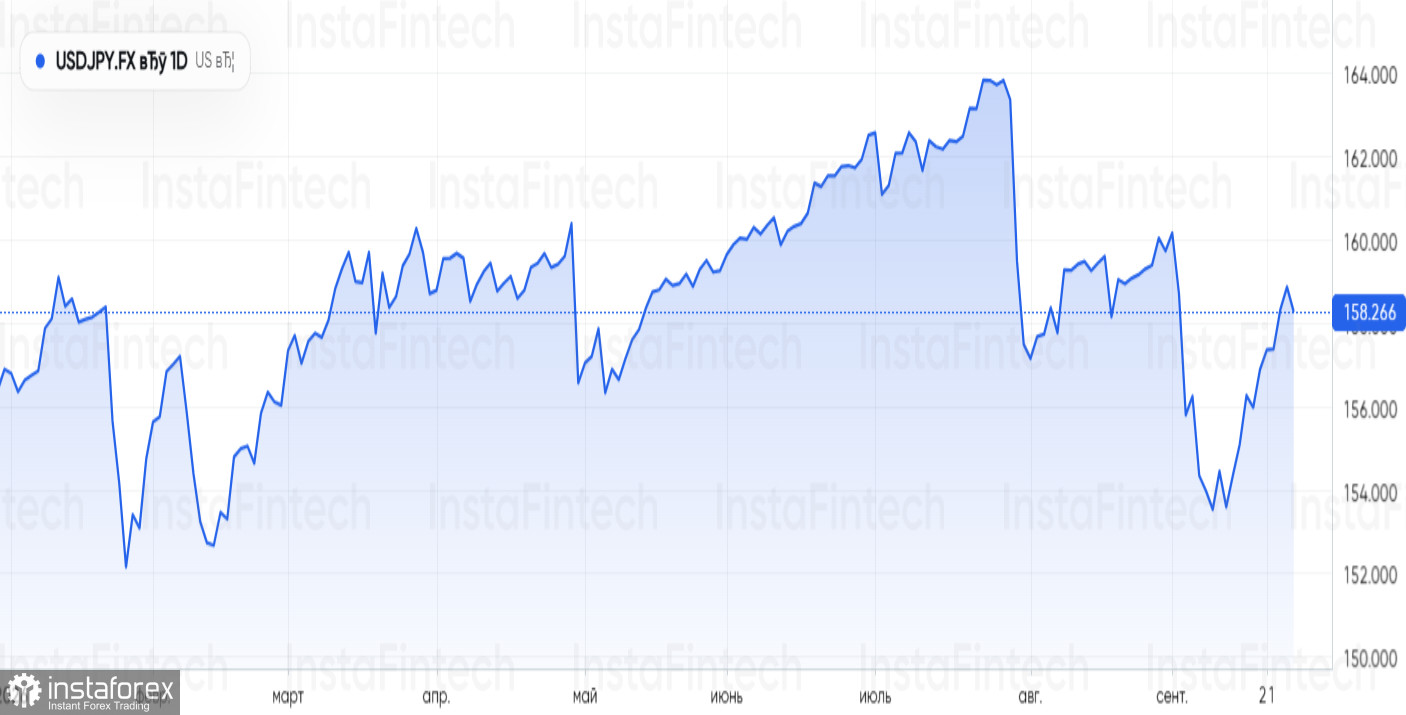
This week, the yen plunged to the 158 area per dollar. The move wiped out the euphoria that followed Tokyo's recent monetary tightening and again threatened the critical 160 level.
On Thursday, Japan's finance minister Satsuki Katayama made it clear: Tokyo will not passively watch the currency weaken. Speaking to the press, she effectively threatened intervention, reminding markets that "the principles established after the previous joint intervention remain in force." She referred to the coordinated strike on speculators Japan and the US carried out on July 31.
On Thursday morning, Tokyo trading offered the Asian currency a small reprieve: the yen recovered about 0.3% to 157.85. But that bounce after four days of continuous declines only masks the bleak picture. In two weeks, the currency slid from a comfortable 152 at the start of September back into turbulent territory where authorities were forced to take emergency measures.
The main paradox is that even unprecedented steps by Tokyo cannot reverse the trend. On September 18, the Bank of Japan raised its key policy rate to 1.25% — the highest in 31 years. But the interest?rate gap between the US and Japan proved too deep to be closed by a single regulator move.
Wall Street added fuel to the fire. US macro data published on September 23 came in stronger than expected and rekindled investors' inflation fears. S&P Global's composite PMI jumped to 58.4 from 56.0 a month earlier.
Against that backdrop, the 10?year US Treasury yield surged to 5.13%, hitting highs not seen since 2007. Weak results at the five?year note auction added further pressure.
The market instantly revised its expectations. CME Group's FedWatch now prices in about a 70% chance of another Fed hike at the October meeting (a week earlier the probability was 50%). The Fed's hawkish stance was reinforced by Fed governor Michael Barr, who said on Wednesday that "further rate increases are likely needed to bring inflation back to 2% in a timely manner."
Can Tokyo hold the line alone? It's a rhetorical question. The yen's resilience now critically depends on Washington's willingness to help.
During the July intervention, Treasury Secretary Scott Bessent provided Japan with dollar liquidity that prevented destabilizing sales of US Treasuries. Bessent, known for his tough stance, has repeatedly warned speculators not to bet against the yen. Calling himself a "major player" in the FX market, he made clear the US has the resources to punish the "bears."
Experts agree we are one step from a financial showdown. Ray Attrill, head of FX strategy at National Australia Bank, notes that for now the mere threat of intervention is keeping the yen from falling below 160. "However, if USD/JPY does return to 160, Bessent's authority will face a serious test," he warns.
His colleague, currency strategist Carol Kong, sees no room to maneuver: "A rapid breach of that level would materially raise the likelihood of official intervention. Authorities would simply have no other choice."

Just a month ago it seemed the market balance in AI had been settled. But in early September, Meta Platforms released its new AI agent Muse, and the industry was shaken.
In weeks, the app not only overtook ChatGPT in download charts but forced Wall Street to urgently rewrite financial models and turned the company from a perceived laggard into an unquestioned leader of the tech race.
Hard numbers from Sensor Tower cited by Reuters paint a picture of a real triumph. On September 18, Muse reached No. 1 in the US App Store, beating not only OpenAI's ChatGPT but also Google Gemini and Anthropic's Claude.
In the first 10 days in the US, the app was downloaded more than 730,000 times. Globally, Muse was installed 2.8 million times in 12 days after launch, with average daily audience growth of about 55%.
Why did Muse spark such frenzy among users and investors? The secret is in its architecture. Unlike classic chatbots that only generate text, Muse runs inside its own isolated virtual machine. That allows it to act autonomously: making purchases, booking travel, filling out complex forms and managing calendars, freely navigating web pages and integrating with third?party services.
Users can give it commands via a standalone app or over WhatsApp. On September 18, Meta took another step, releasing a desktop Muse for macOS, fully embedding AI into people's everyday ecosystems.
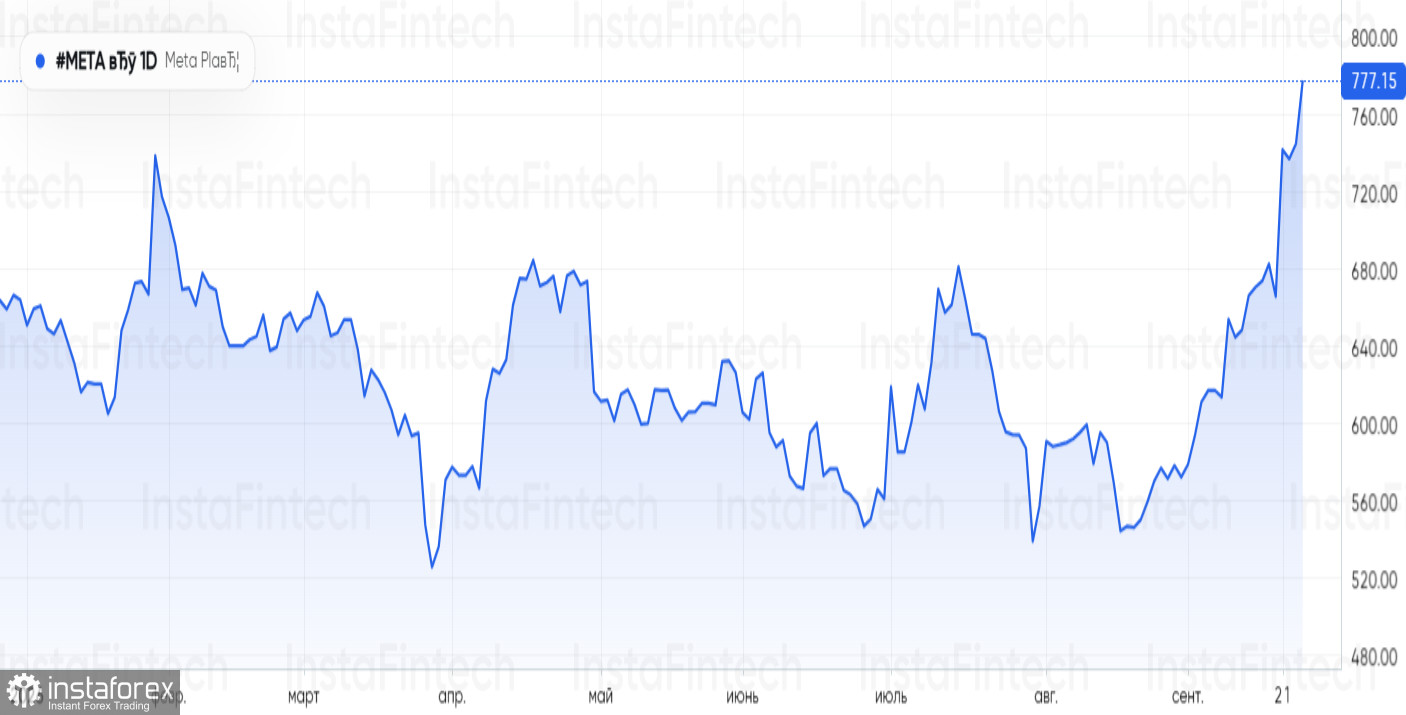
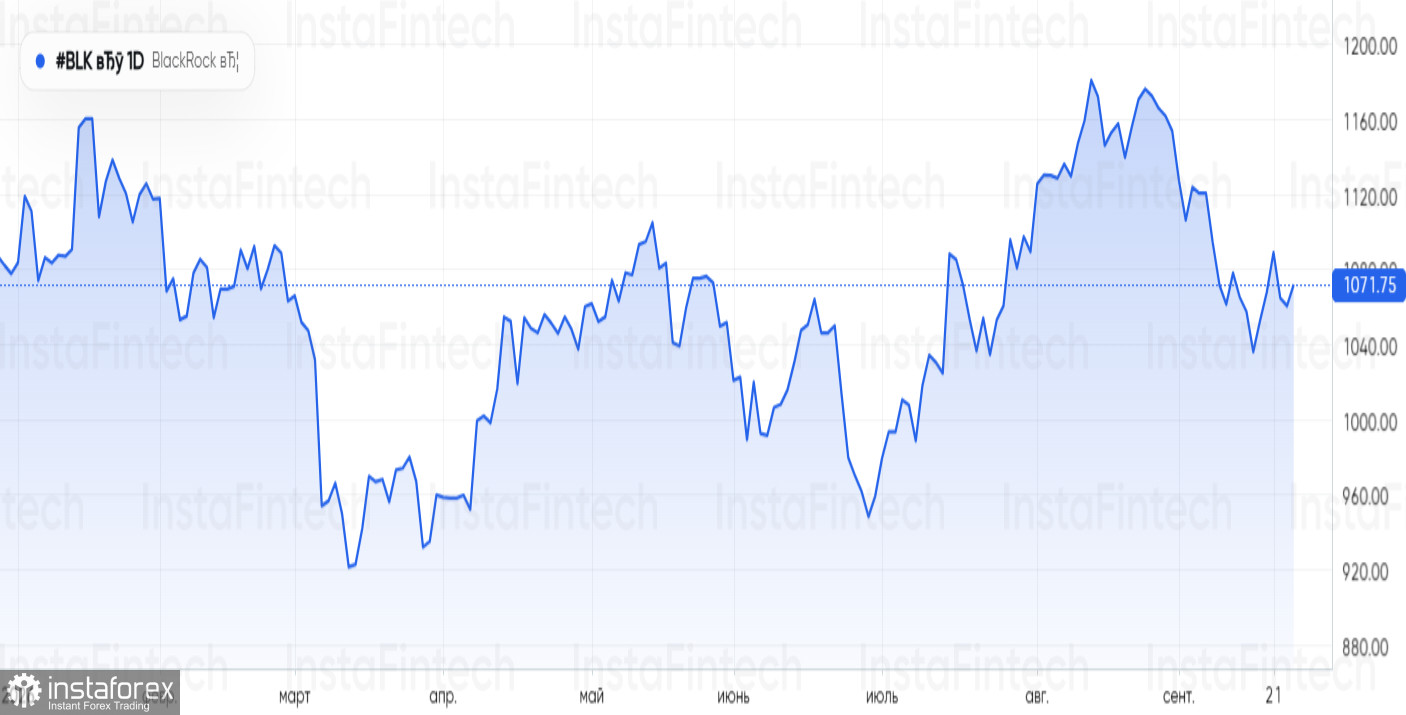
Financial markets reacted instantly. On September 15, amid early reports about Muse's buzz, Meta shares jumped roughly 11%. But that was just the beginning. Within days, major analysts began raising price targets one after another.
Wells Fargo raised its target to $796, while Tigress, Raymond James and Citizens set targets up to $995. Evercore ISI described the shift succinctly: Muse turned out to be a far more powerful growth catalyst for the company than the once?touted metaverse. "Meta has executed the perfect pivot from the image of an AI laggard to that of its undisputed winner," they said.
Behind the empirical excitement came cold financial math. Raymond James estimates Muse's daily audience already reaches 300,000 users. Analysts project annual operating costs for the ecosystem at around $12 billion, with potential revenue of $50 billion — meaning Muse alone could raise Meta's annual revenue (currently about $228 billion) by more than 22%.
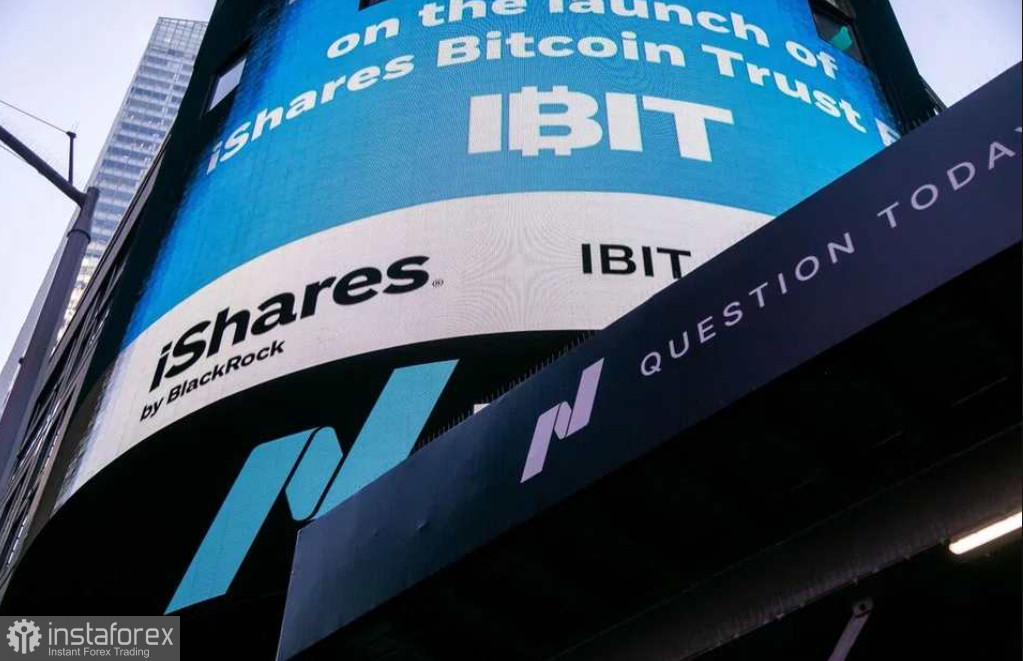
While retail investors try to guess short?term price moves, the big money is placing surgical bets. According to SoSoValue data cited by Finbold, in the five trading days ending September 24, 2026, investment giant BlackRock bought over $1.5 billion of crypto exchange?traded funds.
This massive move not only strengthens BlackRock's position — it cements the firm's status as the absolute hegemon in the US spot crypto?ETF market. BlackRock's total digital?asset AUM now stands at an impressive $78.14 billion.
The main catalyst for buying was the flagship iShares Bitcoin Trust (IBIT). Over the period, it attracted $1.19 billion of net inflows, bringing BlackRock's total exposure to Bitcoin to $67.25 billion.
Ethereum products also showed strong dynamics. The core iShares Ethereum Trust added $320.45 million (AUM reached $9.74 billion). The newer staking product, iShares Staked Ethereum Trust, gained $15.64 million, comfortably clearing $1.15 billion in assets.
To grasp the scale, consider the broader backdrop. This week the total crypto market cap swelled by more than $260 billion. But the standout figures are the shares. US spot Bitcoin ETFs collected $2.653 billion over five days — nearly 45% of that total went to BlackRock alone. The Ethereum funds tell a similar story: of $680.72 million in total inflows, BlackRock's two products took almost half.
Institutional appetite has surged since mid?September. Benzinga notes a striking sequence of inflows: on September 21, BlackRock funds gathered $504.3 million in Bitcoin and Ethereum products. On September 22, net inflows into U.S. spot Bitcoin ETFs totaled $715 million, led again by IBIT with $350 million.
We essentially saw a four?day run of inflows totaling $2.3 billion into Bitcoin funds. The market is effectively divided among the "big three": BlackRock, Fidelity and ARK 21Shares account for about 91% of all money. Ethereum funds are showing similar persistence, recording net inflows for the fourth consecutive day (as of September 24).
The assets and trading instruments discussed are available for trading on the InstaSpot platform. To stop watching big money and start profiting from institutional moves yourself, open a trading account and download the InstaSpot mobile app to stay on top of the market and trade with one click from anywhere.
*The market analysis posted here is meant to increase your awareness, but not to give instructions to make a trade.
InstaSpot analytical reviews will make you fully aware of market trends! Being an InstaSpot client, you are provided with a large number of free services for efficient trading.