




हमारी टीम के पास 7,000,000 से अधिक ट्रेडर हैं!
प्रतिदिन हम ट्रेडिंग को बेहतर बनाने के लिए एक साथ काम करते हैं। हम उच्च परिणाम प्राप्त कर रहे हैं और आगे की ओर बढ़ रहे हैं।
दुनियाभर के लाखों लोगों द्वारा हमारे काम को पहचानना, हमारे काम की सबसे अच्छी सराहना है! आपने आपनी पसंद बनाई है और हम आपकी अपेक्षाओं को पूरा करने के लिए हर संभव प्रयास करेंगे!
हम एक साथ एक अच्छी टीम हैं!
इंस्टाफॉरेक्स को इस बात का गर्व है कि वह आपके लिए काम कर रहा है!





एक्टर, यूएफसी 6 टूर्नामेंट का विजेता और एक सच्चा हीरो!
वह आदमी, जिसने अपनी मेहनत से सब किया है। वह आदमी, जो हमारे रास्तों पर चलता है.
टैक्टारोव की सफलता का राज लक्ष्य की ओर लगातर अग्रसर रहना है।
अपनी प्रतिभा के सभी पक्षों को प्रकट करें!
खोज करें, कोशिश करें, विफल हो-लेकिन कभी न रूकें!
इंस्टाफॉरेक्स- हमारी सफलताओं की कहानी यहाँ से शुरू होती है!

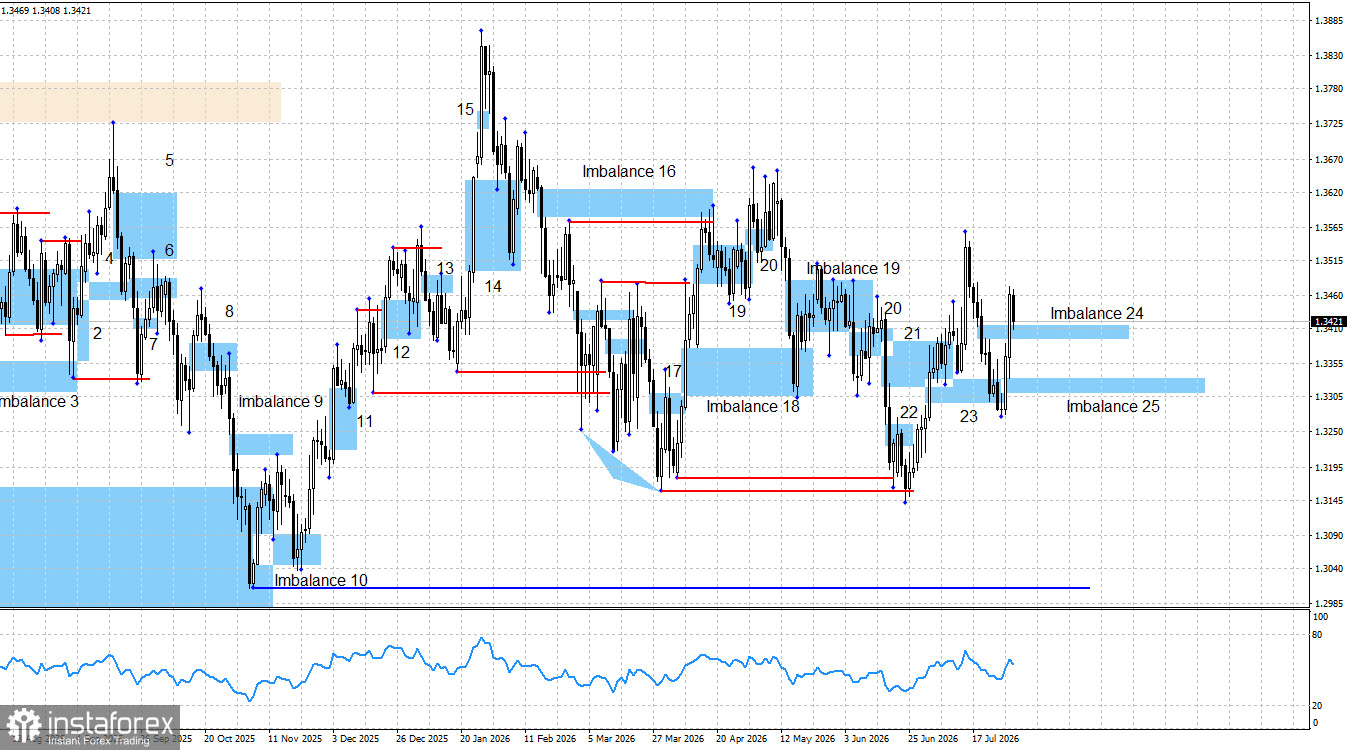
The GBP/USD pair has posted a fairly noticeable decline over the past two weeks, followed by a strong rally over the last two trading sessions. This suggests that the bulls have launched a new offensive, which was then followed by a normal corrective pullback.
Yesterday, Bearish Imbalance 24 was broken without triggering any price reaction. As a result, it can now be regarded as an inverted imbalance. A reaction to this pattern may now occur from above, implying a bullish response. I would like to remind traders that positions should be opened only after the market reacts to a pattern or an area of interest and that this reaction is confirmed on lower timeframes—not simply when the price reaches the pattern itself. Therefore, just as no reaction may occur at a regular imbalance, no reaction may occur at an inverted imbalance either. However, at the moment, such a reaction remains possible. In addition, another Bullish Imbalance 25 has formed below the current price. This gives the bulls two areas of interest where buying opportunities may emerge.
As for the trend, in my view, it remains bullish, while no bearish patterns are currently present. The euro came under pressure today following weaker-than-expected Eurozone inflation data and may have dragged the British pound lower as well. Moreover, after two consecutive days of strong gains, a corrective pullback appears entirely natural.
Last week, oil prices climbed to $100 per barrel, and the consequences of a new escalation in the Middle East, combined with a potential blockade of the Strait of Hormuz, could push prices as high as $120 per barrel. If events continue to unfold according to the most pessimistic scenario—which currently appears increasingly likely—oil prices may continue rising and surpass the highs recorded between March and May. In that case, inflation in both the United States and the United Kingdom could begin accelerating again. If, however, the situation develops according to the more optimistic scenario, oil prices could return to the $60–70 per barrel range. Under those circumstances, the Federal Reserve might not need to tighten monetary policy further, while the Bank of England is already no longer facing the problem of persistently high inflation. As a result, the U.S. dollar currently cannot rely on a hawkish Federal Reserve for sustained support, while the British pound could receive support from the Bank of England only if inflation begins accelerating again.
Chart analysis continues to point to renewed bullish pressure. At present, traders have two bullish imbalances (24 and 25) where long positions may be considered. There are currently no bearish patterns. Therefore, a new buy signal could emerge as early as today or on Monday, allowing the bulls to extend their advance next week, as a new bullish trend may have begun on June 25.
The economic calendar was empty in both the United Kingdom and the United States on Friday. Nevertheless, GBP/USD still entered a corrective pullback, which was entirely justified from a technical perspective.
The broader fundamental backdrop remains such that, over the long term, I continue to expect nothing other than further weakness in the U.S. dollar. Even the conflict between Iran and the United States has not changed that outlook. Nor has the possibility of a Federal Reserve rate hike in 2026. Geopolitical tensions temporarily reminded the market of the U.S. dollar's safe-haven status, but the conflict has already passed its most active phase. The Federal Reserve intends to raise interest rates in 2026, which is supportive for the dollar. However, it should not be overlooked that tighter monetary policy would slow both economic growth and the labor market. In addition, Kevin Warsh was appointed by Donald Trump to lead the FOMC with the goal of shifting monetary policy toward easing—something that, in Trump's view, Jerome Powell was unwilling to deliver. Therefore, in my opinion, any appreciation of the U.S. dollar is likely to be temporary and driven by short-term factors.
United States:
The economic calendar for August 3 contains only one event that can be considered significant. As a result, the economic backdrop is expected to influence market sentiment primarily during the second half of Monday's trading session.
The long-term outlook for the British pound remains bullish. After liquidity was swept below the two most recent swing lows, the bulls launched an advance, followed by a corrective pullback, another bullish push, and then another correction. Next week, I will be looking for a new buy signal within one of the two bullish imbalance zones. Areas of interest for purchases: 1.3310 – 1.3333 and 1.3393 – 1.3414.
If the bears begin a new offensive, bearish chart patterns will be required to justify short positions. At the moment, no such patterns are present.
*यहां पर लिखा गया बाजार विश्लेषण आपकी जागरूकता बढ़ाने के लिए किया है, लेकिन व्यापार करने के लिए निर्देश देने के लिए नहीं |
InstaSpot analytical reviews will make you fully aware of market trends! Being an InstaSpot client, you are provided with a large number of free services for efficient trading.


