




हमारी टीम के पास 7,000,000 से अधिक ट्रेडर हैं!
प्रतिदिन हम ट्रेडिंग को बेहतर बनाने के लिए एक साथ काम करते हैं। हम उच्च परिणाम प्राप्त कर रहे हैं और आगे की ओर बढ़ रहे हैं।
दुनियाभर के लाखों लोगों द्वारा हमारे काम को पहचानना, हमारे काम की सबसे अच्छी सराहना है! आपने आपनी पसंद बनाई है और हम आपकी अपेक्षाओं को पूरा करने के लिए हर संभव प्रयास करेंगे!
हम एक साथ एक अच्छी टीम हैं!
इंस्टाफॉरेक्स को इस बात का गर्व है कि वह आपके लिए काम कर रहा है!





एक्टर, यूएफसी 6 टूर्नामेंट का विजेता और एक सच्चा हीरो!
वह आदमी, जिसने अपनी मेहनत से सब किया है। वह आदमी, जो हमारे रास्तों पर चलता है.
टैक्टारोव की सफलता का राज लक्ष्य की ओर लगातर अग्रसर रहना है।
अपनी प्रतिभा के सभी पक्षों को प्रकट करें!
खोज करें, कोशिश करें, विफल हो-लेकिन कभी न रूकें!
इंस्टाफॉरेक्स- हमारी सफलताओं की कहानी यहाँ से शुरू होती है!

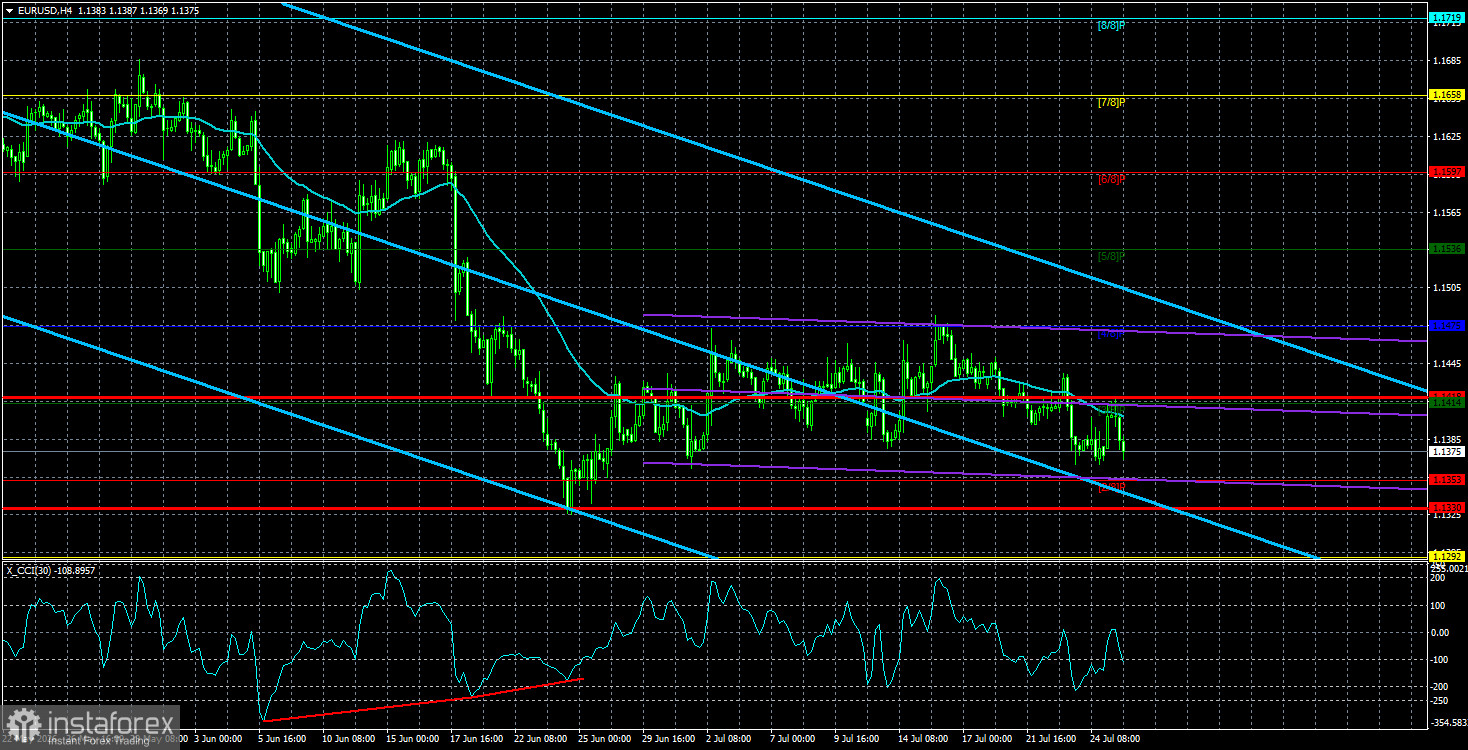
The EUR/USD currency pair rose and then fell on Monday, driven by geopolitical developments. The fact is that over the weekend, Donald Trump again decided to pardon Iran and not devastate the country, leading to a renewed halt in military actions in the Middle East. Naturally, the market could not help but react to yet another ceasefire and the window of opportunity for diplomacy, with tabloid headlines filled with phrases like "Iran and the US Resume Talks" or "Light at the End of the Tunnel." In our view, the light at the end of the tunnel is just the entrance to the next tunnel. Tehran and Washington have sat down at the negotiation table many times and have failed to reach agreements on any of the most fundamental issues. Therefore, new negotiations will yield nothing new. Moreover, the US and Iran have shown only one readiness over the past few months: to constantly violate the terms of any ceasefire. Any new deal can be violated just as easily within a couple of days, as all previous ones have been. So what is the point of new negotiations and a new agreement?
Perhaps the market understands this well and has finally removed its rose-colored glasses. Now, a significant portion of traders and investors is preparing for a prolonged confrontation in the Middle East, and when and how it will end remains a mystery shrouded in darkness. We want to remind you that the confrontation between Ukraine and Russia has been ongoing for five years, despite many experts predicting its end within a couple of weeks or, at worst, months at the conflict's inception. This phenomenon is called subconscious optimism, where you expect the best at a hypothalamic level rather than the worst. As practice shows, there is no place for optimism in our time.
We fully accept that the conflict in the Middle East may outlast Donald Trump (in the sense of being in charge of the US). Of course, the dollar will not strengthen during this entire time, but currently, the market is keeping its finger on the pulse of the conflict and is not ready to abandon the safe and beloved dollar. Essentially, the movement of the EUR/USD pair has not changed for a month. Volatility is low; the euro cannot show growth, the market ignores all positive factors for the euro, and the price remains within a sideways channel. The events of Monday did not change anything at all.
This week, the Federal Reserve meeting will take place, but it is unlikely to have any impact. Most analysts and experts will again attempt to discern any hints from Kevin Warsh regarding possible tightening of monetary policy by the end of the year. With such strong desire, they will find them. Therefore, it does not matter what exactly Warsh says; the market can interpret any of his words in favor of the dollar. Thus, in the short term, the positions of the US dollar remain more attractive. Long-term, the dollar has no chances. Unless, of course, the conflict in the Middle East, along with the conflict in Ukraine, does not begin to gradually flow into World War III.
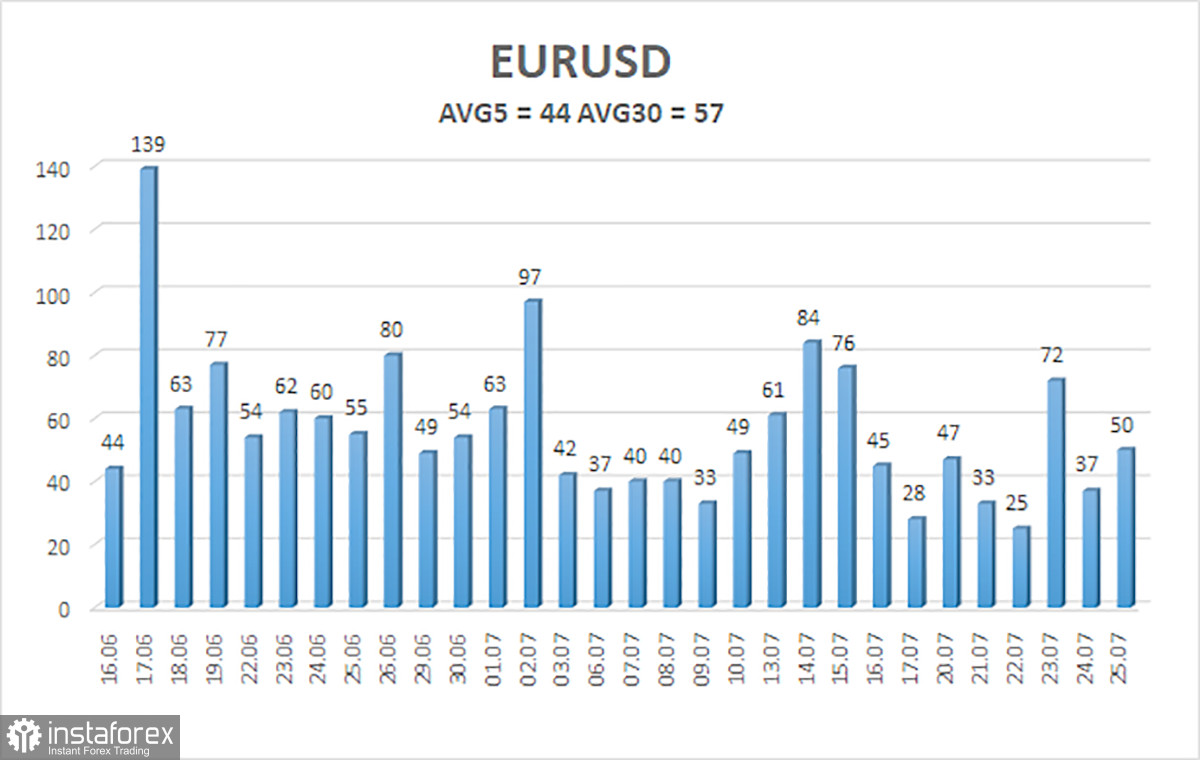
The average volatility of the EUR/USD currency pair for the past five trading days, as of July 28, is 44 pips, characterized as "low." We expect the pair to move between 1.1330 and 1.1418 on Tuesday. The upper channel of the linear regression is directed downward, indicating the maintenance of a bearish trend. The CCI indicator has entered the oversold area and formed two bullish divergences, warning of a possible end to the downtrend.
S1 – 1.1353
S2 – 1.1292
S3 – 1.1230
R1 – 1.1414
R2 – 1.1475
R3 – 1.1536
The EUR/USD pair maintains a bearish trend, which is presumed to be a correction within the global upward trend, clearly visible on the daily or weekly timeframe. The global fundamental backdrop for the dollar remains negative, but in 2026, first, geopolitics and then the Fed's hawkish stance provided strong support for the US currency. When the price is below the moving average, short positions can be considered with targets at 1.1353 and 1.1330. Above the moving average line, long positions are relevant with targets at 1.1475 and 1.1536. The market has been in a flat state for the fourth consecutive week.
Linear regression channels help determine the current trend. If both are directed in the same way, it means the trend is currently strong;
The moving average line (settings 20,0, smoothed) determines the short-term trend and the direction in which trading should be conducted;
Murray levels are target levels for movements and corrections;
Volatility levels (red lines) indicate the probable price channel in which the pair will spend the next day, based on current volatility indicators;
The CCI indicator — its entry into the oversold area (below -250) or overbought area (above +250) indicates that a trend reversal in the opposite direction is approaching.
*यहां पर लिखा गया बाजार विश्लेषण आपकी जागरूकता बढ़ाने के लिए किया है, लेकिन व्यापार करने के लिए निर्देश देने के लिए नहीं |
InstaSpot analytical reviews will make you fully aware of market trends! Being an InstaSpot client, you are provided with a large number of free services for efficient trading.


