




الأسطورة فى فريق إنستافوركس!
الأسطورة! هل تعتقد أن هذا هو الخطاب المنمق؟ ولكن كيف ينبغي أن نطلق على الرجل، الذي أصبح أول آسيوي يفوز ببطولة العالم للشطرنج للشباب بعمر 18 سنة والذي أصبح أول أستاذ كبير هندي في سن 19؟ وكانت هذه بداية طريق صعب إلى لقب بطل العالم لـ فيسواناثان أناند، الرجل الذي أصبح جزءًا من تاريخ الشطرنج إلى الأبد. والآن أسطورة آخر في فريق إنستافوركس!





يعتبر بوروسيا دورتموند أحد أكثر أندية كرة القدم حصولاً على الألقاب في ألمانيا، وقد أثبت ذلك مرارًا وتكرارًا للجماهير: فإنّ روح المنافسة والقيادة ستؤدي بالتأكيد إلى النجاح. قم بالتداول بنفس الطريقة التي يلعب بها المحترفون الرياضيون اللعبة: بثقة ونشاط. احتفظ بـ "ترخيص دخول" من نادي بوروسيا دورتموند لكرة القدم وكن في الصدارة مع إنستافوركس!
On Thursday, the EUR/USD pair once again rebounded from the 50.0% corrective level at 1.1630, declined toward the 61.8% Fibonacci level at 1.1578, rebounded from this level, and returned to 1.1630. This was followed by another rebound from 1.1630, once again allowing traders to anticipate a decline toward the 1.1578 level. Consolidation above 1.1630 would allow for continued growth of the euro toward the next corrective level of 38.2% at 1.1682.
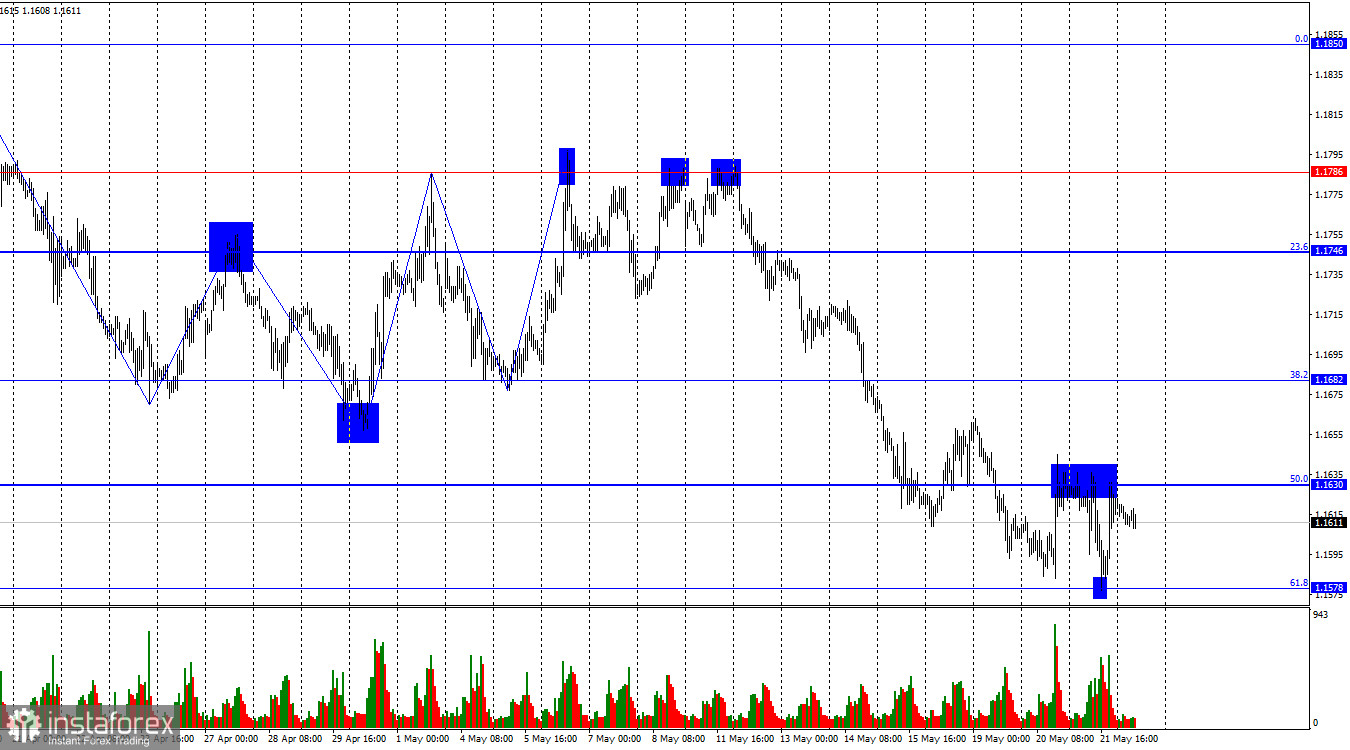
The wave structure on the hourly chart currently remains relatively straightforward. The latest completed upward wave exceeded the previous peak by only a few points, while the latest downward wave, which has not yet been completed, broke below the previous low. Thus, the trend has shifted to bearish. The temporary ceasefire between Iran and the United States supported the bulls for a month, but now, six weeks later, it can be said that geopolitical developments are moving toward preserving the conflict. As I previously warned, the bulls were unable to maintain momentum without a full ceasefire in the Middle East.
On Thursday, the bulls faced new difficulties. Business activity indices in Germany and the Eurozone came in weaker than market expectations, triggering a decline in demand for the euro. Later in the day, reports emerged that Iran and the United States, with Pakistan acting as mediator, had agreed on a plan to resolve the crisis, which forced the bears to retreat. However, as of Friday morning, there had been no confirmation that the crisis was nearing resolution. A draft agreement may have been coordinated, but there is no reliable confirmation of this.
At the same time, reports emerged from Iran this morning stating that Supreme Ayatollah Mojtaba Khamenei had issued a decree prohibiting uranium exports outside the country. I do not know what the proposed agreement includes, but Washington is unlikely to accept such a scenario. Donald Trump's key condition remains Iran's refusal to retain uranium stockpiles and continue uranium enrichment. If this condition is not met, it is difficult to speak about any peace agreement. Therefore, at the current stage, I do not see any meaningful improvement in the geopolitical situation. The parties still cannot reach agreement on the most critical issues.
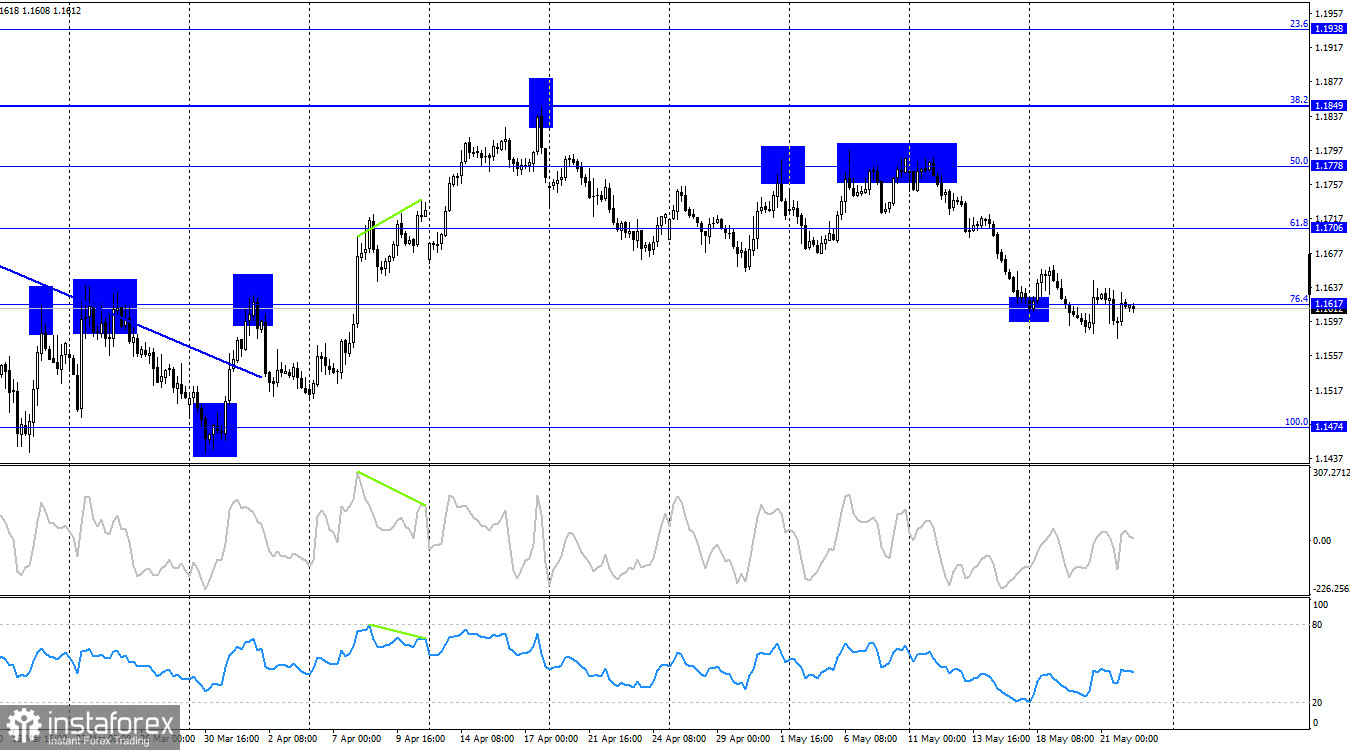
On the 4-hour chart, the pair rebounded from the 76.4% corrective level at 1.1617, but failed to continue either the upward movement or initiate a new decline. Thus, geopolitical developments continue to shift the pair's direction on a daily basis, which is why I currently recommend focusing primarily on the hourly chart for analysis. No emerging divergences are currently observed on any indicator.
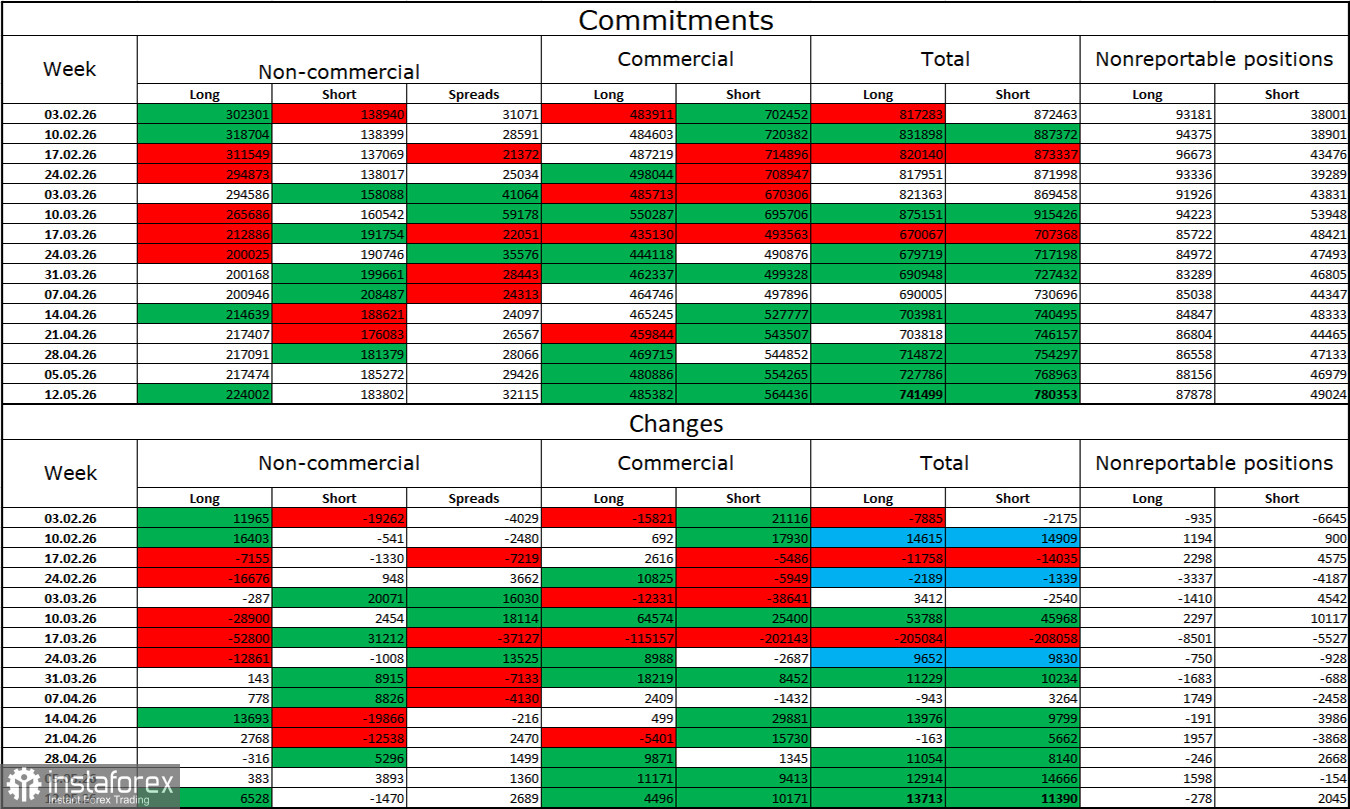
During the latest reporting week, professional traders opened 6,528 Long positions and closed 1,470 Short positions. Over seven weeks in February and March, the bulls' overwhelming advantage disappeared due to the conflict in Iran, while over the past seven weeks the situation has stabilized amid the suspension of military activity in the Middle East. The total number of Long positions held by speculators currently stands at 224 thousand, while Short positions amount to 184 thousand. The gap is once again widening in favor of the euro.
Overall, in the longer term, major market participants continue to show strong interest in the euro. Naturally, global events of various kinds — which have been abundant in recent years — continue to influence investor sentiment. In particular, the market's attention remains focused on the Middle East, where the conflict has merely been paused rather than resolved. Therefore, in the near term, the dynamics of the euro and the U.S. dollar will depend not on the monetary policies of the Federal Reserve or the ECB, nor on economic data, but on developments in Iran.
Germany
United States
The economic calendar for May 22 contains three events, none of which can be considered particularly important. Therefore, the impact of the economic backdrop on market sentiment on Friday is expected to be very limited.
I previously recommended selling the pair after a rebound from the 1.1630 level on the hourly chart with a target at 1.1578. Similar trades could also have been opened today. Buying positions may be considered after consolidation above the 1.1630 level, with targets at 1.1682 and 1.1745.
Fibonacci grids are constructed from 1.1409–1.1850 on the hourly chart and from 1.1474–1.2082 on the 4-hour chart.
*The market analysis posted here is meant to increase your awareness, but not to give instructions to make a trade.
InstaSpot analytical reviews will make you fully aware of market trends! Being an InstaSpot client, you are provided with a large number of free services for efficient trading.


