




Náš tím má viac ako 7 000 000 obchodníkov!
Každý deň spolupracujeme na zlepšení obchodovania. Dosiahli sme vysoké výsledky a posuneme sa dopredu.
Uznanie miliónov obchodníkov po celom svete je najlepším ocenením našej práce! Vybrali ste si a my urobíme všetko, čo je potrebné, aby ste splnili vaše očakávania!
Sme skvelý tím spolu!
InstaSpot. Hrdý na to, aby pracoval pre vás!





Herec, šampión turnaja UFC 6 a skutočný hrdina!
Muž, ktorý sa stal sám. Muž, ktorý ide našou cestou.
Tajomstvo za úspechom Taktarova je neustály pohyb smerom k cieľu.
Odhaľte všetky strany vášho talentu!
Objavte, skúste, zlyhajte - ale nikdy neprestaňte!
InstaSpot. Váš úspech začína tu!

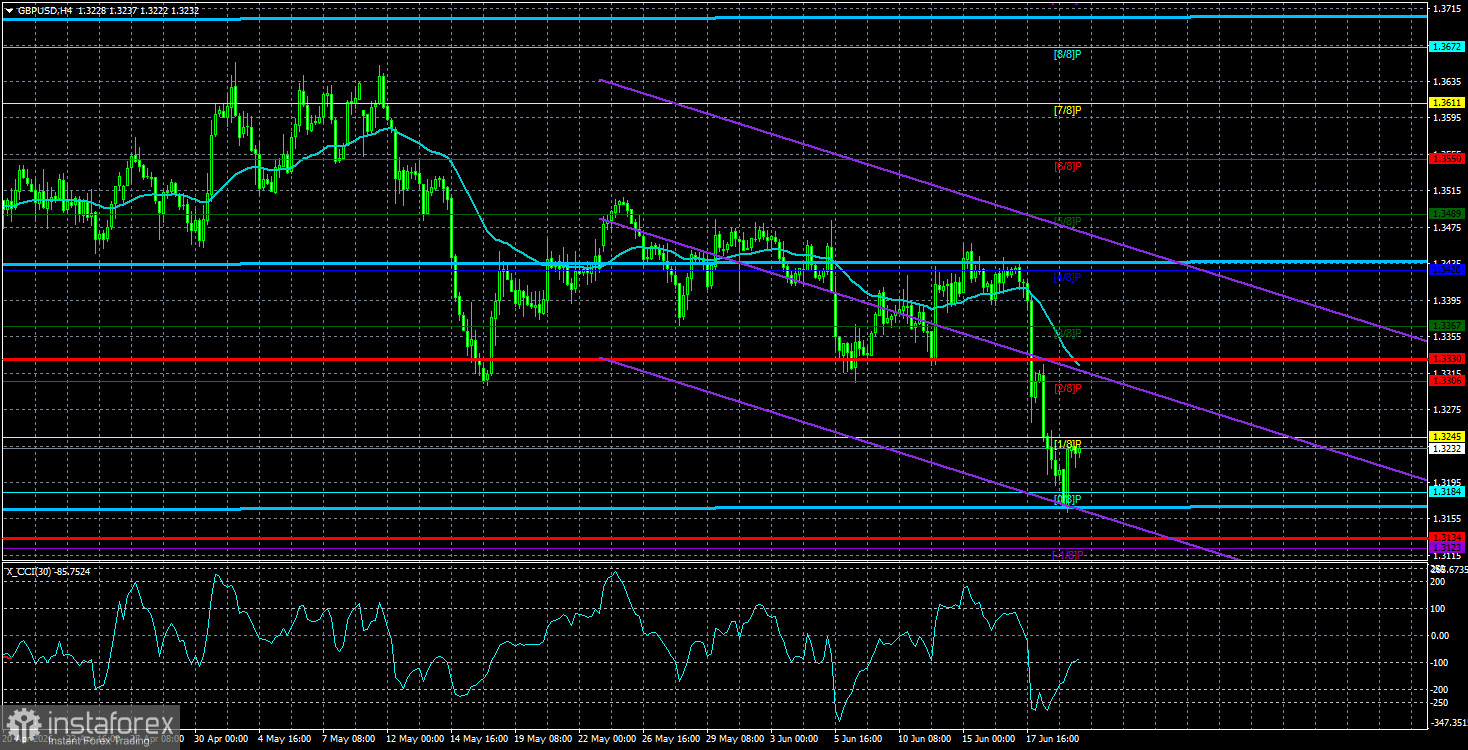
The GBP/USD currency pair also slightly corrected on Friday, which does not affect the overall downward trend the British currency has been in since May 1. It may seem that the British currency is in a long-term downward trend; however, two months of decline is a common pattern on the chart that has regularly formed over the last 9-10 months, as is clearly visible on the daily timeframe. Thus, no matter how severely and groundlessly the pound falls, we believe this segment will not become a full-fledged long-term trend.
Last week, the decline of the pair indeed appeared justified. Firstly, the Federal Reserve's stance turned out to be somewhat stricter than anticipated (though not too much). Secondly, the Bank of England took a rather neutral position. Thirdly, the geopolitical conflict in the Middle East risks resuming, despite Donald Trump's sacrosanct deal. At the same time, the pair's decline might not have occurred. The Fed, in our opinion, signaled exactly the stance the market expected—readiness to raise the key rate once more before the end of the year. The BoE also displayed the neutral stance anticipated, as inflation in the UK has been declining over the last two months, unlike in the U.S. or the Eurozone. As for the war in the Middle East, it is foolish to deny that the situation is now much better than it was 2.5 months ago, when both sides of the conflict were launching dozens to hundreds of rockets every day. Therefore, we consider last week's dollar growth to be somewhat unjustified and unwarranted.
What to expect in the new week? The macroeconomic backdrop is largely being ignored by traders. In fact, we only saw a reaction to this month's NonFarm Payrolls report. As a result, traders are unlikely to be shocked by the indices of business activity, durable goods orders, or the new estimate of U.S. GDP for the first quarter. No fundamental events are anticipated in either the UK or the U.S. Both central banks have concluded their meetings; their stances are clear, and the decisions they are ready to make in the summer of 2026 are now understood.
Thus, only geopolitics remains. Over the weekend, it became known that Donald Trump intends to impose his own tariffs on crossings of the Strait of Hormuz if the blockade remains in effect, and negotiations with Iran are again failing. In fact, negotiations with Iran on the nuclear issue have not yet begun, and the Hormuz Strait, according to IRGC reports, is already blocked. As we anticipated last week, Israel continues to attack southern Lebanon, as it has signed no ceasefire deals with anyone. Experts unanimously stated that the agreement Trump signed with Tehran primarily benefits Tehran. Thus, in the new week, we should again expect negotiations, disputes, exchanges of threats, a carousel around the Strait of Hormuz, rising oil prices, and so on. Everything that the market has gotten used to over the past 3-4 months. The worse the news from the Middle East, the better for the U.S. dollar.
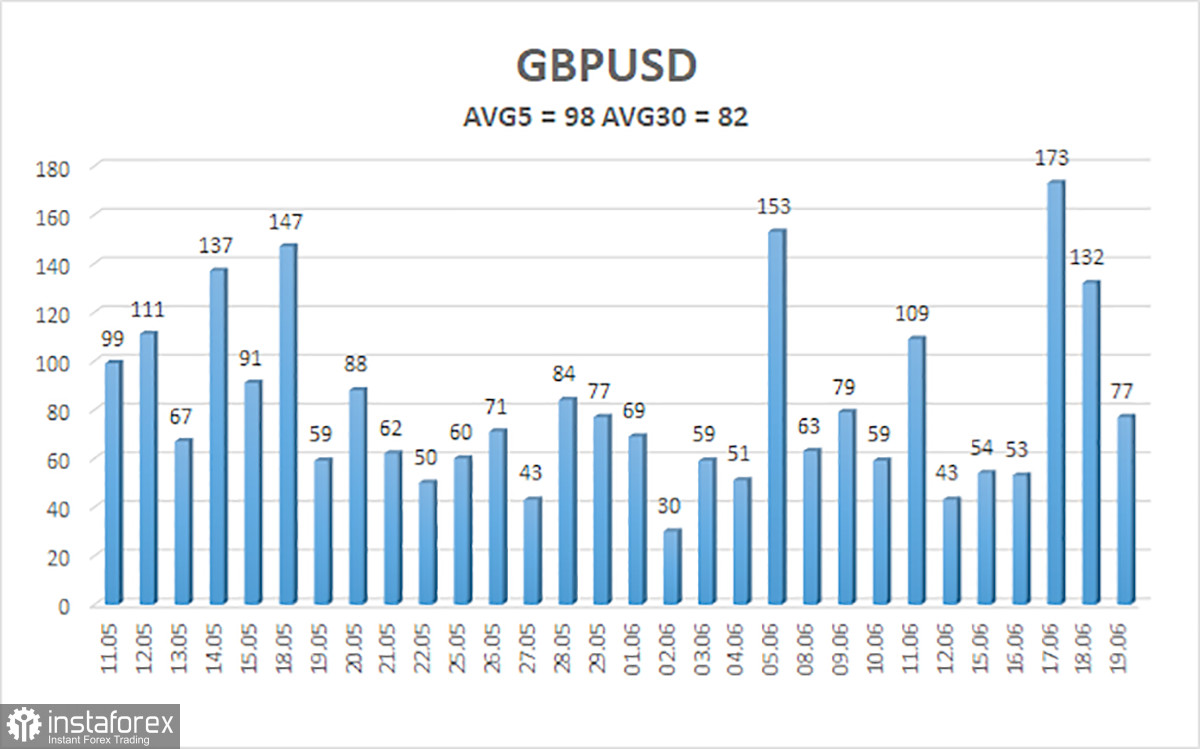
The average volatility of the GBP/USD pair over the last 5 trading days is 98 pips. For the pound/dollar pair, this value is "average." On Monday, June 22, we therefore expect movement within the range bounded by 1.3134 and 1.3330. The upper linear regression channel is moving sideways, indicating trend uncertainty. The CCI indicator has entered the oversold area for the second time and formed a "bullish" divergence, warning of a possible end to the downward trend. However, it will again depend on geopolitics.
S1 – 1.3184
S2 – 1.3123
S3 – 1.3062
R1 – 1.3245
R2 – 1.3306
R3 – 1.3367
The GBP/USD currency pair maintains a downward trend. Trump's policies will continue to put pressure on the U.S. economy, so we do not expect long-term growth in the U.S. dollar. The year 2026 is proving to be super-positive for the dollar due to geopolitics and, more recently, the Fed's readiness to raise the key rate. Thus, long positions targeting 1.3428 and 1.3489 can be considered when the price is above the moving average. A price position below the moving average line will allow for downward trading, with targets at 1.3184 and 1.3134.
Linear regression channels help determine the current trend. If both are directed in the same direction, it means the trend is currently strong;
The moving average line (settings 20.0, smoothed) defines the short-term trend and the direction in which trading should currently be conducted;
Murray levels are target levels for movements and corrections;
Volatility levels (red lines) indicate the likely price channel in which the pair will spend the next day based on current volatility indicators;
The CCI indicator entering the oversold area (below -250) or overbought area (above +250) indicates that a trend reversal in the opposite direction is approaching.
*The market analysis posted here is meant to increase your awareness, but not to give instructions to make a trade.
InstaSpot analytical reviews will make you fully aware of market trends! Being an InstaSpot client, you are provided with a large number of free services for efficient trading.


