




Náš tým má více než 7 000 000 obchodníků!
Každý den spolupracujeme na zlepšení obchodování. Realizujeme pro vás vysoké zisky a jdeme dále.
Uznání miliony obchodníků po celém světě je nejlepší ocenění naší práce! Vybrali jste si a my uděláme vše, co je potřeba, abychom splnili vaše očekávání!
Jsme spolu skvělý tým!
InstaSpot. Hrdě pracujeme pro vás!





Herec, šampion turnaje UFC 6 a opravdový hrdina!
Muž, který vyhrává. Muž, který jde po cestě
Tajemství úspěchu Taktarova je neustálý pohyb směrem k cíli.
Zjistěte všechny výhody vašeho talentu!
Objevovat, zkoušet i prohrávat - ale nevzdávat se!
InstaSpot. Váš příběh o úspěchu začíná zde!

"Tell me who your friends are, and I'll tell you who you are," as the proverb goes. Bitcoin has chosen a new company, and its character is changing because of it. While BTC/USD has been stuck in a $60,000–$67,000 corridor for the third month, a change of the guard is happening beneath the surface: retail speculators are being replaced by hedge funds and asset managers.
According to Wintermute, institutional investors accounted for 72% of spot trading volume in the OTC crypto market in H1 2026, up from 59% a year earlier — even as overall digital-asset volumes shrank. Wall Street is becoming the main source of liquidity, and with that Bitcoin's trademark volatility is waning.
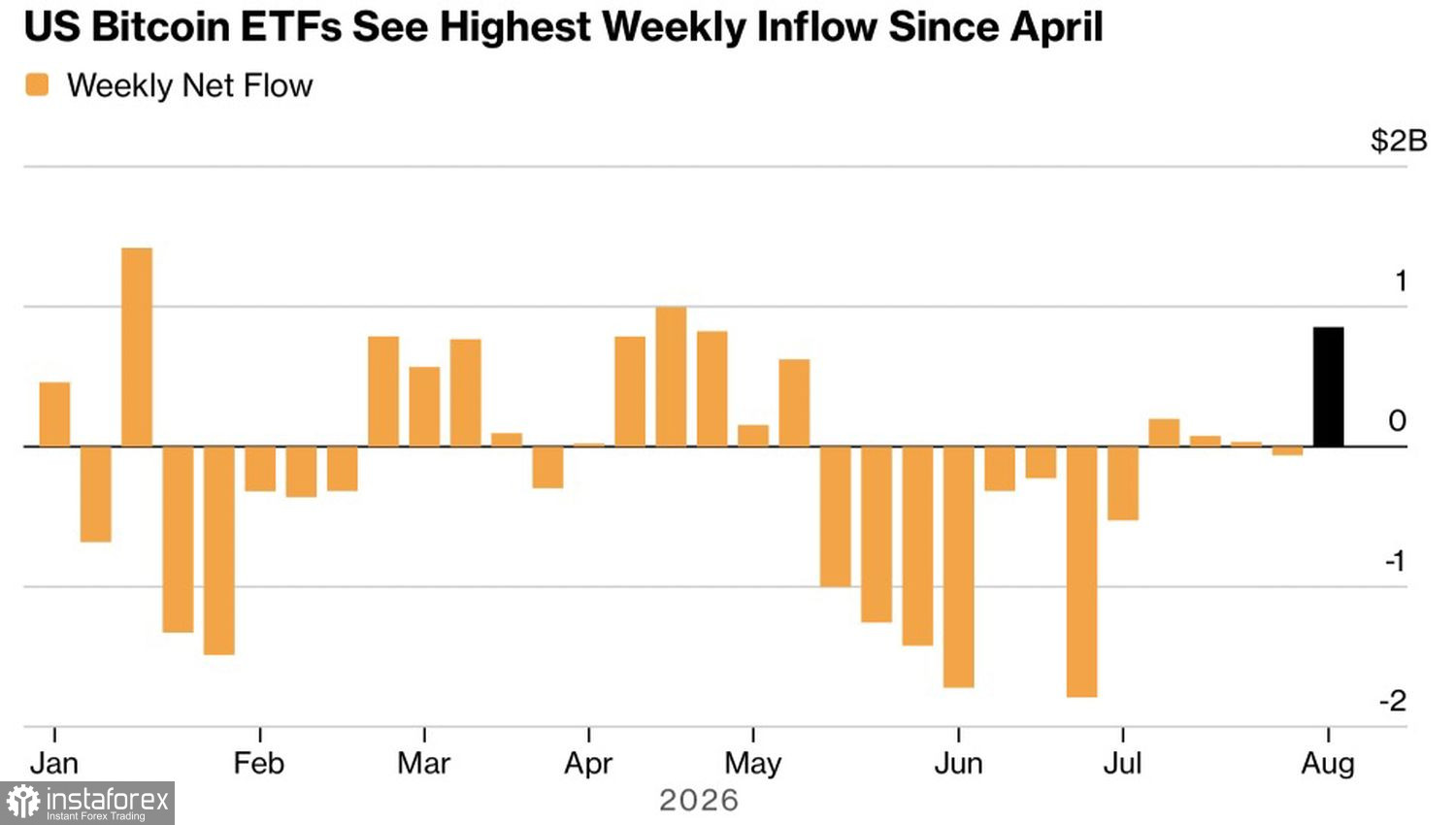
Flows into Bitcoin-focused ETFs
But the change of guard is not only about volumes. Institutions are changing how they access the asset: instead of buying tokens directly, they increasingly use derivatives and exchange-traded funds. Futures volumes on altcoins at Wintermute have more than tripled versus the previous half-year, while liquidity is concentrating in a narrow group of digital assets.
Institutional money has also proven choosier than retail. Over two years, the diversity of tokens held by professional counterparties rose 24%, versus 76% for private investors. Large players are betting on liquidity rather than chasing fleeting gains in obscure cryptocurrencies.
The result is one of the most atypical crashes in Bitcoin's history. From a peak above $126,000 in October last year, BTC/USD has lost about half its value, but it happened gradually, without the panic of prior crypto winters. Wintermute estimates the cryptocurrency now trades like any other asset class. The irony is that the market's maturation strips away its former drama — and perhaps some of its fans.
There was, however, a dramatic trigger. A hack of Coldcard hardware wallets made by Canadian Coinkite Inc. cost holders about $130 million in Bitcoin. Instead of fleeing the asset, the market responded with increased demand for regulated institutions: spot Bitcoin ETFs drew more than $850 million in a week — the strongest inflow since April. The hack only accelerated the migration of coins from self-custody into institutional vaults.
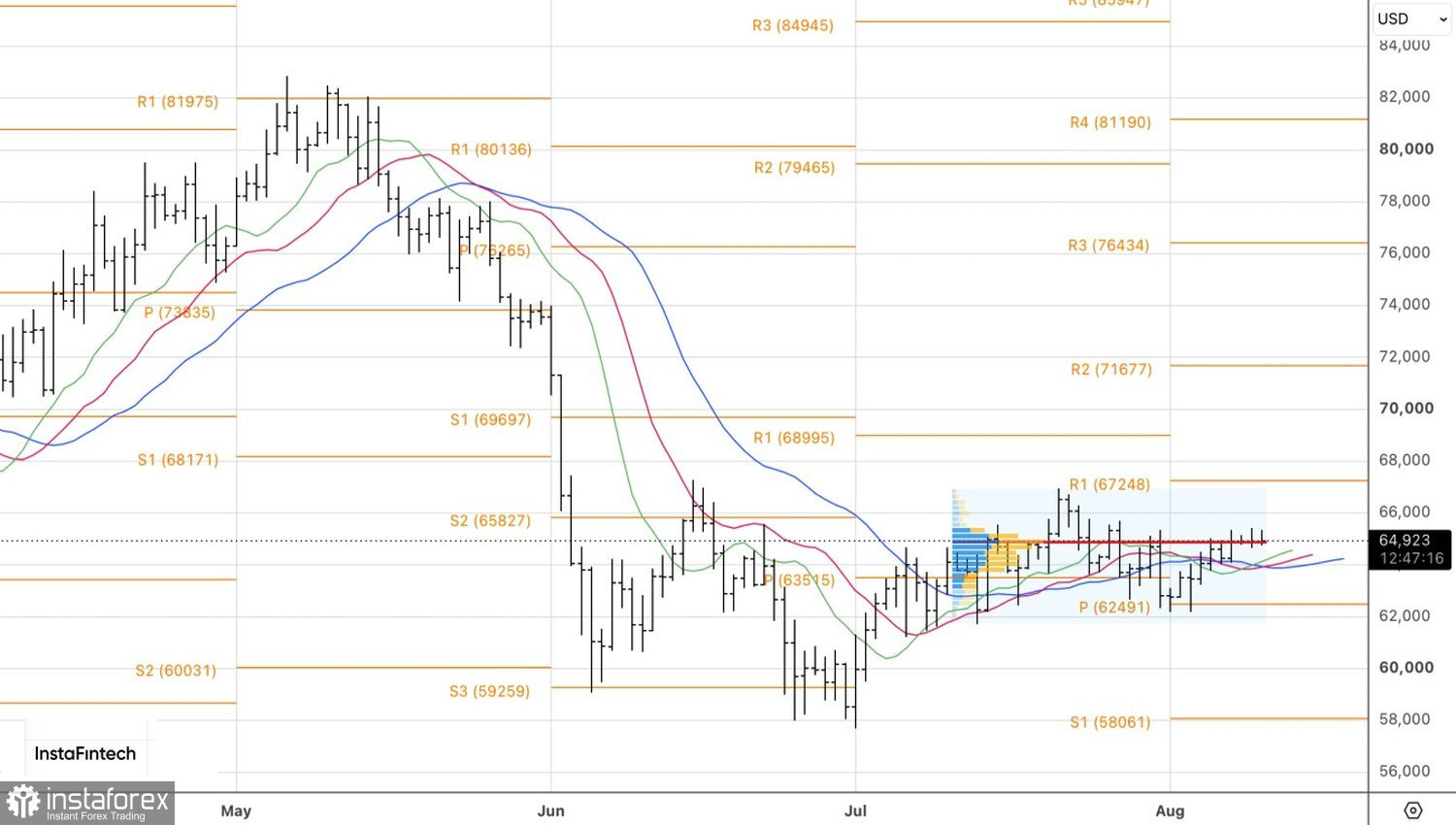
Notably, this demand surge did not come with a price rally — BTC/USD remains locked in the $60,000–$67,000 range, with muted volatility since June. Perhaps it's not a lack of interest but that the coin is changing its domicile: from personal wallets into institutional safes, where it becomes part of someone else's strategy. In my view, the question is not whether Bitcoin will regain its wild temperament, but whether its new company will want it to.
Technically, the daily chart for BTC/USD still shows mid-term consolidation in the $62,000–$65,000 range. It makes sense to place pending orders to buy from the upper boundary and to sell from the lower.
*Účelem zde zveřejněné analýzy trhu je zvýšení vašeho povědomí, nikoli dávání pokynů k obchodování.
Díky analytickým přehledům společnosti InstaSpot získáte plné povědomi o tržních trendech! Jako zákazníkovi společnosti InstaSpot je Vám k dispozici velký počet bezplatných služeb umožňujících efektivní obchodování.


