




Náš tým má více než 7 000 000 obchodníků!
Každý den spolupracujeme na zlepšení obchodování. Realizujeme pro vás vysoké zisky a jdeme dále.
Uznání miliony obchodníků po celém světě je nejlepší ocenění naší práce! Vybrali jste si a my uděláme vše, co je potřeba, abychom splnili vaše očekávání!
Jsme spolu skvělý tým!
InstaSpot. Hrdě pracujeme pro vás!





Herec, šampion turnaje UFC 6 a opravdový hrdina!
Muž, který vyhrává. Muž, který jde po cestě
Tajemství úspěchu Taktarova je neustálý pohyb směrem k cíli.
Zjistěte všechny výhody vašeho talentu!
Objevovat, zkoušet i prohrávat - ale nevzdávat se!
InstaSpot. Váš příběh o úspěchu začíná zde!

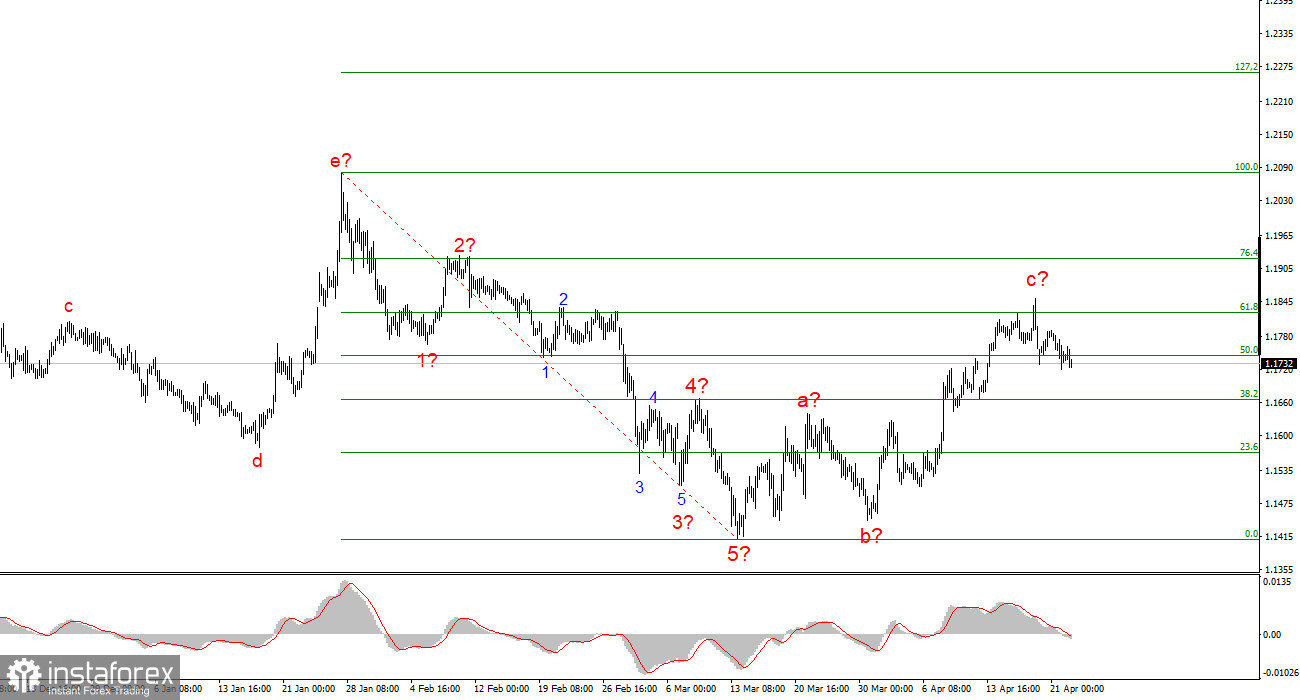
The wave pattern on the 4-hour chart for EUR/USD has changed somewhat. There is still no talk of canceling the upward trend segment (lower chart), which began in January last year, but the overall wave structure now looks quite ambiguous. In such situations, I always recommend switching to a lower timeframe (upper chart) and focusing on the simplest and smallest wave structures to make short-term forecasts—more than enough for opening trades. Wave structures can be very complex and allow for multiple scenarios, but the easiest approach is to trade standard "five-three" patterns.
In the chart above, we can identify a classic five-wave impulse structure with an extended third wave. If this interpretation is correct, then the formation of this structure has been completed, and a corrective phase of at least three waves is currently underway. Therefore, in the near term, we should expect a rise in the instrument, but within a correction relative to the latest trend segment. At present, recent wave structures do not fit well into the higher-degree count, but the situation should become clearer over time. The euro's recovery may end around the 1.1824 level.
The EUR/USD pair remained largely unchanged throughout Wednesday, with very low volatility once again. For the third consecutive day, the market has preferred to stay on the sidelines rather than engage in active trading—and frankly, the logic is hard to argue with. Over the past five to six days, the geopolitical backdrop has shifted about ten times. Each day begins with reports that Iranian and U.S. delegations will meet in Islamabad, only to be followed by news that the talks are canceled, postponed, or impossible.
Market participants have simply grown tired of reacting to every "insider report," 99% of which have little to do with reality. Just yesterday, I mentioned how some U.S. media were actively promoting the idea of a Wednesday meeting between Iran and the U.S. By evening, it became clear that these "insider reports" were worthless, as Tehran once again refused negotiations, citing the U.S. blockade of the Strait of Hormuz as an "act of aggression" rather than a "desire for peace."
At this point, the only statements worth trusting are those from Iranian officials, who remain firm: first, the de-blocking of the Strait of Hormuz; then a second round of negotiations—with no concessions on nuclear energy. Otherwise, Iran is prepared to continue fighting. Meanwhile, Donald Trump is increasing the U.S. military presence in the region, signaling that he is not easily intimidated. As a result, despite the truce, both sides appear to be moving toward renewed escalation. Therefore, I continue to expect a decline in EUR/USD, a scenario supported by the current wave structure.
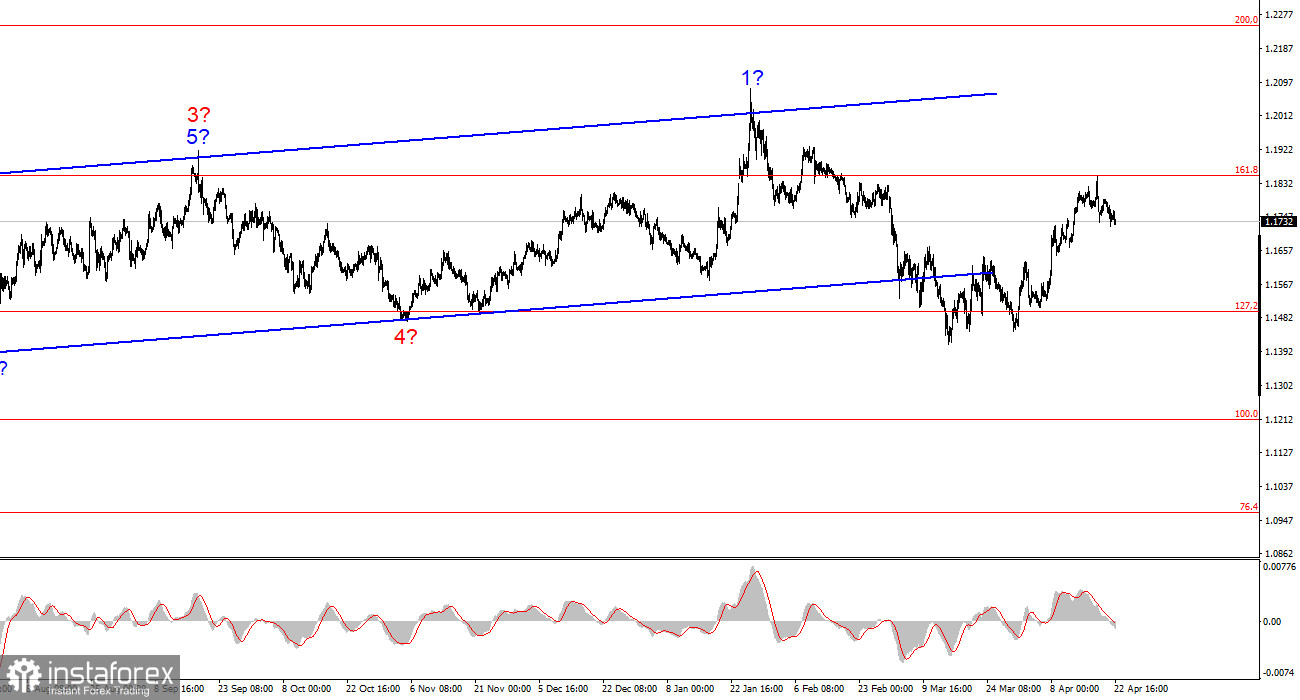
Based on this analysis, I conclude that EUR/USD remains within an upward trend segment (lower chart), while in the short term it is developing a corrective structure. The corrective wave set appears largely complete and could only become more complex and extended if a stable and long-term ceasefire is established among Iran, the U.S., Israel, and all other countries in the Middle East. Otherwise, I believe a new downward wave structure—or at least a corrective wave—may begin from current levels.
On the lower timeframe, the entire upward trend segment is clearly visible. The wave structure is not entirely standard, as corrective waves differ in size. For example, the higher-degree wave 2 is smaller than the internal wave 2 within wave 3. However, such variations do occur. I would remind you that it is better to focus on clear and understandable structures rather than trying to strictly label every wave. In the near future, the trend may reverse.
Key Principles of My Analysis:
*Účelem zde zveřejněné analýzy trhu je zvýšení vašeho povědomí, nikoli dávání pokynů k obchodování.
Díky analytickým přehledům společnosti InstaSpot získáte plné povědomi o tržních trendech! Jako zákazníkovi společnosti InstaSpot je Vám k dispozici velký počet bezplatných služeb umožňujících efektivní obchodování.


